Read part one of the series here.
To counter U.S. President Donald Trump’s hostility toward Europe, one idea being considered in Brussels is to lean into China’s latest charm offensive. The first article in this series found several obstacles to economic cooperation between Europe and China. Nevertheless, in a speech at Davos this year, European Commission President Ursula von der Leyen said that the EU intends “to engage and deepen our relationship with China and where possible, even to expand our trade and investment ties.”
If the EU or its member countries forge closer economic ties with China, what would this mean for Taiwan? “China will definitely try to use this relationship, if it’s reset, to … push Europe to align with China on its core interests, including Taiwan,” said Matej Simalcik, executive director of the Central European Institute of Asian Studies. “While every European country, except for the Vatican, maintains diplomatic ties with China and not with Taiwan, many [European] countries have one China policies that are not aligned with China’s one China principle, and have been permissive of many interactions with Taiwan.”
How much China pushes the Taiwan issue, and how effective this is, will vary across Europe. Experts largely predict continuity in the EU and its member states’ Taiwan policies, although how support for Taiwan plays out in practice is more difficult to anticipate.

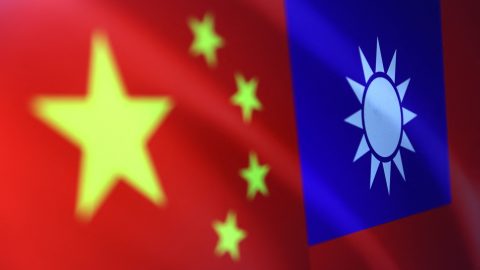
The “one China” principle is Beijing’s official stance that there is one China, Taiwan is a part of China and the People’s Republic of China is the sole legitimate government of China. Some European countries have endorsed this stance. A “one China” policy, on the other hand, was adopted by the U.S. and others to normalize relations with China while reserving some ambiguity about China’s claim to Taiwan. There are multiple variations of the “one China” policy — the U.S. “recognizes” the PRC’s claim to Taiwan, while others in Europe and elsewhere “understand,” “respect” or “take note of” this claim. The EU supports the standard version of the one China policy, although it isn’t technically formalized in any agreement with China.
Europe’s varied stances on “one China” — as outlined in normalization agreements — don’t necessarily correlate with how much support they each give to China at the expense of Taiwan today. France endorsed the “one China” principle in the 1960s but has evolved toward a “one China” policy that reflects the EU’s and maintains robust unofficial relations with Taiwan. Lithuania signed a normalization agreement endorsing the “one China” principle in the 1990s but got into hot water with Beijing in 2021 for allowing Taiwan to open a de facto embassy for “Taiwan” instead of Beijing’s preferred “Taipei.” In contrast, while Spain maintains its alignment with the EU’s “one China” policy in official statements, Spain has been notoriously hostile to Taiwan. In 2017, Spain extradited 300 Taiwanese nationals to China at Beijing’s request.
Still, if Beijing convinced European countries to make changes to their one China policies or to their official statements on cross-strait relations in exchange for economic benefits, this would be a big deal. As Jyun-yi Lee (李俊毅), associate research fellow at the Institute for National Defense and Security Research and expert in small states’ foreign policy in Europe, told Domino Theory, “a small change in wording is very significant in international politics.”
However, there are a few reasons this is less likely. First, Zsuzsa Anna Ferenczy, assistant professor at National Dong Hwa University and an expert in EU-China relations, questions how far Beijing would go to push European countries to change their “one China” policies. China is eager to expand economic cooperation with Europe and will double down on attracting European companies to its market. While the Taiwan issue will probably be raised, “in the context of how much the Chinese economy is struggling … China also sees itself challenged in terms of how far it can go with its aggressive political agenda.” Ferenczy also cautions against conflating economics and politics here. Taiwan is not as relevant for Beijing in the context of “what European companies do in China … the whole Taiwan question, as they put it, becomes relevant when it has visibility internationally.”
From the other angle, Marc Julienne, director of the Center for Asia Studies at the French Institute of International Relations, highlighted the affinity that the EU and its member states feel toward Taiwan’s democratic story and their shared values as reasons why Europe is unlikely to shift its stance on Taiwan, even in the face of Chinese pressure. “Many people in Europe, especially in the member states and the European Parliament are … very friendly with Taiwan.” This is increasingly true. European delegations to Taiwan have come in droves and Von der Leyen’s discourse on Taiwan increased quantitatively and qualitatively over 2023 to 2024, according to Julienne. Short of changes to their one China policies, if Europe leans toward China in the coming months and years, we might see fewer delegations to Taiwan or Taiwan mentioned fewer times by European leaders, Julienne said.
Lee of the Institute for National Defense and Security Research questions whether strengthening economic ties with China can be translated into pro-China political messaging. A consensus has formed in the EU about pushing back against China’s claims in the Taiwan Strait and the South China Sea, which is especially apparent among bigger powers like France and Germany, according to Lee. Advocating for maritime rights in the Taiwan Strait is key for Taiwan, which relies on Europe more for political support rather than security assistance.
But some European countries are more likely than others to shift their rhetoric toward a more pro-China approach. China “has long been seeking to drive a wedge between not only the EU and the U.S., but also within the European Union,” said Lee, adding that shifts in official statements on Taiwan are more likely among smaller states, particularly those that have been more pro-China like Hungary. “I wouldn’t be surprised if China somehow encourages the Hungarian government to say something like ‘Taiwan is part of China’s domestic or internal affairs,’” Lee said. Nevertheless, as Simalcik from the Central European Institute of Asian Studies noted, Hungary is a major hub for Taiwanese investment — for a long time it had the second largest stock of Taiwanese investment in Europe, until TSMC began building semiconductor fabs in Dresden.
In fact, Taiwan’s strategic importance to Europe is such that Simalcik “would not make a prediction that all of a sudden, working more closely with China on some things would lead [European countries] to reducing interactions with Taiwan.” Still, there are ways in which Taiwan can strengthen its role as a vital economic and even defense partner for Europe.
Lacking security assurances from Trump, the notion of strategic autonomy (i.e., that Europe should secure its own defense) is gaining more and more traction in Europe. “Taiwan is crucial for Europe … in order to achieve this strategic autonomy and [secure] the European supply chain … So that is the proverbial chip that Taiwan can play,” said Simalcik. Beyond semiconductors, Taiwan is expanding its drone cooperation in Europe, particularly with Poland, the Baltic states, the Czech Republic and Germany. “While this is, for now, seen as economic cooperation, there is a very clear tie of that cooperation into the defense sector, which maybe can help … Europe to get over some of the traditional taboos in [defense] relations with Taiwan” and open this space for further collaboration, said Simalcik.
Marc Cheng (鄭家慶), Executive Director of the EU Centre in Taiwan, thinks that Taiwan should pursue some kind of bilateral investment agreement with the EU. An agreement would facilitate Taiwanese investment in Europe by assuaging the fear Taiwanese companies might have that China will pressure European countries into not engaging with Taiwan, a predicament that clearly isn’t ideal for investor confidence. There isn’t much, if any, momentum in Europe to do this right now, partly because it’s politically sensitive and partly because the EU’s bilateral investment agreement with China is stalled. But if both sides can think creatively about how to craft an agreement that wouldn’t imply Taiwanese statehood and yet provides some institutional guarantees for investment, this could be a boon for both Europe and Taiwan.
At the end of the day, Taiwan is not at the top of Europe’s list of concerns and Europe is not at the top of Taiwan’s. But as the ever shifting and sometimes troubling dynamics between the U.S., China and Europe play out, there’s room for Taiwan to find strength in Europe and vice versa.




Leave a Reply