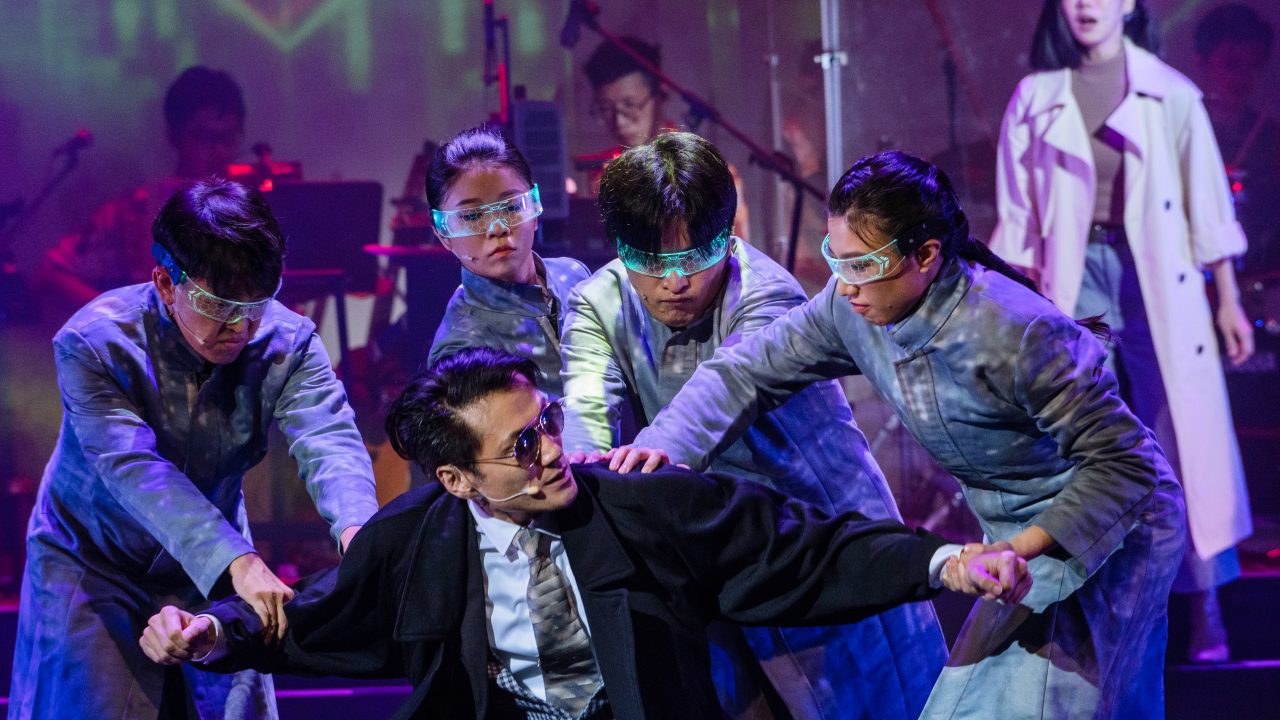
In Taiwan, people still remember Tzuyu’s apology video in 2016. In a black turtleneck and loosely tied ponytail, the then-16-year-old Taiwanese K-pop star recited, “There is only one China. The two sides of the strait are one, and I have always felt proud to be Chinese.” Tzuyu, whose full name is Chou Tzu-yu (周子瑜), was forced to make the apology after she waved the flag of the Republic of China, also known as Taiwan, on a Korean variety show. That flag, which was supposed to represent her home country, led to a boycott by Chinese netizens and companies.
Eight years later in a small, dimly lit bar on the outskirts of Taipei, Alice, a young theater actress, has recently given up the opportunity to go on tour in Hong Kong. Alice requested I not use her real name for fear that going public may further jeopardize her career. She had been trying to apply for a short-term work visa in Hong Kong for the past three months. After several email exchanges, she finally received a notice from the Immigration Department. The email listed old social media posts, word for word, and asked her to explain herself and her political stance. “I’m a Taiwanese person who grew up in a free and democratic country. I shouldn’t have been treated like this,” she said.
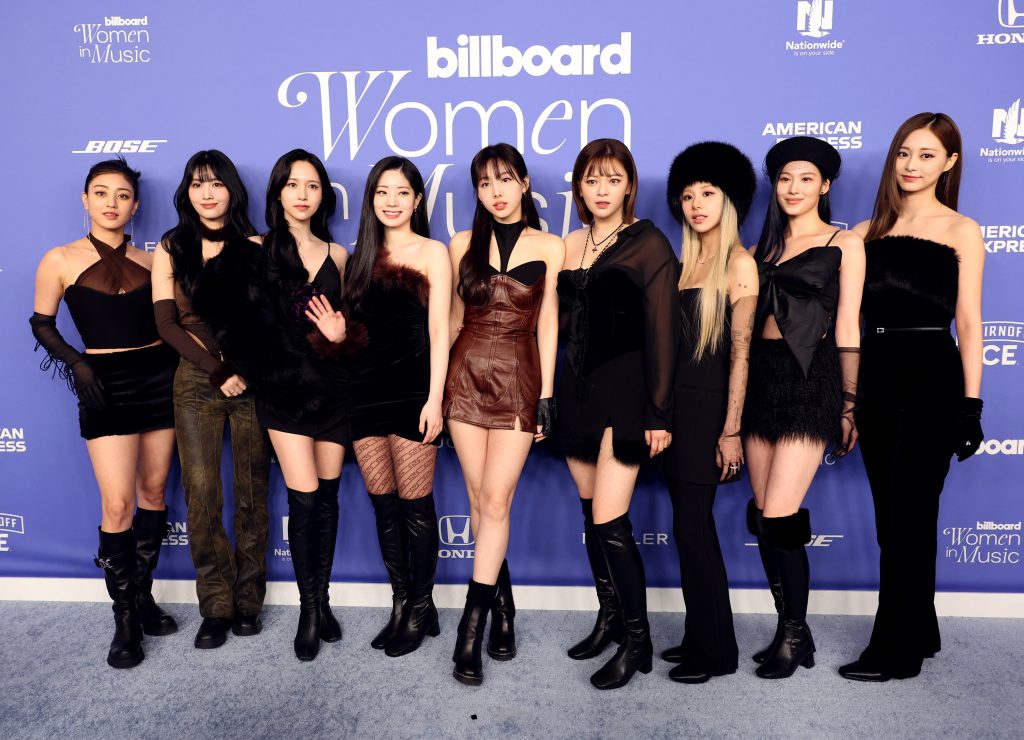
For many Taiwanese creators and entertainers, avoiding saying or doing things that might upset China has become almost ingrained. It doesn’t matter if you’re an international superstar with 13.2 million followers on Instagram like Tzuyu, or someone like Alice who has only 200-some followers on her public account.
Understanding the censorship is like a careful dance with the Chinese Communist Party for those working in China: You have to tip-toe about until you find a safe space where you won’t draw their ire. Now, creators who want to work in Hong Kong have to do the same. In 2020, China introduced the National Security Law, further undermining Hong Kong’s autonomy. A lot of Taiwanese people worry the National Security Law foreshadows the future of Taiwan if the island nation ever becomes controlled by the People’s Republic of China.
Alice is one of them. When I spoke with her, she remembered how she shared a post about “Revolution of Our Times,” a documentary covering the 2019 Hong Kong protest, on her Facebook page. She never anticipated receiving a letter from the Hong Kong immigration authorities some years later questioning her about her post.
Earlier this year, Article 23 was enacted in Hong Kong, and many believe the law squeezes out the last bit of freedom of speech from Hong Kongers. Collins, an experienced scriptwriter from Hong Kong, moved his life and career to Taiwan last year. He also wished to remain anonymous, since many of his friends and family still reside in Hong Kong.
“I used to be very well connected in Hong Kong. Now I have to start from scratch. But at least in Taiwan, I can write whatever I want,” Collins said. He decided to immigrate to Taiwan before the pro-democracy protests in 2019, a decision he stressed several times was “non-political.” However, after hearing about the experiences of his fellow writers in Hong Kong, he felt lucky he had left.
While Hong Kongers like Collins left to seek more freedom, Taiwanese theater groups like Our Theatre are still trying to collaborate with their counterparts in Hong Kong. The group put out a joint production called “The State & Denki” (皇都電姬) in 2020, connecting the fate of the Cantonese and Taiwanese Hokkien languages. During the Martial Law era in Taiwan, Taiwanese Hokkien was heavily suppressed by the Chinese Nationalist Party (KMT) in Taiwan. There are signs things may be going the same way for Cantonese in Hong Kong.
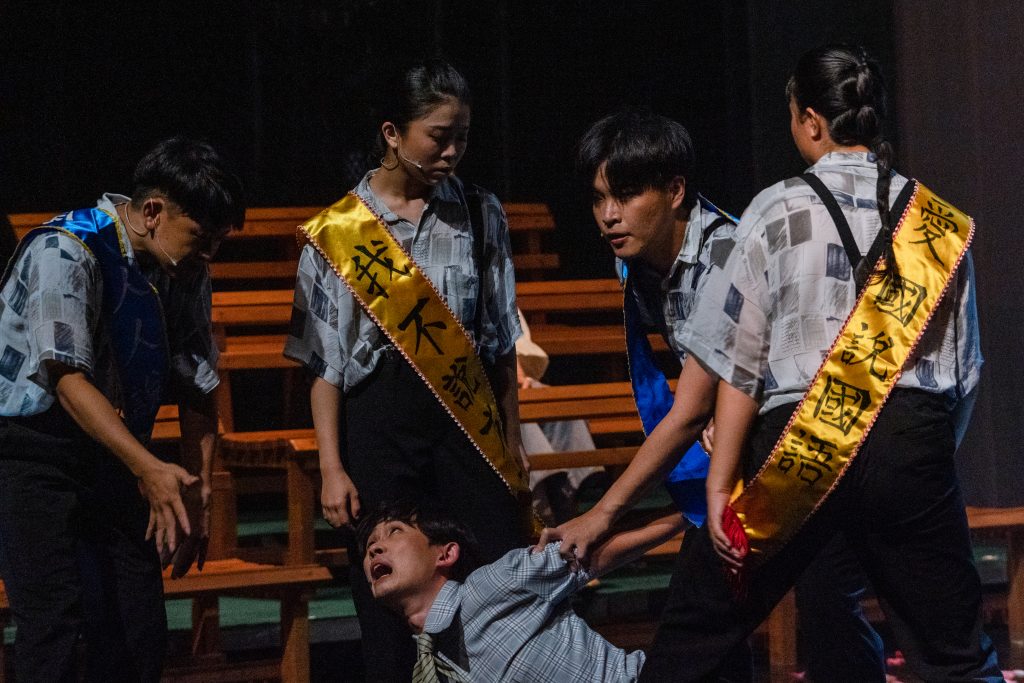
The first edition of the play referenced the Hong Kong protests of 2019. But after the National Security Law came into force, the group had to change the script to make it more allegorical. “I don’t want to hurt my colleagues in Hong Kong. We’re echoing social issues, but based on the premise that everyone will return home safely,” said Wang Jhao-cian (汪兆謙), the artistic director of Our Theatre.
Wang graduated from Taipei National University of the Arts in 2008. He remembered how excited his peers were about starting their careers in China. “I was a hipster in my twenties, I didn’t care too much about the money,” Wang added, explaining his reason for staying in Taiwan.
China’s sizable market for Taiwanese creators can mean more opportunities and more profit. Since Taipei and Beijing signed the Economic Cooperation Framework Agreement (ECFA) in 2010, Taiwanese films have been exempt from the limited quota of the 30 foreign, non-U.S. films screened in China every year. Creators in television and film were excited to push their work in this promised land, but it also meant they had to refrain from ever talking about cross-strait relations.
Some people like Wang are still trying to break into the Chinese market despite the risks. He and Our Theatre are planning their next production about overseas Hong Kongers. When asked if he’s worried about censorship, he said he believes most Chinese audiences are craving something different. “I’m not the kind of person who chants their ideas out loud. I believe in working within the limitations,” he said.
Collins also doesn’t mind writing within the framework. He sees himself as an entertainer rather than an advocate. “But I once wrote a story related to the housing price in Hong Kong. How do you not mention the government when you’re talking about this?” he asked. The thought that he could have been prosecuted for a story like this makes him worry: “You never know when you might cross the line.”
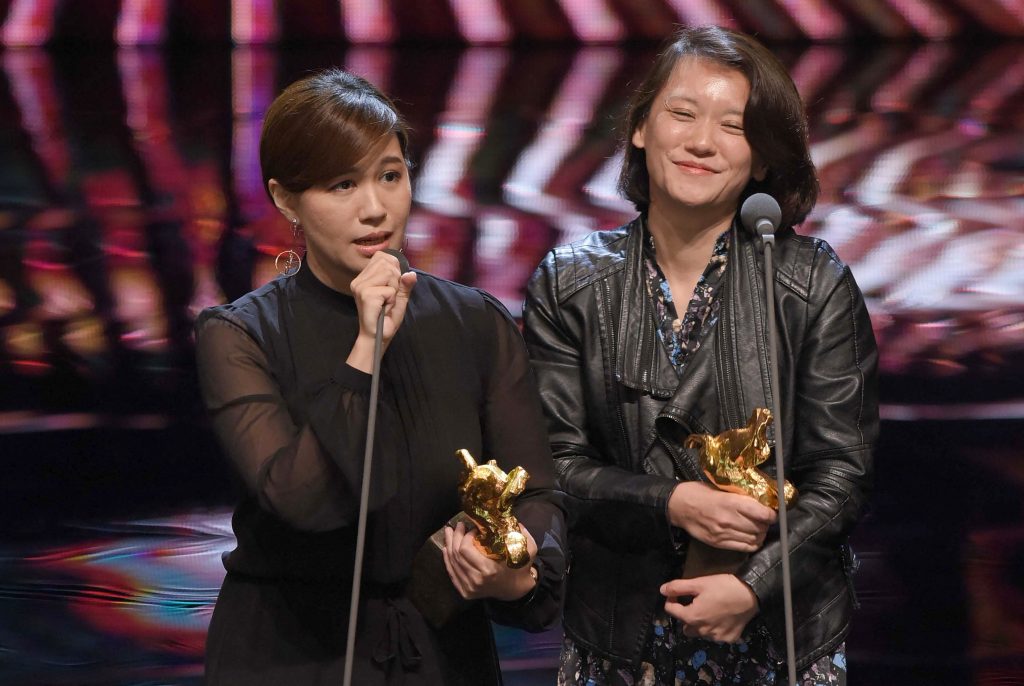
Taiwanese director Fu Yue (傅榆), who won the Golden Horse Award for Best Documentary Feature for her work “Our Youth in Taiwan” in 2018, shared a similar feeling. “I originally thought this was a documentary that few people have seen. Even if I say something that might upset the Chinese government, the impact would be marginal,” she wrote in a book about the documentary. During her acceptance speech, she expressed support for Taiwanese independence. The incident sparked significant controversy and led to China boycotting the Golden Horse Awards until last year. While some people supported her actions, many blamed her for endangering the competition, which has long been seen as the highest honor for Mandarin-language films.
This was the climate under which Alice found herself having to choose between her career and her principles. She was asked by the producer of the theater group to write a letter to the Hong Kong immigration authorities to clarify that she knew little about the Hong Kong protests, as well as to mention that she was delusional when she made the posts but had now come to her senses. She refused to compromise on her beliefs and she fears for her own safety should she enter Hong Kong. “I now have a voice inside my head that tells me, ‘Taiwanese people who want to go to Hong Kong or China will not consider working with me,’” Alice said.
People who choose to speak out like Alice and Fu Yue have to face the consequences of becoming the odd one out. Some Taiwanese people believe that political self-censorship is a way of avoiding trouble, a relic of the Martial Law period that lingers in many people’s minds. Expressing your political beliefs is only encouraged when you’re the sole person being held accountable, an unrealistic expectation for most people.
“Maybe I wouldn’t feel so guilty if the mentality in Taiwan was different. If people collectively decided to reject this kind of pressure, then maybe I could feel more confident about my decision,” Alice said.





Leave a Reply