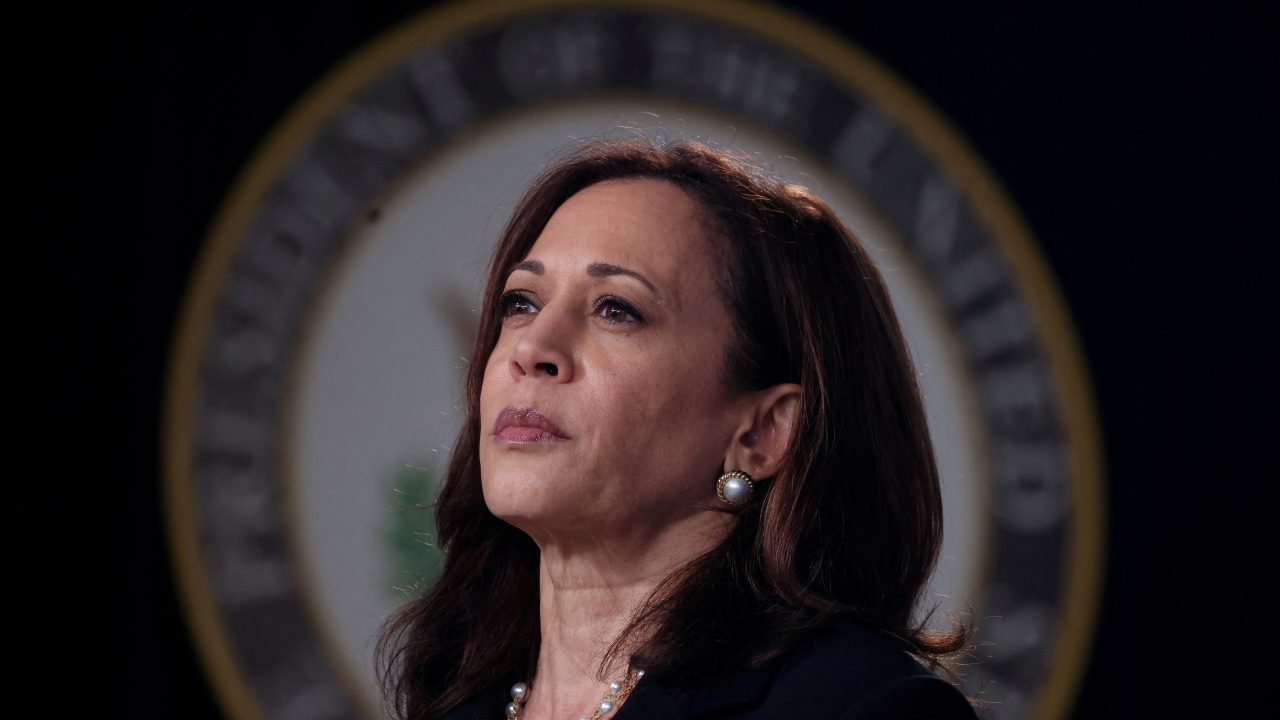
With U.S. President Joe Biden announcing that he will not run for a second term, thoughts in Taiwan will now turn to the implications for U.S.-Taiwan relations. Should Biden’s pick for the Democratic Party nomination, Vice President Kamala Harris, officially become the party’s presidential candidate and go on to win the presidency, what will her approach to Taiwan look like?
Though nothing is certain at this point, all evidence points to Harris as the closest thing to a continuity candidate apart from Biden himself, having been both a part of the current administration and been a faithful repeater of its key positions whenever she was allowed the opportunity.
Her fullest remarks to date on Taiwan came during a trip to Japan at the back end of 2022, and they carefully echoed the White House’s position from the past four years.
The U.S will “continue to oppose any unilateral change to the status quo” regarding Taiwan’s relationship with China, she said, adding that “we will continue to support Taiwan’s self-defense, consistent with our long-standing policy.” She also said the United States believes peace and stability in the Taiwan Strait is “an essential feature of a free and open Indo-Pacific,” and stated that “We will continue to fly, sail, and operate, undaunted and unafraid, wherever and whenever international law allows.” There is nothing to see here.
There is one notable difference between Harris and Biden, though. She has not gone as far as Biden in repeatedly stating that the U.S. would intervene should China attempt an invasion of Taiwan. Although the White House has downplayed Biden’s remarks, saying they don’t mean the U.S.’ policy of strategic ambiguity had changed, that shift in rhetoric is seen as important by some experts, who view it as an indication that Biden believes the Taiwan Relations Act allows for a U.S. military response should China invade.
Harris’s Japan speech went for the more traditional approach. The U.S. has a “profound stake in the future of this region,” she said, and the U.S. presence in the Indo-Pacific region “is in pursuit of peace and stability, and to support our allies and partners.” Notably, this was the same line she put out in a more recent speech on the same topic, in September last year.
By comparison to Biden, the most radical thing that Harris has done is publicly met with Taiwanese President Lai Ching-te (賴清德). In 2022, when Lai was Taiwan’s vice president, the two had a brief conversation in Honduras while attending the inauguration of President Xiomara Castro. At the time, China’s Taiwan Affairs Office (中共中央臺灣工作辦公室) responded that the U.S. should “take actual steps to put into effect its promises not to support Taiwan independence, and stop playing with fire on the Taiwan issue.”
But even there Harris played down the meeting. “The brief conversation that we had was really about a common interest in this part of the region and apparently Taiwan’s interest in our root causes strategy,” she said, notably adding that Lai had approached her. She also did not meet with Lai during his transit through the U.S. last year, despite a letter from six U.S. lawmakers urging her to do so.
This caution is taken by many to reflect a lack of experience in foreign policy. Jim Townsend, a former Pentagon and NATO official, told Politico: “She doesn’t really have a background in defense or foreign policy, so she’s really dependent on [her advisers] where she has to take part.”
Looking at Harris’s record before she took on the vice presidency does nothing to muddy this account. While running to be the Democratic nominee for president in 2019, she joined the chorus of nominees criticizing China on trade. “They steal our products, including our intellectual property. They dump substandard products into our economy. They need to be held accountable,” she said at one debate. Before that, she had backed cross-party legislation on Hong Kong and Uyghurs.
In similarly uncontroversial terms, when she has struck a conciliatory note it has been over working with China on climate change and North Korea.
This is not a politician who has suggested she will lead any grand change of course on Taiwan. And nor are the people in her team. Philip Gordon, her national security adviser, worked in the Obama and Clinton administrations. “Their views, I think, would fit well with a Bill Clinton or Obama presidency,” Townsend summarized. “They are straight-arrow, traditional foreign policy folks … products of the post-World War II rules-based international order.”


Leave a Reply