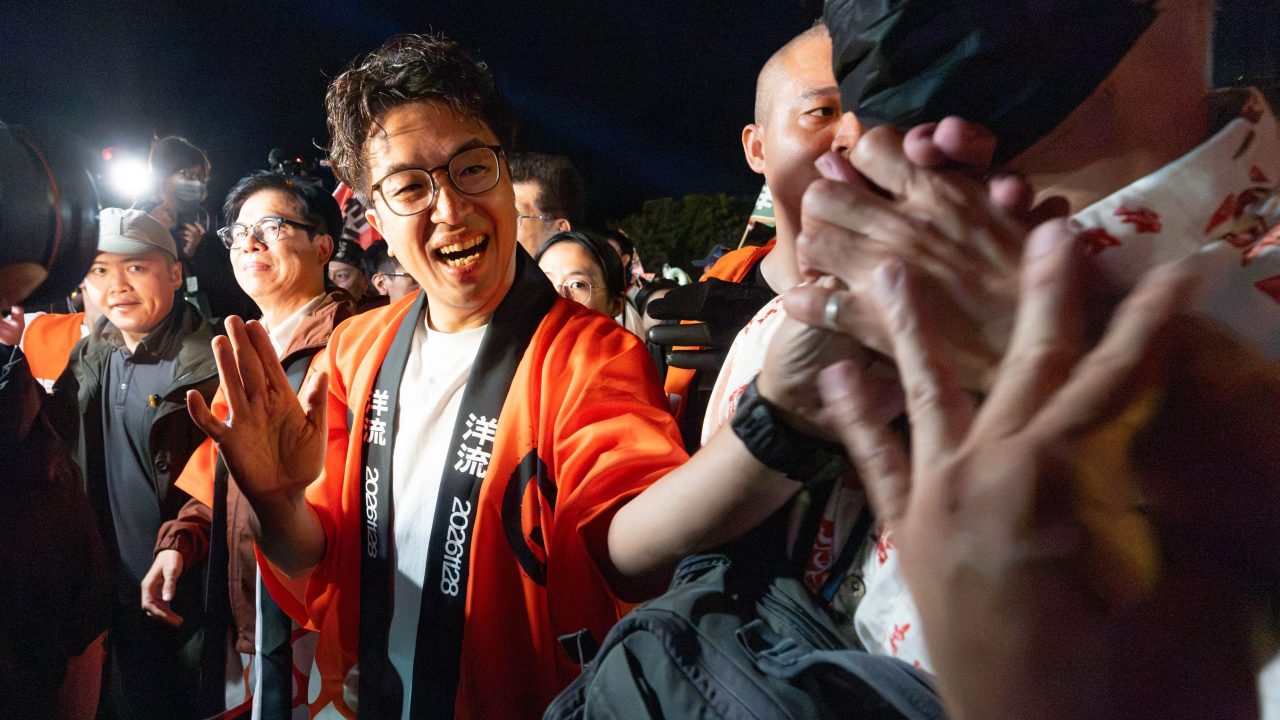
Taiwan’s local midterm races have entered their final stage, with key mayoral elections slated for November 28 carrying major implications for the future of the country’s political landscape.
One crucial battleground is Taiwan’s most populous city, New Taipei, which surrounds Taipei in the shape of a doughnut. The race there pits Democratic Progressive Party, or DPP, Legislator Su Chiao-hui (蘇巧慧) against former Deputy Mayor Lee Shu-chuan (李四川) of the Chinese Nationalist Party, or KMT.
The KMT has controlled New Taipei since it became a special municipality in 2010. A win for Su, daughter of former Premier Su Tseng-chang (蘇貞昌), would represent a major achievement for the DPP, which tends to perform better in races for national rather than local office.
A win for Su would also spell trouble for KMT Chairwoman Cheng Li-wun (鄭麗文), whose political fortunes are as tied to the results in these local elections as any national figure. Cheng, who enjoys enthusiastic support among the most fervently pro-China wing of her party, grabbed headlines for a meeting with Chinese leader Xi Jinping (習近平) earlier this year, but has yet to prove her competence as a domestic political operator.
“If the [KMT] does well overall, [Cheng] is well-positioned to steer nominations for the KMT’s 2028 presidential and legislative candidates,” wrote Kharis Templeman, a research fellow at the Hoover Institution, in a recent blog post. “If it does poorly, there will be mounting pressure on her to step aside, and her influence is likely to decline regardless of whether she does.”
The race in New Taipei underscores a somewhat paradoxical fact about local elections in Taiwan: Though they can have major implications for cross-strait relations and the future of the U.S.-Taiwan relationship, races revolve around largely mundane local issues.
Reporting across the country this fall, Domino Theory has encountered candidates and voters highly reluctant to speak on national or international concerns, no matter how important their voting decisions may end up being for those issues.
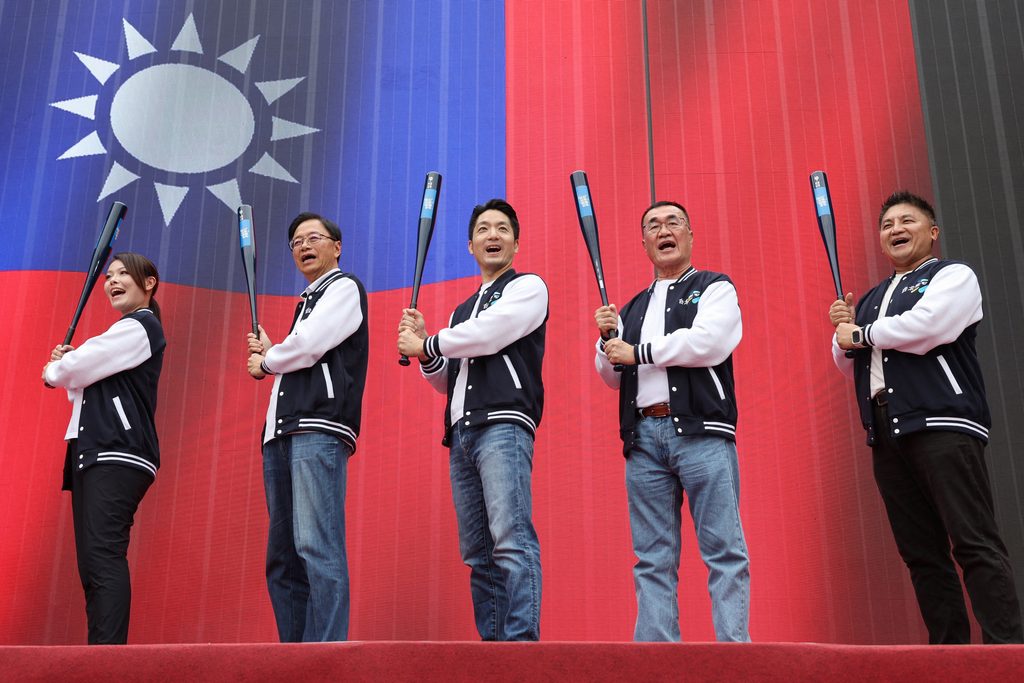
The southern city of Tainan, sometimes referred to as Taiwan’s “Holy Land of Democracy,” has long been one of the DPP’s most loyal strongholds. On the national level, the party draws criticism for what some see as its provocative approach to Beijing.
But Tainan voters hoping for a change in power are far more likely to express frustration over flooding or the uneven benefits accruing to citizens from the expansion of a local tech park.
The DPP’s mayoral candidate, Chen Ting-fei (陳亭妃), has emphasized her local roots, a message that has resonated with Lily, an online marketer and mother of three. “Chen is deeply rooted in Tainan, she knows the city, and she could become the city’s first female mayor,” said Lily, who asked to be identified by her English name.
Tainan’s government has courted local investment from TSMC, Taiwan’s world-beating chipmaker. Earlier this month, Taiwan’s National Science and Technology Council announced plans to launch a major new science park in Tainan next year, a project expected to become home to TSMC’s leading-edge 1-nanometer manufacturing process.
The plan represents the sort of coup local governments can hang their hats on, but has left some voters feeling left behind. “It wouldn’t hurt to have someone from a different party to run this city,” said Wu Chin-huo (吳金火), a 53-year-old construction contractor. “They focused so much on building tech parks and forgot about us in the outer part of the city.”
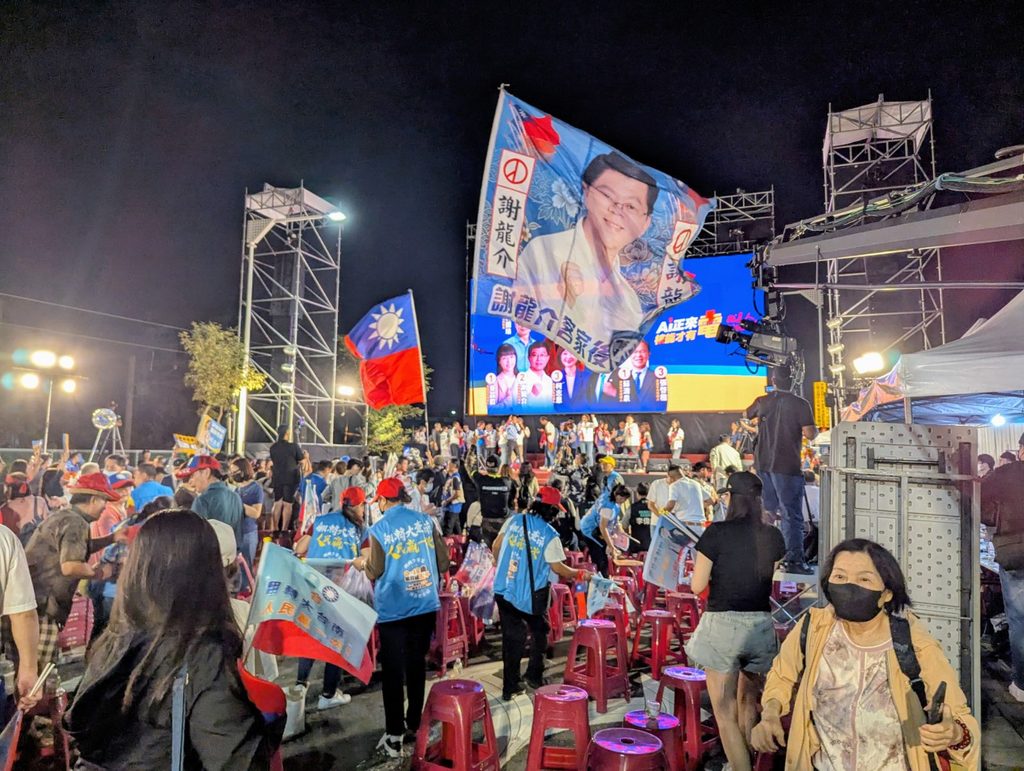
The KMT’s candidate, Hsieh Lung-chieh (謝龍介), has presented himself as an alternative to the status quo. He has highlighted Taiwan’s extremely low birthrates as an issue ripe for increased government attention.
Back in New Taipei last Friday, Su and Lee laid out their own priorities at a televised policy forum that devoted significant attention to the issue of infrastructure development.
New Taipei is the most populous city in Taiwan with more than four million people. In part because of its sprawl, and in part because of its uneven terrain, it remains less efficiently connected by public transportation than the city that lies inside it, Taipei.
Lee, who began his career as an engineer for the Taipei City government, has sought to convince voters that he is the right shepherd for New Taipei’s much-needed infrastructure upgrades. His previous tenures as deputy mayor of New Taipei, Kaohsiung (a major city in the south) and Taipei are another main selling point.
Su, for her part, has sought to poke holes in her opponent’s public development record, drawing attention to a gaffe in which Lee misstated which highway a major New Taipei bus line runs on.
New Taipei is a mish-mash of geographies. Along its northern coast lies a long strip of beachfront boutiques, the closest thing one can find in Taiwan to the French Riviera. Its southern region is a tree-covered mountainscape interrupted by little more than power lines and the occasional tea farm. In the middle is Yonghe, one of the most densely populated urban districts in the world.
Su has said she will make it a priority to balance out economic development between these different areas, an approach her party has long applied to the rest of Taiwan.
Whether that pitch works may depend on a factor outside the control of both candidates: the impact of the DPP’s Taipei mayoral candidate, Shen Po-yang (沈伯洋).
The viral enthusiasm surrounding Shen’s campaign has earned the moniker “ocean current.” If it sweeps across Taiwan in next week’s elections, its first impact will be felt in New Taipei.
(Note: Taiwanese law prohibits media outlets from reporting on polls less than ten days before an election. For a sense of where the races stand, readers are encouraged to consult coverage prior to November 17.)





Leave a Reply