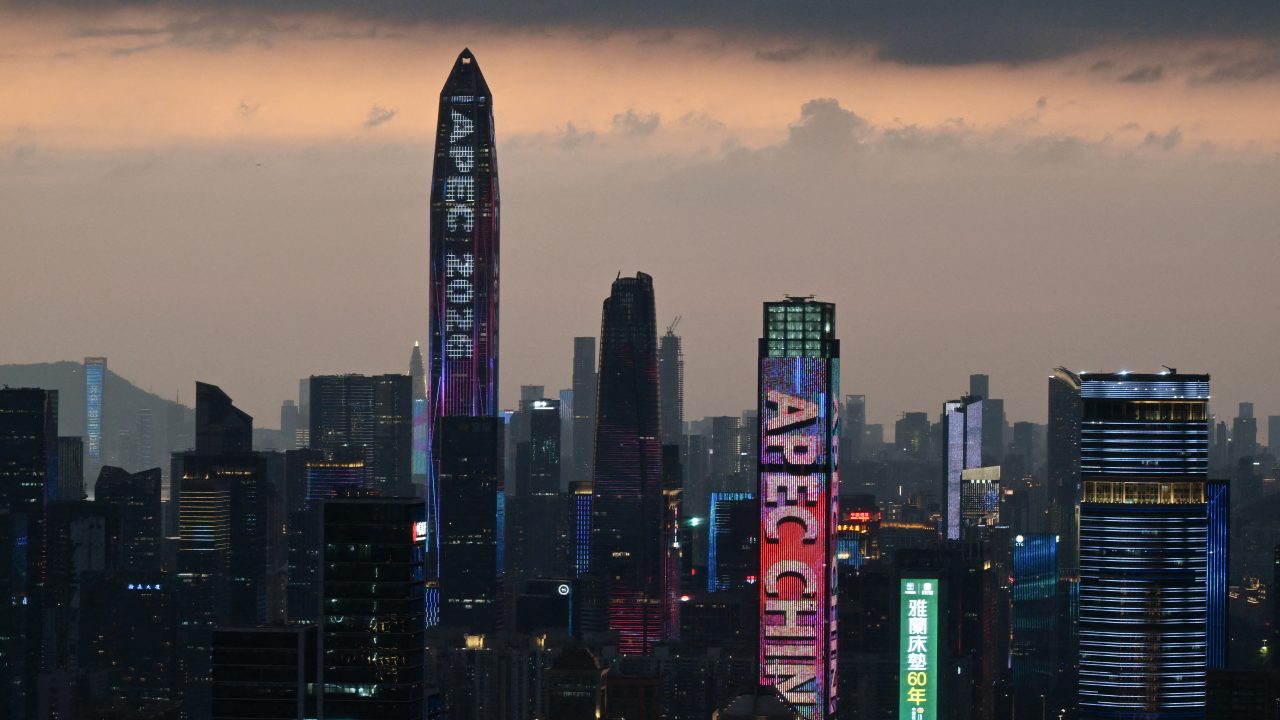
Taiwan could be a wild card topic at the trilateral summit between China, the U.S. and Russia in Shenzhen on Thursday.
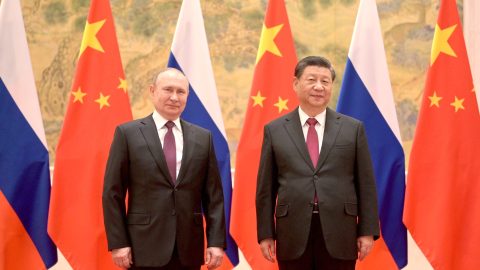
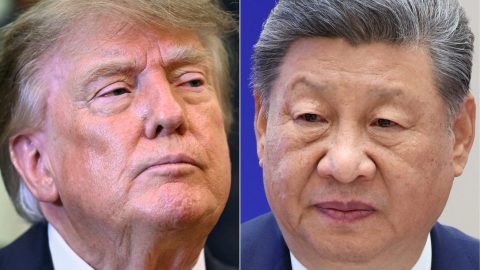
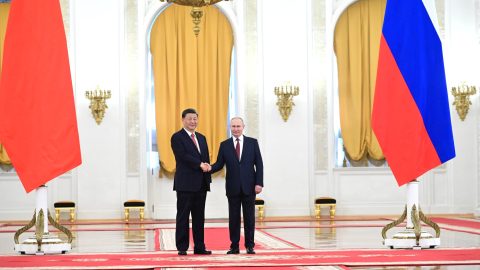
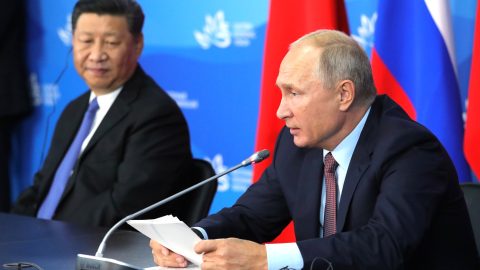
Beijing yesterday confirmed the meeting between Chinese leader Xi Jinping (習近平), President Donald Trump and Russian President Vladimir Putin on the sidelines of the Asia-Pacific Economic Cooperation Summit.
The possibility of a summit was trailed by Trump weeks ago, but China reportedly had concerns about the format and scope of discussion.
Now the meeting is confirmed, but details on the agenda are still scarce. Trump has repeatedly said he wants to talk about denuclearization and the war in Ukraine. White House officials have contradicted this, saying Ukraine is unlikely to be brought up, but that Iran would be discussed.
Taiwan seems to be conspicuously absent from the pre-summit briefing.
The tripartite format of the discussion has raised comparisons to the Yalta conference during World War II, when the leaders of the U.S., the Soviet Union and the U.K. met in Crimea to decide the fate of Germany and Japan after their defeat.
“They want to create an image of a tripolar world, where you have the U.S., China, Russia — and that’s it when it comes to big issues,” Sergey Utkin, a resident research fellow at the Institute for Peace Research and Security Policy at the University of Hamburg, told The Globe and Mail.
Some reports even suggest the summit might be Yalta 2.0. Instead, it will be Shenzhen 1.0, said Shen Shiwei (沈詩偉), a Chinese journalist known for supporting pro-Beijing narratives, in a post on X.
China wanted a highly scripted meeting, according to reporting in The Wall Street Journal by Lingling Wei (魏玲靈), who is regarded as being close to Chinese policymakers. The Financial Times reports that the summit will instead go ahead without an agenda, and that Moscow hopes to produce a joint statement.
Trump and Xi have already met twice this year. On both occasions, there was concern in Taipei that Beijing would attempt to persuade the U.S. to make concessions on Taiwan, perhaps by agreeing to change the wording of its long-standing policies on Taiwan, or even to stop selling Taiwan weapons.
No official changes materialized, but after the first meeting in May, Trump made comments about Taiwanese independence that seemed influenced by Chinese viewpoints. The lack of an agenda creates uncertainty over whether Taiwan will be discussed, and even who could be the one to raise it.
China may not want to discuss Taiwan at all, especially when there has been no preparation. Chinese diplomacy prefers to avoid open discussions and surprises, said Gideon Rachman, The Financial Times’s foreign affairs columnist, when commenting on his paper’s reporting. Xi’s preference for sticking to the script means “the trilateral meeting in Shenzhen is unlikely to produce world-shaking outcomes,” Rachman said.
Taiwan will be present at the APEC summit, but by convention and due to Chinese pressure is not represented by the head of government like the other attending countries. Instead, Taiwan typically sends a senior figure from the private sector as an envoy. This year it is Acer Group founder and Honorary Chairman Stan Shih (施振榮).



Leave a Reply