This roundup details Taiwan’s efforts to build a complete indigenous satellite communication network, TSMC’s difficulties in developing chip production in the U.S. and Taiwan’s attempts to transition toward using more hydrogen energy.
Space Industry
Even in a “best case scenario,” it is “highly unlikely” that an indigenous satellite communication network will be “service ready” within a 3-to-5 year time frame, according to a presentation by Tu Chen-Yi (杜貞儀) of Taiwan’s Division of Cyber Security and Decision-Making Simulation. Tu said this owed to Taiwan’s political position and the high cost of developing satellite communication.
Taiwan Space Agency (TASA) has announced it will launch the first of its Formosat-8 satellites at the end of 2025, with around 80 percent of its content being made in Taiwan. Ultimately, Formosat-8 will be a group of six high-resolution optical remote sensing satellites with an image resolution of 1 meter.
AI
TSMC’s new “A16” chip manufacturing process will enter production in 2026, according to an announcement by the company, with makers of AI chips likely to be the first to take advantage of the technology. TSMC said the A16 process will be 8-10 percent faster, and use 15-20 percent less power than the ”N2P” process for manufacturing 2-nanometer chips, which begins next year.
Semiconductors
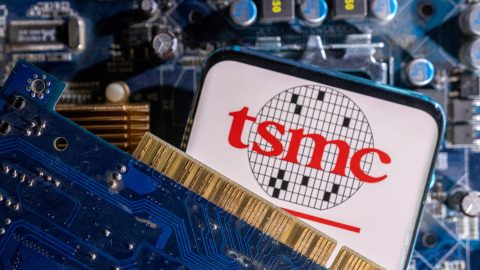
An in-depth account of culture differences between Taiwan Semiconductor Manufacturing Co (TSMC, 台積電) employees in Taiwan and those working in the new plant in Arizona has seen TSMC’s work practices described as an “authoritarian work structure.” In interviews with Rest of World, American employees lamented long and intense working hours, shaming over performance and being kept out of high level meetings.
King Yuan Electronics Co (KYEC, 京元電子) has divested its stake in a Chinese subsidiary, saying that U.S. restrictions on semiconductor manufacture in China were behind the decision. KYEC is a chip testing and packaging services firm and said it would use the funds “to meet the strong demand in artificial intelligence (AI), high-performance computing and related markets.”
Taiwan’s National Science and Technology Council (國家科學及技術委員會) will launch the IC Taiwan Grand Challenge in 2024, an award to discover “promising” international startup and academic teams that work on chip-based applications. The Taiwan government hopes to connect their work with local integrated circuit design, manufacturing, packaging, testing and product processes.
Gigabyte Technology Co. (技嘉科技) has denied illegally shipping advanced semiconductors to China, following a report by Reuters which alleged the opposite. An industry source told Taiwan’s Central News Agency that documents obtained by Reuters did not prove the Nvidia-designed advanced chips had been sold after new strengthened restrictions came into force in November this year.
Startup Snapshot
Taiwanese startup AUTO Mobility Solutions has been acquired by U.S. food delivery robot startup Kiwibot. AUTO Mobility Solutions works on AI self-driving and robot security chips.
Green Transition
As another round of talks between U.S. and Taiwanese officials regarding the Taiwan-U.S. Initiative on 21st Century Trade began on April 29, clean energy development and environmental protection were listed as specific areas of interest. Overall, the talks focus on agriculture, labor affairs and the environment.
The American Chamber of Commerce in Taiwan has called for the development of specialized green-technology talent in higher education, in a statement titled “Bridging Taiwan’s Green Talent Gap.” It argues for “increased investment in university programs and research focusing on green energy and sustainability … infusing practical, cross-disciplinary training with theoretical knowledge.”
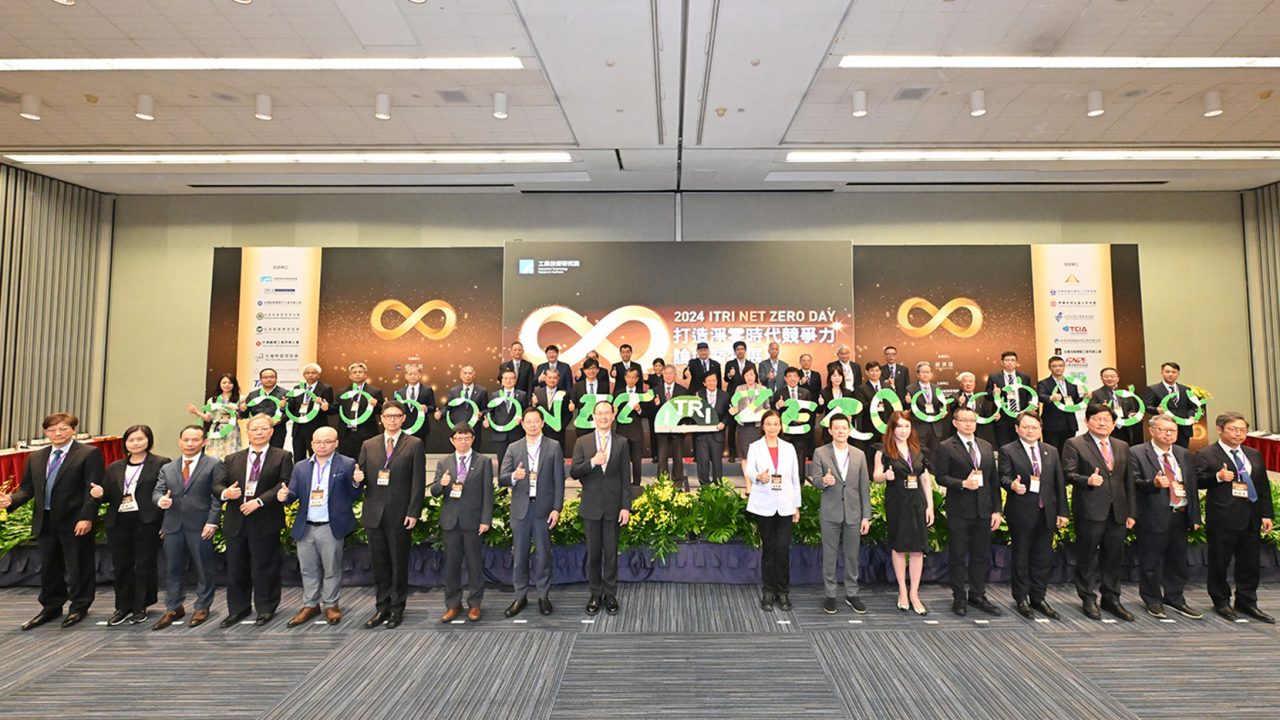
At last week’s Industrial Technology Research Institute Net Zero Day 2024 forum, which focused on accelerating Taiwan’s transition to hydrogen energy, the TaiPower Research Institute said that regulatory measures were the most significant barriers to increasing the use of hydrogen energy in Taiwan. It suggested a “regulatory sandbox” — a small scale testing zone supervised by a regulator — could be used to allow for research and development around hydrogen.
This week a delegation from Taiwan’s Ministry of Economic Affairs’ Energy Administration visited Canada and discussed cooperation over hydrogen energy. The Energy Administration said the visit made room for jointly developing hydrogen technologies, pointing out that Canada could become an important exporter of ammonia and hydrogen.
Medical Tech
A team from the Department of Clinical Laboratory Sciences and Medical Biotechnology at National Taiwan University (國立臺灣大學) has developed a way to counter catheter-related infections. Working with Taiwan’s National Science and Technology Council, they have combined docosahexaenoic acid with a novel small molecule compound that can help eradicate biofilms, the shield formed by some species of bacteria.
Gaming
Influential Taiwanese indie game developer Red Candle (赤燭遊戲) will release its new game, Nine Sols(九日), on May 29. They previously produced Detention(返校), a horror game set in 1960s Taiwan under martial law.





Leave a Reply