On Saturday, the first day of the Iranian work week, Tehran was bombarded with explosions in broad daylight. In a dramatic series of coordinated strikes, the U.S. and Israel killed Iran’s supreme leader and some of its highest military and intelligence officials. 4,000 miles away, people in Taiwan are now talking about whether China might do the same to Taiwanese President Lai Ching-te (賴清德).
But while China possesses the capability to conduct a precision decapitation strike against Taiwan, whether or not it would attempt to do so depends on the kind of war it has chosen to wage, according to six experts who spoke to Domino Theory. They warned against thinking about a decapitation strike as an isolated event in cross-strait conflict, since China’s ultimate objective would be to degrade Taiwan’s willingness to fight as quickly and permanently as possible.
“You don’t decapitate for Lai, you decapitate for the will of the people,” said Michael Hunzeker, a former Marine and professor at George Mason University who runs the Taiwan Security Monitor.
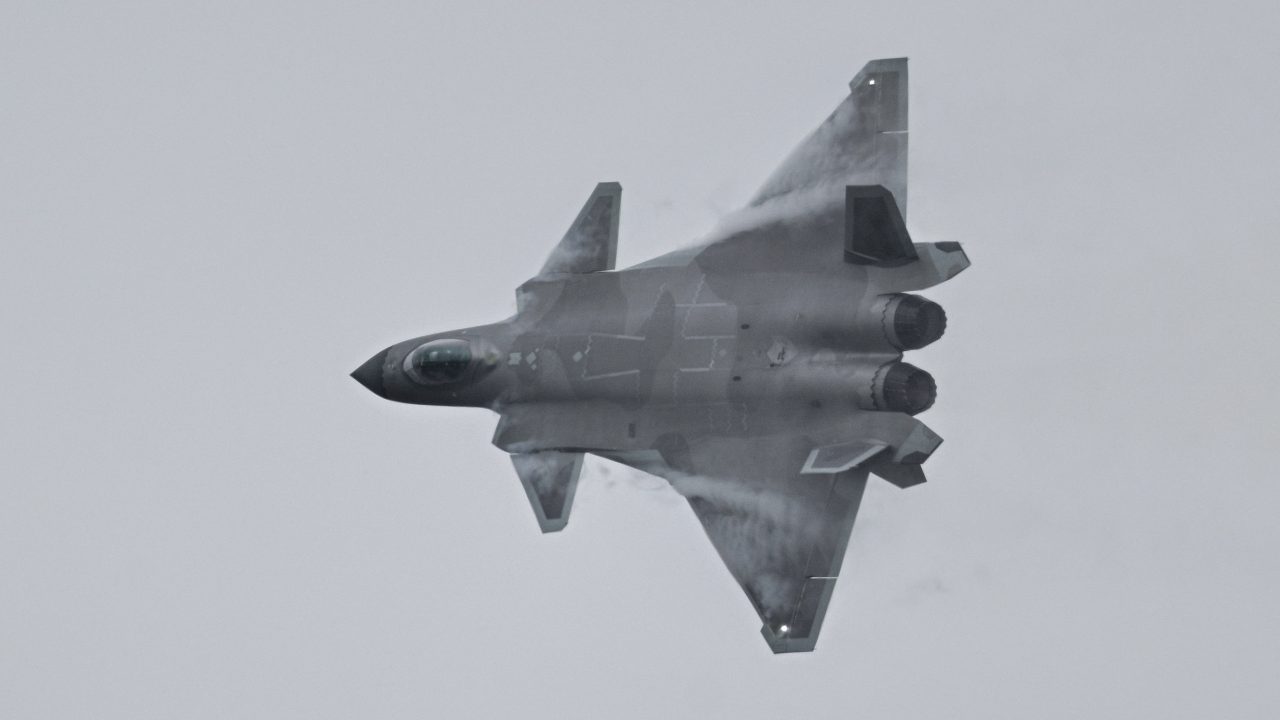
When it comes to technical capabilities, there is no doubt that the People’s Liberation Army has an advanced kill chain. The PLA’s capabilities in a number of different domains, including satellite reconnaissance, image analysis and long-range precision munitions launched from aircraft or naval vessels, equip it in theory with the ability to target high-level Taiwanese military and political leaders, Chieh Chung (揭仲), an adjunct associate research fellow at the Institute for National Defense and Security Research, Taiwan’s government-affiliated defense think tank, wrote in an email.
But in any type of invasion scenario, Beijing will need to contend with its lack of experience. The last war the PLA fought was in 1979. China might perform a lot of military exercises these days, but playing by the book won’t cut it in the fog of war. “How good is your commander, your communication? Are you sure that the United States does not have jamming capabilities, that the United States has no idea what you are doing,” said Alexander Huang (黃介正), chairman of the Council on Strategic and Wargaming Studies and former director of international affairs for the Chinese Nationalist Party (KMT).
In the specific case of a decapitation via air strike, the PLA would need to evade or overcome Taiwan’s air defenses. Unlike Iran’s air defense system, which was already severely degraded when the U.S. and Israel killed Ayatollah Ali Khamenei, Taiwan’s large, dense radar network is intact. Even a well-timed strike based on good intelligence could fail, said Xu Tianran (徐天然), a senior analyst focusing on Northeast Asian security and missile systems for Open Nuclear Network. “If you don’t degrade this air defense system first, it will give the Taiwanese enough time to evacuate.”
Political and military figures would move to underground bunkers like the Heng Shan Military Command Center in Taipei’s Dazhi neighborhood. These bunkers ostensibly can withstand attack from Chinese ballistic missiles.
Khamenei is presumed to have spent much of his time in underground hideouts in the months leading up to his assasination, but good intelligence placed him and other senior Iranian officials above ground, in the heart of Tehran on Saturday morning.
Taiwan has suffered from extensive penetration by Chinese intelligence networks, experts said. “Taiwanese society is very seriously infiltrated by Chinese spies,” said Shihmin Chen (陳世民), an associate professor at National Taiwan University specializing in international security and arms control. The clearest evidence of this is the many recent cases of espionage in the military and in the highest circles of political leadership.
In 2025, three former military guards who worked in the Presidential Office were jailed for selling classified information to China. A former assistant for Joseph Wu (吳釗燮), the current secretary general of Taiwan’s National Security Council and former foreign minister, was convicted of spying for China last year. The Taiwanese government estimates that there are more than 5,000 Chinese spies in Taiwan.
It’s possible that compromised military leaders operating Taiwan’s air defenses could make sure that “when they see something streaking across their radar, they just don’t tell their boss for 30 seconds,” said Hunzeker. But China’s intelligence infiltration of Taiwan also creates risks for decapitation by other means. “I worry about decapitation. I do not think it comes from the air, or at least it wouldn’t only come from the air,” Hunzeker said. “I don’t know that the air defense being intact matters if Lai is killed by his own bodyguard or if Lai is hit from 300 yards away with a .50-caliber sniper rifle.”
Even if Beijing is totally confident in its ability to launch a precision strike against Taiwan’s political leadership, it still might determine that it’s not the most strategic option.
Chieh from the Institute for National Defense and Security Research said that a decapitation strike would only occur when Beijing has already decided to initiate a large-scale military invasion of Taiwan, either during the “joint fire strike operation” phase or when the PLA has successfully landed on Taiwanese territory and is preparing to launch ground assaults. “Once a decision to use force is made, the operational objective is to militarily occupy all of Taiwan, preventing any opportunity for separatist forces to revive, thereby resolving the Taiwan issue once and for all,” Chieh said.
A successful decapitation could damage high-level decision-making, create psychological shock, and force Taiwan to the negotiating table, said Andrew Yang (楊念祖), former defense minister and current secretary general of the Chinese Council of Advanced Policy Studies. The goal would be to create the “maximum psychological impact” in Taiwan.
The risk of a decapitation strike on its own is that it wouldn’t collapse Taiwan’s governance, Huang from the Council on Strategic and Wargaming Studies said. Taiwan has a line of succession, albeit a short one, and elections if that line runs out. A decapitation that wasn’t followed by a swift PLA victory might solidify Taiwan’s resolve against China and further alienate the population, making the island harder to govern in the future. It would also trigger a global response that would bombard China with sanctions, before it has annexed even an inch of Taiwan.
Beijing has other options to impose incremental military and psychological pressure on Taiwan in order to coerce negotiations, Huang said. These include seizing offshore islands, capturing airports, occupying lightly populated areas and targeting critical infrastructure like electricity grids, telecom networks and internet nodes.
The question for Beijing should be about what costs it’s willing to absorb. A “textbook decapitation,” like the one the U.S. and Israel just did in Iran, would likely require military mobilization that would provide Taiwan with several weeks of advance warning, Huang said, adding that Taiwan could take major defensive steps in that time. “Every time I talk to them [the PLA], either online or in person, I would say, ‘If you really want to come, make sure you bring body bags. You’re gonna need it.’”
“And I told them, ‘Xi Jinping (習近平) will die,’” Huang said, referring to the Chinese president. “They say, then, ‘Why are you saying this?’ I say, ‘because the first emperor died as well in the Qing dynasty. So f— off.’”





Leave a Reply