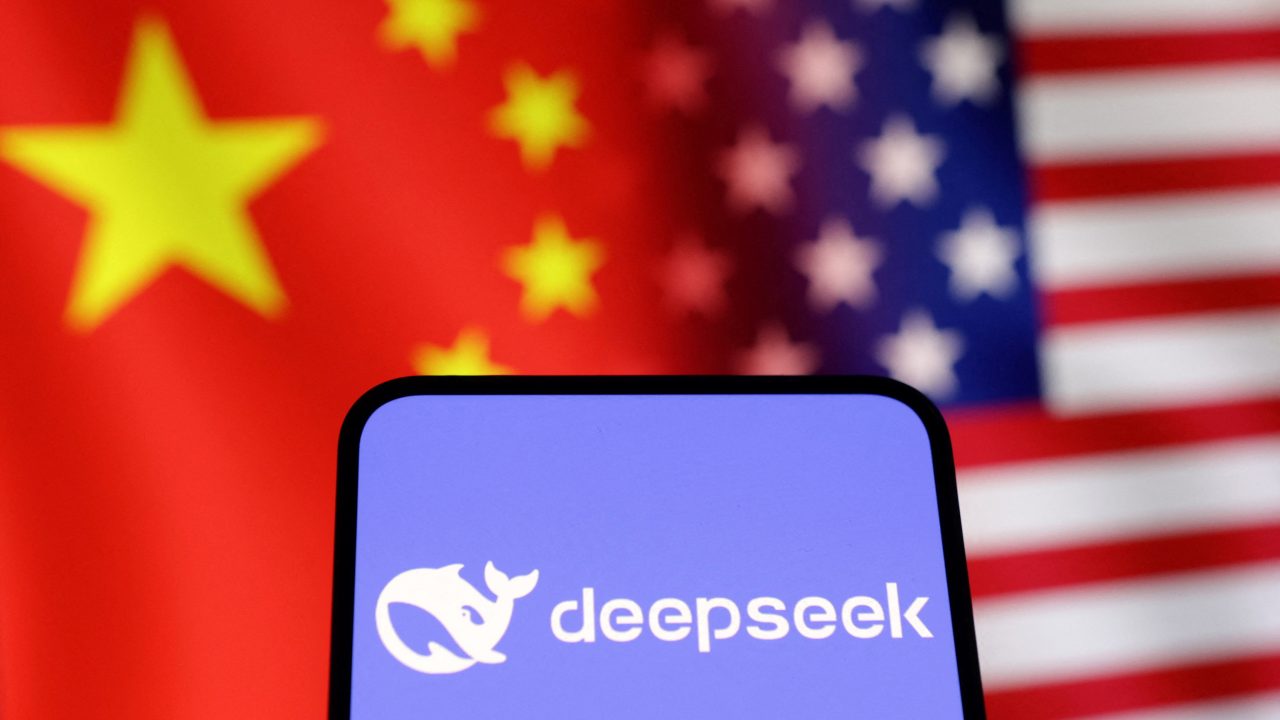
DeepSeek rocked the world when it was released a couple of weeks ago. A variety of reactions to the app, some curiously tepid and others predictably strong, have surfaced in response. Having grown up in an era where uncritical demonizations of China ran rampant in American media, something I’ve been paying attention to is perceived the threat that DeepSeek poses to the U.S. How often will we see claims along the lines of “don’t use DeepSeek because it’s made in China?” and who will be pushing these narratives? Will more hawkish framings of DeepSeek be accepted in the current moment defined by Donald Trump and TikTok?
Many in the U.S. are framing DeepSeek’s release as a “Sputnik moment,” returning to the oft-used Cold War framing of U.S.-Russia relations. But the reactions to DeepSeek’s release (and parallelly, to the Ban of TikTok last month) are too varied to permit a simple conclusion. My guess is that American consumers’ hearts and minds will not so readily be aligned with the aim of squelching China’s AI ambitions. This will make things complicated for American politicians, who have coalesced around hawkishness, and for American tech leadership, which stands to gain from attempts to stifle the development and use of Chinese technology.
As is the case with TikTok, DeepSeek seems to pose two main threats: censorship and data extraction.
OpenAI CEO Sam Altman warned that AI will soon be capable of “superhuman persuasion.” Censorship that is baked into popular AI models could mold public opinion in such a way that influences geopolitics (for example, by eroding American support for Taiwan). But the technological feasibility of censorship is more complicated. Experts have noted that censorship for open-source models typically depends on where you run the model, not necessarily the model itself (but one should expect a model that is trained under Chinese rules and with Chinese data to have more PRC-sanctioned outputs). Even if DeepSeek was consistently censored, we don’t know what the impact would be on American consciousness. As Jordan Schneider, author of the ChinaTalk Newsletter, pointed out, it’s hard to imagine that AI language model users will often be looking up, “What happened on June 4, 1989?”
DeepSeek also poses a concern about data privacy. Some reporting has featured data privacy experts explaining in broad strokes why technology from China cannot be trusted. Indeed, if Americans are using a language model that is hosted in China (and the data is stored in China), DeepSeek could be compelled to hand over that data to the Chinese government pursuant to Chinese laws like the National Intelligence Law. But this perspective also lacks nuance about how the technology actually works. On the Lex Fridman podcast, Dylan Patel, founder of SemiAnalysis, and Nathan Lambert, a research scientist at the Allen Institute for AI, clarified that the model itself doesn’t inherently pose significant data leakage threats because it is open source, which means it can be downloaded and run locally. The issue of where the data flows creates the real data privacy concern.
Congresspeople seem to be among the most vocal critics of DeepSeek. Representatives Raja Krishnamoorthi and John Moolenaar released a bipartisan statement in response to DeepSeek’s release calling for increased export controls to curb the further advancement of China’s capabilities in AI. “DeepSeek is deeply alarming, and it is seeking to undermine American AI leadership,” Krishnamoorthi said. Moolenaar added, “the rapid growth and CCP control behind the company raises serious national security concerns and demands immediate action” with respect to export controls. Senator Josh Hawley proposed a bill to ban DeepSeek and fine violators up to $1 million.
Of course, American politicians do not stand alone in framing DeepSeek in geopolitical terms. Geopolitics is an integral dimension of AI’s development and impact. DeepSeek’s founder, Liang Wenfang (梁文鋒), has himself described his pursuit of a better AI model in terms of China’s AI ambitions vis-a-vis the West, telling Waves that “China’s AI cannot be in the position of following forever.” American tech leaders have done the same. Raising censorship concerns, Meta CEO Mark Zuckerberg said on the Joe Rogan podcast, “If there’s going to be an open-source model that everyone uses, like, we should want it to be an American model, right?” On ChinaTalk, Kevin Xu, formerly of GitHub and Obama’s press office, highlighted that the “Xi or me” argument has been a core strategic message for Zuckerberg in seeking favorable policy outcomes.
But it’s hard to imagine that the aggressive approach advocated for by members of Congress will be popular all at once and with no pushback — both because of the fact that DeepSeek was able to innovate around export controls, calling into question the efficacy of these measures, and because the American public and President Trump might not be on board.
Public opinion seems to have softened toward China in the U.S. — or at least the China threat doesn’t seem to outweigh American’s desire to use their favorite technologies. This was made very apparent amid the unpopularity of the TikTok ban and the flight of American TikTok “refugees” to the Chinese app RedNote — a trend that was rooted in spite rather than in RedNote’s similarity to TikTok. It’s difficult to convince the public to do something in response to a nebulous threat when that thing negatively interferes with daily life. In Taiwan, politicians are not considering a general TikTok ban — even though the China threat is felt acutely — because they realize that a ban would provoke resentment toward their own government, rather than generating solidarity against the external threat.
Regarding DeepSeek, it will be similarly difficult to convince the American public that they shouldn’t have access to an affordable and freely available language model developed in China when American models are much less accessible. ChatGPT, for example, is a closed, proprietary model. Jennifer Zhu Scott, founding partner of Hong Kong-based venture capital firm IN. Capital, wrote in the Financial Times, “Centralised, closed models create a dangerous feedback loop. The more data they amass, the more powerful they become, further marginalising anyone outside their gates. For consumers this means large fees, surrendered data and watching AI’s future unfold without meaningful participation.” DeepSeek promises a new avenue for technological empowerment that Scott likens to the printing press.
Sam Altman warned us of the spectre of authoritarian tech development last summer, but then decided to follow DeepSeek’s approach to opening its models last week, admitting that OpenAI has “been on the wrong side of history” in keeping their models closed. When OpenAI voiced a concern that their models had been illicitly used to train DeepSeek, they faced some backlash. Guardian columnist Marina Hyde poked fun at OpenAI’s complaints, highlighting a tension between democratic idealism and the reality that our digital world is dominated by a burgeoning tech oligarchy: “For us little people, the choice seems to be between being data-jacked and screwed over by the undemocratic Chinese, or being data-jacked and screwed over by the post-democratic tech bros.”
As for Trump, his response to DeepSeek was surprisingly mellow — reflecting the softening toward China we can see among the American public. Trump called DeepSeek a “wake-up call” for the tech industry and has expressed his support of open source AI models. This is a departure from Biden, who believed that open-source software would lead to national security risks if AI got into the wrong hands.
It’s possible that Trump’s approach to DeepSeek and TikTok is due to his evolving thoughts on China. Jeremy Goldkorn and Kaiser Kuo, co-founders of the Sinica podcast, highlighted that Trump seems to have lost some interest in bashing China — for example, Trump tariffed China considerably less than Canada and Mexico last week. But what Trump really wants to do is make a deal with Chinese President Xi Jinping (習近平). Trump probably won’t support a ban or an expansion of export controls right out the gate because he wants to keep some cards in his hand — concessions he can give Xi in exchange for things he wants like TikTok’s algorithm or a trade deal. When Liang, DeepSeek’s founder, met with China’s premier, Li Qiang (李強), he reportedly raised DeepSeek’s need for American chips.
Ultimately, the shift from cutting-edge technology to commoditization was inevitable in this space. But the fact that this shift emerged in China creates some really interesting implications for geopolitics and technology. Lawmakers in D.C. will have their work cut out for them if they hope to convince the American public and the president to restrict DeepSeek and China’s technology ambitions more broadly.





Leave a Reply