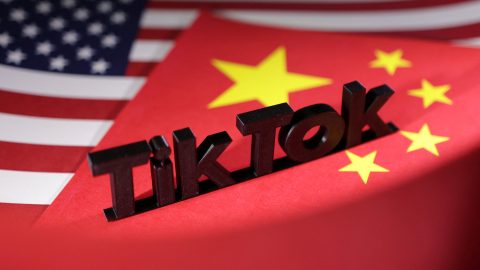
In his farewell address to the nation, President Joe Biden warned the country about a growing concentration of wealth and power that threatens American democracy. Among the list of concerning trends, Biden noted the rise of a “tech-industrial complex.” As the TikTok ban takes effect across the U.S., this warning rings true but somewhat hollow.
The ban follows the Supreme Court’s unanimous decision on Friday to uphold the Protecting Americans from Foreign Adversary Controlled Applications Act, which was passed with bipartisan support in Congress and signed into law by Biden last year.
“Whether this law will succeed in achieving its ends, I do not know … As time passes and threats evolve, less dramatic and more effective solutions may emerge. Even what might happen next to TikTok remains unclear … But the question we face today is not the law’s wisdom, only its constitutionality,” said Justice Neil Gorsuch said in his concurring opinion.
Indeed, the ban raises serious concerns about the concentration of technological and economic power in the U.S., and the inadequacy of government protections. TikTok is a significant driver of small business growth. Divestment would likely strengthen the tech oligarchy that Biden referenced without solving the root issue, which is inadequate data protection for Americans.
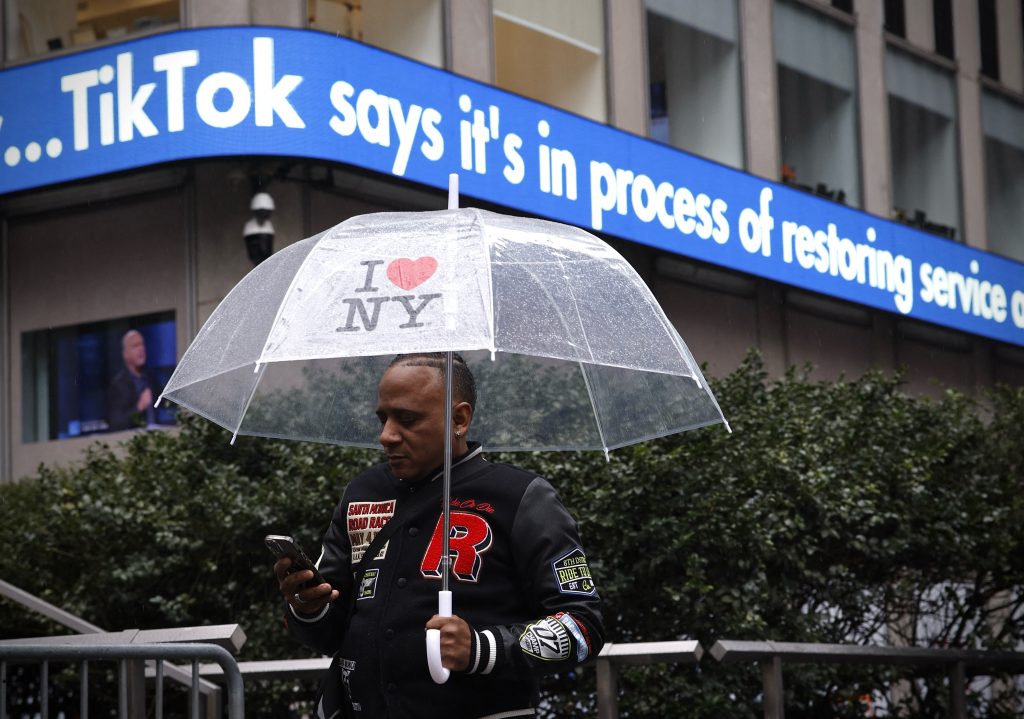
When users opened the app Saturday night, they found a message that read, “A law banning TikTok has been enacted in the U.S. Unfortunately, that means you can’t use TikTok for now. We are fortunate that President Trump has indicated that he will work with us on a solution to reinstate TikTok once he takes office. Please stay tuned!”
Trump, who will be inaugurated today, says he is ready to sign an executive order that will delay the enforcement of the ban by 90 days. But the legality of this is questionable. The app is already banned as of Trump’s inauguration day. According to the text of the law, the only way for TikTok to come back online in the U.S. is through divestment. Astonishingly, TikTok came back online on Sunday afternoon because it said it got the necessary assurances from Trump that its service providers would not face liability for doing so. But TikTok has not reappeared in the Apple or Google app stores, confirming that service providers are skeptical of the legality of Trump’s promises. And Trump has previously been punished by the courts for trying to use executive orders like a magic wand.
Divestment seems like the most likely path forward for TikTok, even if a prolonged political and legal battle pushes it off for a while. Since the act gives the president the authority to approve a divestiture option, it is possible that Trump approves a “qualified divestiture” that merely changes the shape of ByteDance’s corporate structure without really addressing concerns about Chinese influence. Trump could be pursued in court for not sufficiently enforcing the law, but it’s hard to know who would be willing to sue and have legal standing.
It is also possible that Trump tries to engineer a divestment that gives the U.S. government a kickback. In 2020, Trump reportedly pushed for a cut of a divestment deal that was on the table at the time to go to the Treasury Department. Trump recently said of a potential divestment, “Whether you like TikTok or not, we’re going to make a lot of money.” This outcome would on its face be a disturbing realization of the tech industrial complex.
Even if some kind of legitimate divestment were to occur, this would likely strengthen the position of dominant tech companies in a few ways. The first way is by funneling users toward American social media giants. Despite last week’s frenzy over Chinese social media app RedNote (小紅書), this platform is unlikely to stick with American audiences, due in large part to its heavy censorship. Users are more likely to turn to Instagram and YouTube if TikTok faces a prolonged ban or fundamentally changes form — both of these platforms stand to gain immensely. But the U.S. lacks comprehensive federal privacy legislation to protect American citizens from intrusions from domestic companies and their own government. While domestic and foreign surveillance certainly pose different threats, this outcome seems somewhat incongruous, especially considering that the Supreme Court decision to uphold the ban hinged on the data privacy rationale. TikTok was low-hanging fruit due to its association with China, but hopefully the legislation spurs a concerted effort among policymakers to build a more robust data privacy framework.
The second way is by empowering whoever purchases TikTok. Experts estimate that TikTok is worth around $40 to $50 billion, which limits the pool of potential buyers to already powerful players. For example, multiple outlets reported that China is considering a deal with Elon Musk. TikTok has called these rumors “pure fiction.” Given Musk’s proximity to Trump, Chinese officials might be interested in using TikTok (and its algorithm) as leverage during discussions with the incoming president about tariffs and other issues. If this happened, Musk would own two of the most prominent social media platforms in the world. That Trump might approve a divestiture that benefits his friend is, again, disturbing.
Third, this legislation could empower dominant tech companies by impairing TikTok’s ability to be a vehicle for small business growth. Take Project Liberty’s bid to buy TikTok, for example. Founded by billionaire Frank McCourt, Project Liberty is a consortium of stakeholders and investors aiming to create a democratic and secure internet. Project Liberty envisions a new version of TikTok that gives users greater control over their data — it has no intention of acquiring ByteDance’s coveted algorithm.
If TikTok is sold without ByteDance’s algorithm, the app will struggle to be the driver of small and medium-sized business growth that it has become. A study by Oxford Economics found that over seven million businesses are active on TikTok. In 2023, TikTok drove $14.7 billion in revenue for small and midsized American businesses, supporting 224,000 jobs. These businesses might have to shift their ad budget to other dominant platforms like Instagram, which very well might have higher advertising costs and be less effective at targeting diverse audiences. These platforms will benefit from advertising previously spent on TikTok while small and medium-sized businesses are forced to adapt to a less ideal marketing environment.
The TiKTok ban would not lead to all these negative impacts in a vacuum. Rather, it exists in the context of the growing tech-industrial complex that Biden voiced in his farewell address. Going into Trump’s inauguration, TikTok users are thrilled that the app is back online. But we should be wary about how Trump’s efforts to “save” the app might further distort the distribution of power in the digital media landscape.



Leave a Reply