
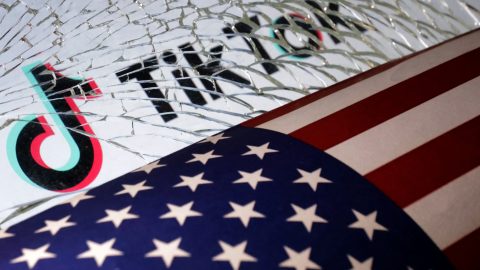
In December, the D.C. Circuit upheld the so-called TikTok ban, which requires TikTok to divest itself from Bytedance by January 19 or be banned. The Supreme Court agreed to hear the case on an expedited timeline — oral arguments are scheduled to take place in three days.
The briefs already submitted by TikTok and the government provide detailed insight into the logical structure of the case. During oral arguments, the presentations will be more dynamic, as the justices clarify and poke at the reasoning of each side’s arguments. The following is a breakdown of TikTok’s briefs, which argue that the ban violates freedom of speech and that the D.C. Circuit erred by deciding otherwise.
Allegations of Chinese Influence are Overblown
The D.C. Circuit held that while TikTok is an American entity with First Amendment rights, the act addresses the government’s legitimate concern that TikTok could be covertly influenced by the Chinese government, through both data extraction and content manipulation.
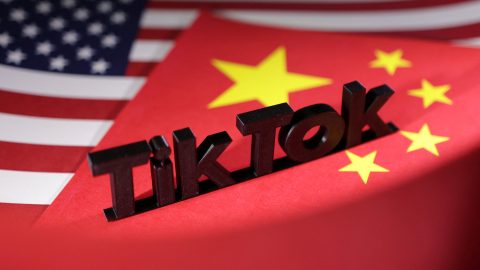
TikTok responded in its brief for the Supreme Court that its ties to China are overblown. ByteDance is incorporated in the Cayman Islands and has subsidiaries around the world, including in China and the U.S. The Chinese government has no direct or indirect influence over ByteDance. And TikTok Inc. — an American company incorporated in California — is able to review and approve the algorithm, customize the recommendation engine and develop content moderation policies for the U.S.
TikTok’s lawyers also argue that the government has no concrete evidence that its content has been manipulated by the Chinese government. The government’s main piece of evidence is that ByteDance had taken action in response to China’s request to censor content somewhere outside of China. TikTok argues that the D.C. Circuit was wrong to defer to this “bare assertion.” But in this brief TikTok again failed to squarely deny the accusation, which will likely raise concerns for the justices, as it did for the D.C. Circuit.
Even if TikTok is Susceptible to Chinese Influence, it Still has the Right to Free Expression
TikTok’s lawyers acknowledge that the app “unabashedly control[s] the content that will appear to users.” But even if TikTok was pressured by the Chinese government to present particular content, TikTok’s curation choices are still protected speech: “No matter the amount or source of ‘control’ a third party wields over an American speaker, the speaker always retains the ultimate choice: It can acquiesce in the third-party’s demands or refuse and incur any consequences.”
The D.C. Circuit decided that speech could be restricted in this case because the act was motivated by a concern that the Chinese government could and would “covertly manipulate” the curation of content on TikTok. TikTok disagrees, arguing that the government’s real desire is to suppress content on the app. TikTok cited several comments made by legislators to that effect.
Content-based discrimination is anathema to the principle of the marketplace of ideas, wherein “information itself is not harmful.” If the government is deciding which information is or isn’t harmful by banning an entire social media platform (or significantly altering it through divestment), that should raise a concern about government control over the information environment.
On the issue of the Chinese government potentially extracting American data via TikTok, TikTok argues that the act cannot be justified over these concerns because there are many ways that the Chinese government can harvest American data, including through e-commerce platforms. The act doesn’t address Chinese data mining in its totality, but rather singles out TikTok, raising “serious doubts” that the act is motivated by a legitimate national security interest rather than the desire to suppress TikTok’s particular expressive activity.
Divestment Would Ruin TikTok and Impinge on its Right to Free Expression
The government argues that the act doesn’t unduly restrict free speech because there is a divestment option. But TikTok counters that divestment would be like a “death penalty” on its expressive activity by overriding “TikTok Inc.’s editorial choice that the recommendation engine is the best content-dissemination method.” It would take “several years for an entirely new set of engineers to gain sufficient familiarity with the source code” in order to make TikTok functional.
Like the D.C. Circuit, the justices might take issue with the tension between TikTok’s claim that it is sufficiently separate from ByteDance to preclude Chinese influence and its claim that it cannot operate independently of ByteDance.
TikTik also argues that divestment would sever the U.S. version of TikTok from the rest of the world, creating a “content island” that would be “significantly less attractive to global advertisers.” The justices might challenge this argument, given TikTok’s massive American user base and the scale of economic activity it generates in the U.S. alone.
TikTok said that if the concern is “covert” manipulation, then disclosure would work just as well and be a less restrictive alternative (i.e., it wouldn’t impinge on TikTok’s expression to the same extent as divestment). Disclosure could look like alerting TikTok users when they open the app to the possibility that the content they are seeing has been manipulated by the Chinese government. TikTok argued that both the government and the D.C. circuit dismissed this alternative without fully considering it. But aside from arguing that disclosure is a “time-tested” method, the brief doesn’t further justify why this would be appropriate for countering the potential harms of TikTok, which is unique in its ubiquity and addictiveness.
Ultimately, it will be difficult for TikTok to prove sufficient separation from Chinese influence, as well as explain why alternatives to divestment would be equally as effective. The justices will have to make a somewhat nebulous judgement call about TikTok’s threat to U.S. national security, and whether this threat justifies shuttering a massively popular platform for democratic expression.




Leave a Reply