
Taiwan’s legislature this week failed to agree on a special defense budget that would authorize up to 210 billion New Taiwan dollars (about $6.6 billion) in funding for military drones and unmanned vessels, leaving the country’s plan to expand its defenses against China in limbo.
The deadlock centers on whether the money should be provided through a large, multi-year special budget proposed by the ruling Democratic Progressive Party, or DPP, or through annual appropriations supported by the main opposition Chinese Nationalist Party, or KMT.
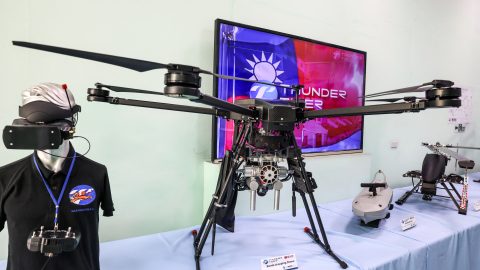
The cabinet’s special budget proposal allocates NTD 210 billion for the purchase of 1,446 coastal surveillance drones, 208,200 coastal attack drones and 1,320 small suicide unmanned surface vessels, according to defense officials.
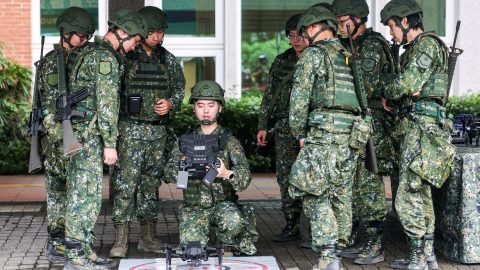
Taiwan has made drones and unmanned vessels a central part of its strategy to deter or withstand a potential Chinese invasion. Drones bolster Taiwan’s asymmetric defense because they are relatively inexpensive and can be produced at scale.
But the bill has been delayed for two months after negotiations involving 14 competing versions failed to produce a consensus on the law’s name, responsible government agency, funding source and spending period. It’s not much of a surprise that the bill hasn’t passed, as it was originally included as part of a bigger defense special budget that the cabinet proposed last year. After months of negotiations, a shrunken version of the bill, which excluded funding for domestic drone procurement, finally passed in May.
The DPP has argued that concentrated, long-term funding for Taiwan’s young drone industry via a special budget is needed to scale up production and secure domestic supply chains. They say money would be dispensed more quickly and flexibly than if it were appropriated in the annual budget, which is vulnerable to annual spending caps and political gridlock. The 2026 annual budget was just approved last Friday, after a record 266-day delay.
The opposition argues that funding drone development and procurement through the annual legislative review would allow for better oversight over how the money is allocated. The KMT’s version would authorize up to NTD 240 billion, with NTD 40 billion allocated primarily to the Ministry of Economic Affairs each year over six years. The KMT’s smaller ally in opposition, the Taiwan People’s Party, or TPP, proposed a plan that also demands that funds be appropriated annually, but that doesn’t specify a spending cap. The plans have not been voted on.
“An NTD 40 billion budget framework would not allow the Ministry of Defense to effectively build an unmanned force,” Defense Minister Wellington Koo (顧立雄) argued during negotiations yesterday.
The DPP is aiming for a vote on the bill by August 28, the end of the current legislative session, although there is no certainty the bill will be placed on the agenda or passed.
The deadlock has raised concerns among Taiwan’s drone industry that political disputes could delay industrial scaling, especially as the Chinese and U.S. drone industries quicken their pace.
As one drone industry representative put it: “In Taiwan, politics is above everything. No matter how urgent the situation is.”


Leave a Reply