Semiconductors and Artificial Intelligence
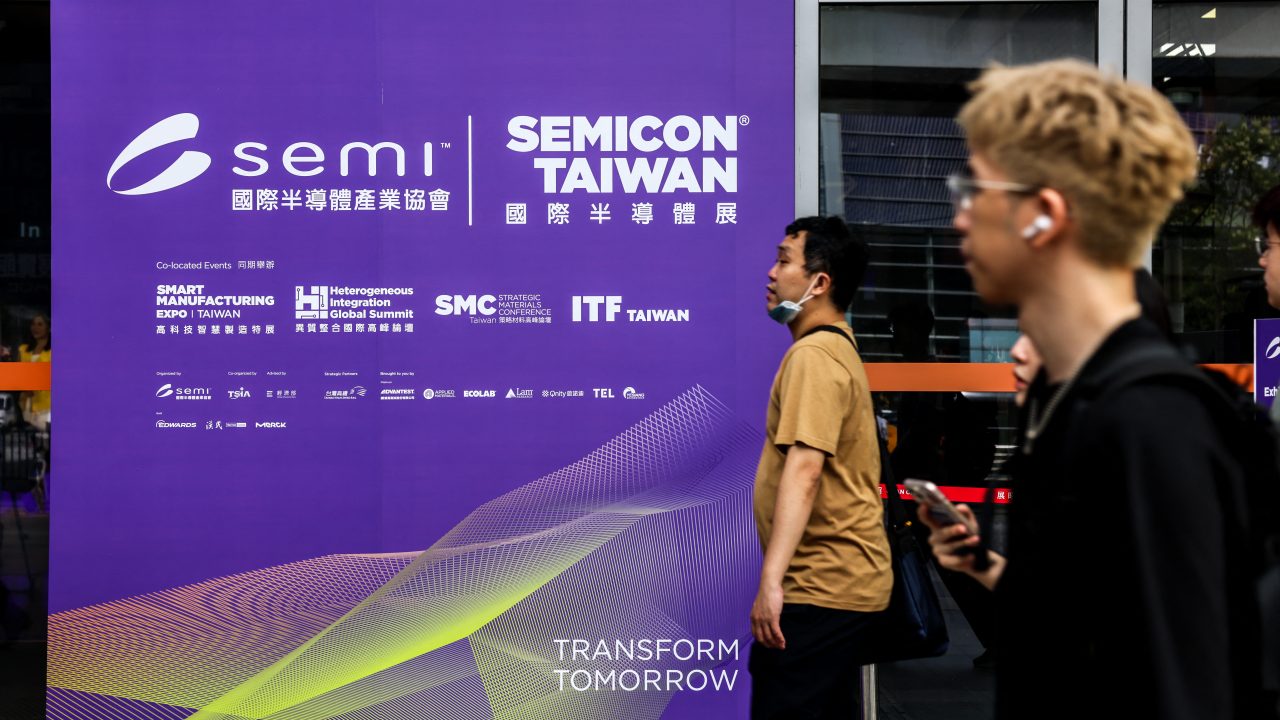
Semicon Taiwan, one of the world’s largest semiconductor trade shows, kicked off on Monday and has continued through the week, featuring 18 national pavilions, over 1,300 exhibitors and dozens of speeches and panels. Executives from TSMC, ASE, MediaTek, Unimicron and Foxconn participated in a panel discussion together on Monday, representing the “Five Tigers” across Taiwan’s AI ecosystem.
On a Tuesday panel, representatives from Taiwan’s advanced chip packaging ecosystem stressed the importance of further integration between their companies to keep up with short product cycles. After interviewing exhibitors, Domino Theory found that there is more opportunity for competition and parallel production in advanced packaging than was on display during the panel.
At Semicon’s opening ceremony, Taiwan’s minister of economic affairs, Kung Ming-hsin (龔明鑫), announced that Taiwanese semiconductor makers, supply chain partners and AI server firms will invest an additional $20 billion into developing the U.S. semiconductor industry. This builds on the $35 billion in investment that 20 such companies announced in May. At a forum hosted by the U.S.-Taiwan Business Council later that day, tech analyst Dan Nystedt noted that while massive, the scale of announced Taiwanese investment in the U.S. has not been overstated. A closer look at the numbers confirmed that contributions from TSMC and the broader AI supply chain in Taiwan have amounted to over $300 billion, Nystedt said.
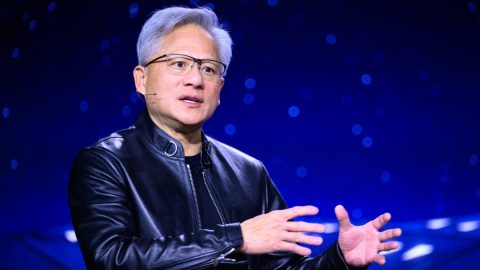
American companies have also made big investments in Taiwan recently. Nvidia announced at the end of August that it had invested $3.5 billion in convertible bonds issued by MediaTek, a Taiwanese chip designer and Taiwan’s second-biggest firm after TSMC. This is the largest direct investment that Nvidia has made outside the U.S. MediaTek will use Nvidia’s NVLink Fusion ecosystem to help customers develop custom AI infrastructure that integrates with Nvidia computing systems.
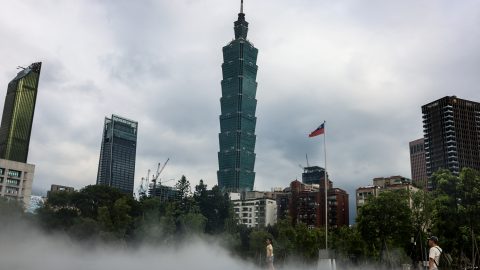
Taiwanese President Lai Ching-te (賴清德) announced plans to distribute 10,000 New Taiwan dollars, approximately $314, in cash to residents next year as part of the 2027 budget. The purpose is to help redistribute the “AI dividend,” Lai said, which has driven Taiwan’s unprecedented GDP growth this year but has not benefited everyone equally. “The government will not only concentrate on the technology industry but also care for every family striving to make a living,” Lai said.
The government is also working to ensure that people don’t benefit from the AI boom nefariously. On August 24, Taiwan indicted nine people for allegedly selling 74 Supermicro servers equipped with Nvidia B300 graphics processing units, or GPUs, to China, Domino Theory reported. The network of deception spanned seven companies in Taiwan, including Nvidia’s Taiwan office, a data center service provider, a distributor and a server sales company. Back in March, the U.S. indicted three people connected to Supermicro for allegedly smuggling $510 billion worth of AI servers to China. This most recent set of charges puts into sharper relief the possibility that this incident was not a one-off crime, but rather the result of systemic weaknesses in the U.S. export control regime.
Defense and Space Tech
Taiwan’s legislature passed the 2026 annual budget on August 14 after a record 266-day delay, approving funding for the cabinet’s six-year, NTD 44.2 billion (about $1.4 billion) drone development program in full. This approval came despite the fact that the opposition Chinese Nationalist Party, or KMT, had previously threatened to cut the funding. Some analysts commented that this reversal was an attempt to recover from the bad optics of not sufficiently supporting Taiwan’s defense. Others told Domino Theory that the decision presents an opportunity for the ruling Democratic Progressive Party, or DPP, to cultivate cooperative ties with defense-oriented KMT legislators.
The months-long partisan conflict over drone procurement remained in limbo after the annual budget was passed, until last week when the KMT ultimately rejected the government’s drone-focused special budget proposal, and passed its own proposal. The bill adds up to NTD 40 billion worth of acquisitions and subsidies to support Taiwan’s drone sector each year for six years. It will be subject to yearly legislative review, which critics say will open the funding to further delays and grandstanding, reducing certainty for domestic drone makers.
Taiwan’s cabinet on Thursday announced the approval of a supplementary budget request of NTD 607.6 billion ($19.12 billion) for the procurement of three types of uncrewed systems, among other weapons systems. One of these is the Chiang Kung (強弓), or “Strong Bow,” missile. The National Chung-Shan Institute of Science and Technology disclosed technical details about the Chiang Kung on August 23. It will contribute to Taiwan’s “T-Dome” initiative, which is effectively a rebranding of continuing and existing efforts to improve its air defense systems.
When it comes to drone development and procurement, both Taiwan and the U.S. are focused on building a supply chain that does not include China. At a Semicon forum organized by the Research Institute for Democracy, Society and Emerging Technology, or DSET, on Thursday, tech journalist Tim Culpan asked the panel what the hardest parts of the drone supply chain are to extricate from China. Trent Emeneker, chief executive of Kill Zone, answered that batteries, magnets and rare earth materials are the most painful dependencies to overcome. China also dominates in lenses and cameras, although this capacity is technically much easier to develop.
In space news, the Taiwan Space Agency, or TASA, completed Taiwan’s first home-grown sounding rocket test, launching “Maraho” from Pingtung on August 22. TASA aims to reach low Earth orbit with its first indigenous launch vehicle by 2034.



Leave a Reply