Semiconductors and Artificial Intelligence
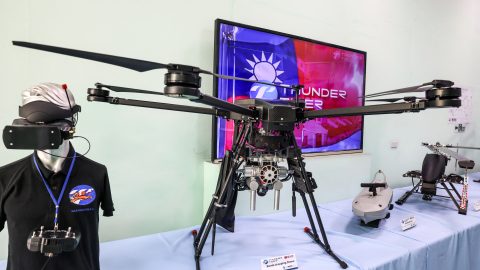
June was a busy month for Taiwanese tech diplomacy. Taiwanese startup NunoX Tech, which makes AI-powered fashion tech, won first place in the AI category during a competition held at the VivaTech startup trade fair in Paris. In Warsaw, over 100 Taiwanese companies, including 16 drone companies, participated in the Taiwan Expo. Bilateral trade between Taiwan and Poland has grown 20% since 2018, with Poland emerging as a primary buyer of Taiwanese drones. A delegation from Taiwan also attended the Pax Silica Summit in Washington at the end of June as a part of the U.S. State Department initiative on AI supply chain security. Taiwan has not been invited to sign the Pax Silica Declaration.
In Phoenix, Arizona, Taiwan will open a representative office to strengthen technology, education and supply chain cooperation, the Ministry of Foreign Affairs announced on Friday. Taiwan has 13 other representative offices in the U.S.
TSMC is currently pouring $165 billion into the build out of a chip manufacturing ecosystem in Arizona, including six fabs, two packaging facilities and a research and development center. The expansion will require skilled talent and a network of supply chain partners. At a U.S.-Taiwan supply chain conference in Washington last week, Economic Minister Kung Ming-hsin (龔明鑫) announced that 20 Taiwanese semiconductor and AI server companies have expressed interest in investing a total of $35 billion in the U.S., and outlined Taiwan’s plan to implement a financing guarantee for these companies.
Trump said on Wednesday that TSMC’s investments in Arizona will help the U.S. capture 50% of the global chip market. Taiwan currently accounts for over 60% of global foundry revenue and over 90% of advanced chipmaking. Earlier this year, Taiwanese officials countered that relocating that much chipmaking capacity to the U.S. would be “impossible.”
Back in Taiwan, investigators raided the Taiwan offices of American server company SuperMicro last week, detaining two workers and releasing two others on bail on suspicion of falsifying documents. The U.S. indicted three people associated with SuperMicro earlier this year for allegedly smuggling at least $2.5 billion worth of controlled AI-technology into China on servers that travelled through Taiwan. Taiwanese authorities previously detained three people connected to the case in May. Exporting advanced AI chips to China is not considered a criminal offense in Taiwan, according to Democratic Progressive Party, or DPP, lawmaker Chung Chia-pin. Chung plans to propose an amendment to the Foreign Trade Act that would make the export of chips to China illegal.
Taiwan held its first meeting of the National Artificial Intelligence Strategy Special Committee last month, which was formed under Taiwan’s AI Basic Law to promote national AI policy, including hardware manufacturing, innovation, computing infrastructure, sovereign AI models and AI services. The momentum is already visible in Taiwan’s economy, where AI demand lifted Taiwanese exports 51.7% year-on-year to $78.48 billion in May, the second highest export value in history.
Defense and Space Tech
Taiwan’s political parties are fighting over how to allocate government funding for drone procurement, an issue left out of the special defense budget that Taiwan’s opposition-controlled legislature passed last month. The ruling DPP proposed a $6.5 billion (210 billion New Taiwan dollar) special budget to fund domestic and foreign drone orders. The opposition Chinese Nationalist Party, or KMT, countered with its own proposal last week, which would give the legislature more authority in doling out $7.5 billion across six years, subject to annual spending caps. While the KMT is wary of the risk of waste and corruption in large special budgets, the DPP argues that its plan will allow for the more rapid and stable procurement of drones.
Taiwan displayed defense technology that it already has during military exercises last month. In Taichung, Taiwan fired HIMARS rocket systems into the waters of the Taiwan Strait for the first time. The launchers were made by Lockheed Martin and supplied by the U.S., which announced plans to sell 82 more to Taiwan in December of last year. Later in June, recently acquired M1A2T Abrams tanks rolled through Taoyuan as the military conducted combat readiness patrols.


Leave a Reply