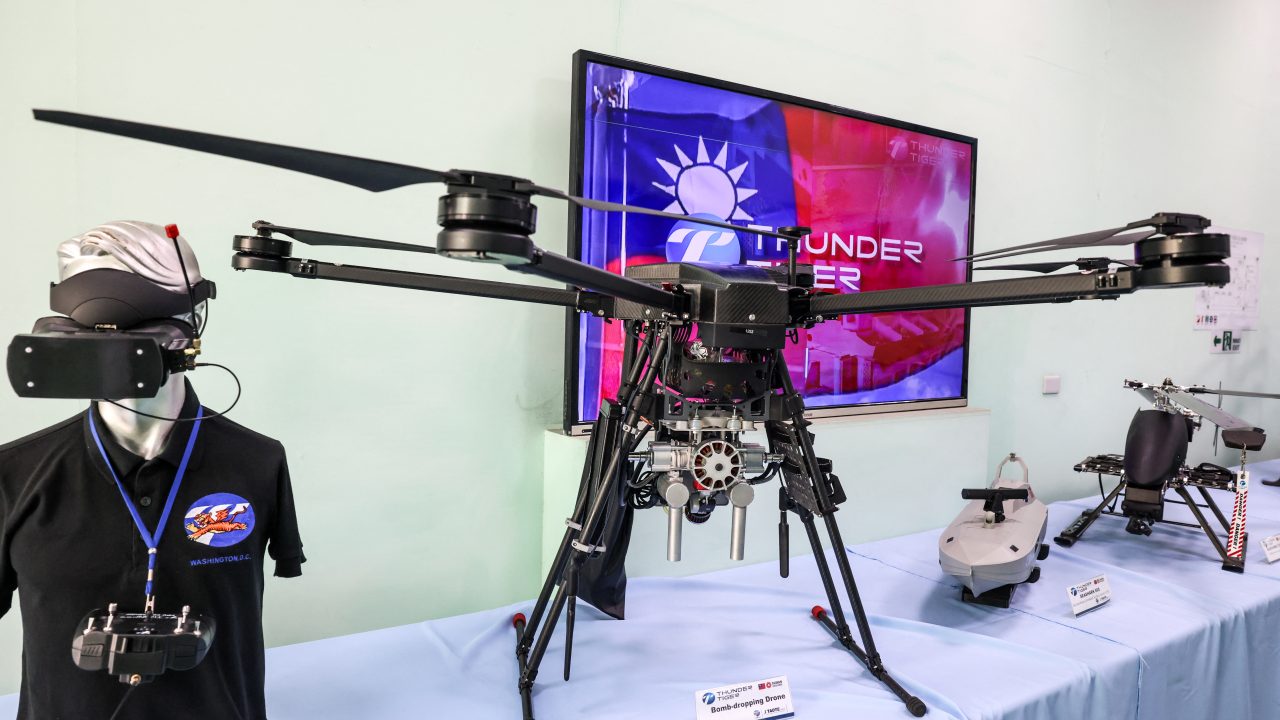
When Taiwan’s opposition-led legislature passed a reduced version of the government’s special defense spending package last month, it omitted funding for the country’s domestic drone industry, which experts say would be essential for repelling a Chinese invasion.
Now, the question of how to structure government support for the drone industry has kicked off a new round of political fights in Taipei.
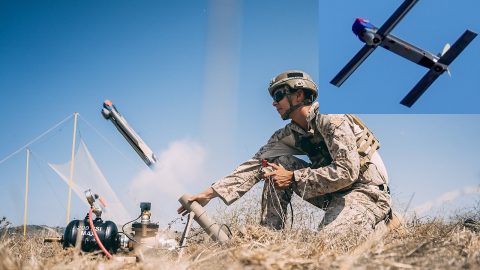
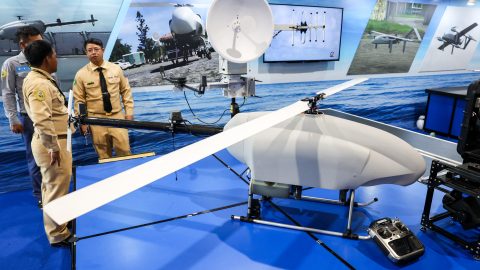
The ruling Democratic Progressive Party, or DPP, recently proposed a $6.5 billion (210 billion New Taiwan dollars) special funding package that would fund support for dronemakers both foreign and domestic. The proposal calls for the purchase of coastal surveillance drones, coastal attack drones and small suicide unmanned surface vehicles, or USVs, which Ukraine has used to great effect against the Russian navy in the Black Sea.
The DPP’s proposal would allow Taiwan’s defense ministry to make large orders to suppliers immediately, a move the government says would provide dronemakers with the stable, long-term financial support necessary to scale up their production lines.
Earlier this week, the opposition Chinese Nationalist Party, or KMT, proposed its own alternative, which would see the government allocate $7.5 billion over six years as part of its regular annual budget, with an annual cap of $1.3 billion. The KMT has long accused the DPP of using special budgets as a shield for corruption, which it says the yearly scrutiny of regular budgets can help prevent.
But the DPP was quick to criticize the opposition’s proposal, saying that it would leave dronemakers in a state of suspense, as they wait to see whether each year’s legislature would approve subsequent funding. The KMT’s proposal would force dronemakers to “live hand to mouth,” the DPP said in a Facebook post on Wednesday, citing input from industry organizations.
On Friday, Taiwan’s legislature voted in favor of sending the rival proposals to committee for further review.
Funding for Taiwan’s drone industry represents just one of three initiatives that the opposition cut out of the government’s proposal when it passed the $25 billion special defense package in May. The legislature also eliminated the government’s proposed funding for the integration of AI into Taiwan’s kill chain, or the process by which the military identifies and decides to strike enemy targets, as well as proposed funding for a comprehensive air defense system modeled after Israel’s Iron Dome.
Yuster Yu (于孝斌), a retired commander in Taiwan’s navy, said that in allocating all of its funding up front, the DPP would risk sacrificing the flexibility to adapt to the rapidly changing landscape of drone warfare.
Drone technology and the way they are used in operations changes quickly, Yu said. “If you passed a massive acquisition program with a large special budget based on the requirements and specs of yesterday, by the time they are delivered they would have been all outdated. What do you do next? Another special budget?”
The KMT proposal, which is expected to enter into legislative committee on Friday, does not specify which types of drones the government plans to procure. The party has placed a greater emphasis on the industry’s potential impact on Taiwan’s economy as a whole, while placing a series of requirements on the government’s drone procurements.
The KMT’s proposal would require the executive branch to notify the legislature any time it approved a procurement exceeding NTD 100 million. It also calls for drone production parks to be distributed throughout different geographic regions in Taiwan, a requirement that could make it more difficult for China to destroy Taiwan’s production lines in the case of conflict.
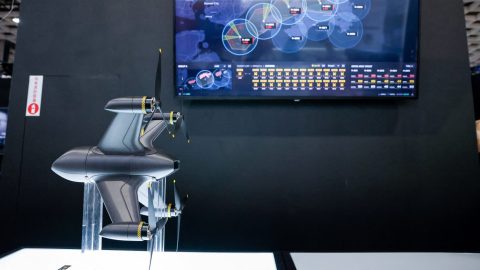
Taiwan’s domestic drone industry has been in the midst of a production boom, led by demand for products from firms like Thunder Tiger. But demand has been driven largely by customers in Poland and Czechia — convenient transfer points to the Ukrainian front lines — not Taiwan’s government. In the first quarter of 2026, Taiwanese firms exported more than 140,000 drones, compared with the only roughly 5,000 that Taiwan’s military currently has access to.
The KMT plan requires that after two years, more than 50% of the drones procured by the government must come from domestic producers, a number that would jump to 80% after four years.
The DPP has accused the KMT of using legislative oversight as an excuse for obstructing or delaying new military spending. That perspective is shared by many in Washington, who fear that the KMT’s reluctance to increase defense spending has been driven in part by a desire to achieve friendlier relations with Beijing.
“Taiwan’s legislature adjourned last week without passing the budget necessary for Taiwan to defend itself. Meantime, the leadership of the opposition party responsible for this, the KMT, is in Beijing meeting with the CCP and planning bigger engagements. It doesn’t take a genius to figure out what’s going on here,” Senator Dan Sullivan wrote on X in February, using an acronym for the Chinese Communist Party.
During KMT Chairwoman Cheng Li-wun’s (鄭麗文) trip to the U.S. last month, she was met with skepticism from lawmakers and other officials skeptical of her commitment to Taiwan’s defense. Many refused to meet with her, but Sullivan did.
“I had a good discussion with KMT Chair Cheng Li-wun today. I’m a strong advocate for the US-Taiwan relationship, regardless of politics in Taiwan. But, as I told her, we need KMT to join with the DPP to finish the defense budget,” Sullivan wrote on X.
In the fight over Taiwan’s previous defense budget, it took the KMT three months’ worth of stonewalling to propose its own alternative. With the increased U.S. pressure hanging over the current round of spending negotiations, that delay has been shortened to two weeks.


Leave a Reply