Semiconductors
U.S. President Donald Trump’s 20% reciprocal tariff on Taiwanese goods went into effect on August 7. Taiwan clarified that this rate is provisional and subject to a reduction pending further negotiations. While the terms of the deal are still unclear, this tariff rate does not apply to semiconductors, electronics and information and communication technology.
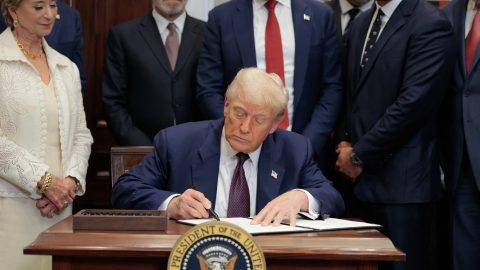
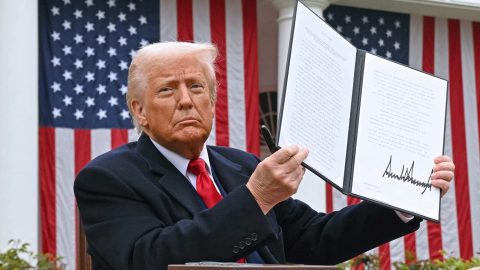
Trump announced separately that he plans to implement a 100% tariff on chip imports, following the results of an ongoing Section 232 investigation. But this has not yet materialized, and experts and officials think that TSMC might be exempt from this tariff anyway. Trump indicated that there would be “no charge” for chipmakers that are investing in the U.S., which TSMC is doing by the billions. Trump said on Thursday to expect an announcement on the semiconductor tariffs “very shortly.”
A researcher at the Taiwan Industry Economics Database told Taiwan’s CNA that these tariff-driven investments in the U.S. might lead to a decline in Taiwan’s chip-making capacity, as TSMC suppliers and other related firms shift attention toward replicating Taiwan’s semiconductor ecosystem in the U.S. Hon Hai Precision Industry, better known by its trade name Foxcoon, announced plans to set up technology parks in Mexico and the U.S. to facilitate investment and help Taiwanese companies bypass the 20% reciprocal tariff on Taiwanese goods. Some in Taiwan are worried that offshoring Taiwan’s chip manufacturing capabilities will weaken the “silicon shield” — the idea that Taiwan’s central role in the semiconductor supply chain protects it from Chinese aggression.
Nvidia CEO Jensen Huang arrived in Taipei on August 22 to, in his words, thank TSMC for finalizing design on six brand-new chips and deliver a speech. Analysts speculated that the purpose of this visit may also have been to communicate about how geopolitical pressures are impacting chip sales. On the same day, Reuters reported that Nvidia had asked Foxconn to suspend its production of the H20 AI chip. This is the chip that Trump approved for export to China in July, only for the Chinese government to caution its tech firms against purchasing it due to information security concerns.
Trump announced that the U.S. government will take a 10% equity stake in American chipmaker Intel, in exchange for releasing the remainder of the federal funding Intel was promised via the Biden-era CHIPS Act. Although the impact of this decision on TSMC’s entrenched dominance, if there is any impact at all, will not materialize for a while, the decision alters the landscape of semiconductor production and governance in the U.S. Tech analyst Ben Thompson thinks that this move is “the least bad option” for the U.S. given the strategic importance of semiconductors and the U.S.’s reliance on foreign chipmakers, the inability of startups to fill the gap and Intel’s desperate need to acquire capital and communicate long-term stability and reliability to potential customers.
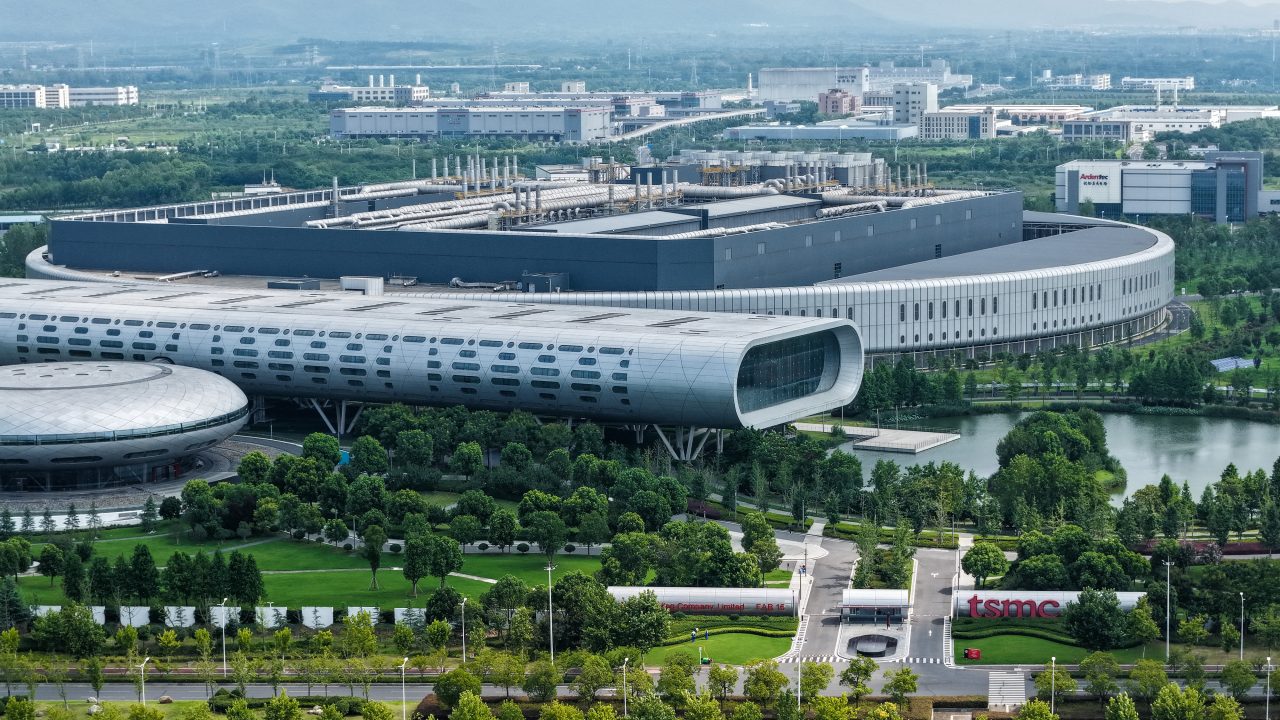
TSMC announced earlier this week that its authorization to freely ship advanced technology from the U.S. to China will be revoked by the end of the year. This decision may impact TSMC’s production of chips at its facility in Nanjing, which provides roughly 3% of TSMC’s overall production capacity. Competitors Samsung and SK Hynix, which are similarly impacted by this revocation, have more of their production based in China. SK Hynix produces 30% to 40% of its DRAM and NAND chips in China, while one third of Samsung’s NAND chips are produced in China.
Artificial Intelligence
Artificial Intelligence drove growth in Taiwanese exports in the month of July, according to figures published in August. Reuters reported that Taiwanese exports rose 15% year-on-year in July, the fastest pace in 15 years, due to strong demand for AI-related tech products and the looming threat of U.S. tariffs. For the first time ever, Foxconn’s revenue from sales of AI servers and other cloud products surpassed its revenue from smart consumer products like iPhones, marking a shift from its reliance on the smartphone market. TSMC reported its monthly sales in July to be the second highest ever, attributing the boom to the global demand for artificial intelligence.
Regulations and Investigations
Three people were detained and indicted for conspiring to help Tokyo Electron compete for TSMC supplier deals using trade secrets owned by TSMC, the first time Taiwan’s national security law was used to indict individuals for a case involving the theft of core technology.
Taiwan is investigating 16 Chinese companies for poaching semiconductor and other high tech talent from Taiwan. Investigators say these firms are operating in Taiwan illegally, either without regulatory approval, by using shell companies or by dispatching staff through local hiring agencies to conceal their identities.
Taiwan is also tightening supervision on government usage of technology that could endanger national security. Technology that is supplied by “enemy forces,” as defined by the National Security Act or Anti-Infilitration Act, is now prohibited from being downloaded, installed or used by government agencies.
International Cooperation
At the Japan-Taiwan Innovation Summit, Taiwan’s National Development Council called for deeper innovation ties and supply chain integration with Japan.
U.S. lawmakers introduced a bill to enhance defense tech cooperation with Taiwan, particularly in the realm of emerging technologies. The Financial Times reported that a representative from the Pentagon’s Defense Innovation Unit will be sent to Taiwan to facilitate bilateral cooperation on drones and other defense tech.
American defense tech company Anduril announced the opening of a Taiwan office and delivered its first tranche of Altius loitering munitions, a type of weaponized drone, the company said in a press release. During Anduril founder Palmer Luckey’s visit to Taipei in August, a group of students at National Taiwan University protested his alleged complicity in the Gaza genocide. Luckey was speaking at a talk titled “Deterrence, Technology & Defending Taiwan” sponsored by Academia Sinica and the National Science and Technology Council. “I think they may be confused,” Luckey said, “Anduril doesn’t actually sell anything to Israel.”

Leave a Reply