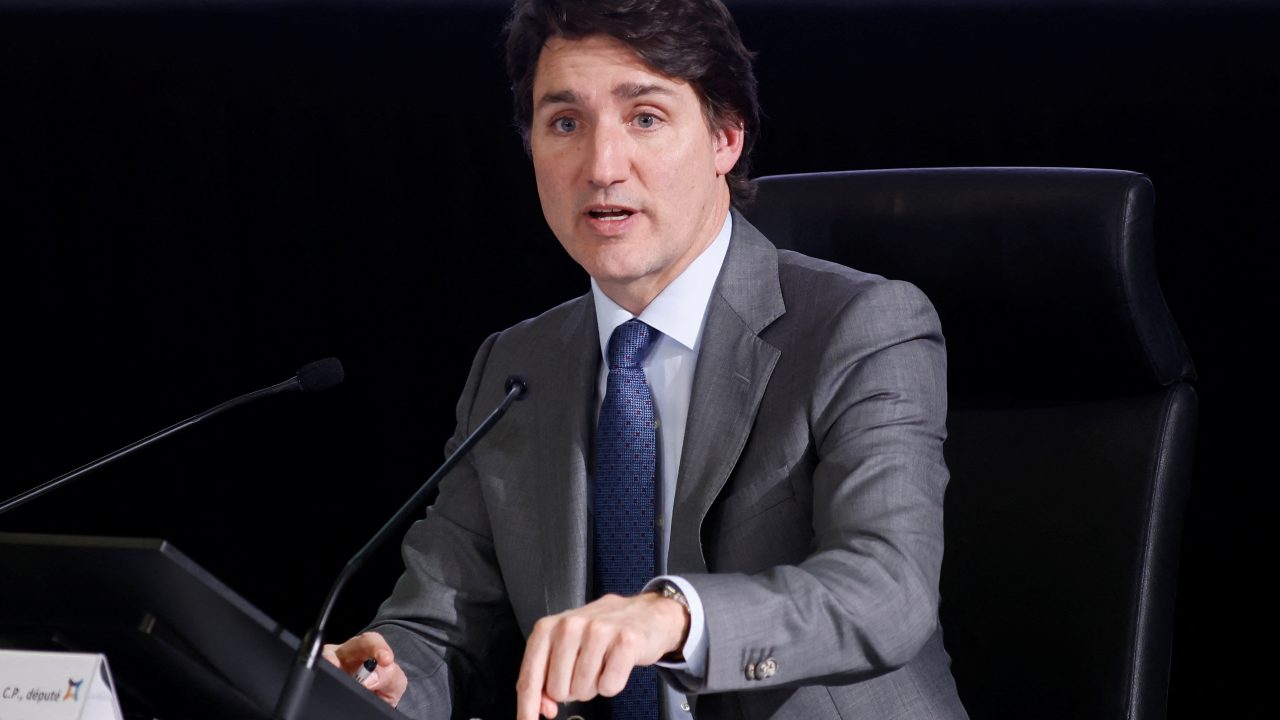
From March 27 to April 10, 2024, the Canadian government conducted the latest phase of its Foreign Interference Commission, which seeks to learn whether and how China, Russia and other states may have sought to influence Canadian federal elections in 2019 and 2021, the response to any such interference and the capacity to “detect, deter and counter” it for the future.
So far, the inquiry has determined that, while not the only country seeking to clandestinely sculpt Canada’s elected representation to its liking, China has been the most active. It has allegedly deployed misinformation to dissuade Chinese-speakers from voting for the Conservative Party; donated funds and non-monetary support to candidates who would either further its aims or at least not stand in the way of them; and even bussed high-school students in to vote for a politician named Han Dong (董晗鵬), who was looking to secure the nomination for a safe Liberal Party seat. These students may have been subject to coercive pressure.
Whether these measures were successful or not is a matter of conjecture. Canada Prime Minister Justin Trudeau does not think so. He claims that is “very improbable” that the Chinese government had a bias for one party or another and seems to consider the whole topic to be much ado about nothing.
This totally — and perhaps willfully — misunderstands Beijing’s tactics. As reported by The Globe and Mail on the basis of classified documents last year, China’s actual intention was to deliver a minority government in Canada, while sieving specific candidates who might be detrimental to its goals out from the parliament.
By these measures, it may not regard the 2019 and 2021 election outcomes as a failure, and it is worth taking note of its strategy. In the absence of a party it can always guarantee to take its side, it wants to pit governments against their legislatures to ensure that any policy that would be strongly unfavorable to Beijing gets dragged into inter-party warfare. For the long term, it is meanwhile whittling parties on the inside by boosting politicians it likes and targeting individuals it wants out of the game.
China has another reason for preferring minority governments, too: They make democracy look impotent, such as seen in the U.S., where topics like Biden support for Ukraine meets impasse in Congress as they get tangled with other issues. Not only does endless wrangling make English-language propaganda about the systematic virtues of single-party rule seem more convincing, but it also leads international allies to question whether they have picked the right side by choosing democratic partners over Beijing.
From this perspective, China is very probably licking its lips at recent election results in other parts of the world. Taiwan may not have selected Chinese Communist Party Chairman Xi Jinping’s favorite candidate to be its president, but it did the next best thing by denying his most hated one a legislature majority. South Korea, meanwhile, may have a U.S.-leaning president, but this month’s electoral obliteration of his party is going to limit what he can do with the remains of his tenure.
Under the noses of both Seoul and Taipei, China was working hard to manipulate both elections, and, again, it may be patting itself on the back for a job well enough done. Yet it would do well not to congratulate itself too heartily, for a closer look under the hood of its target electorates paints a rather different picture, particularly where the public is strongly aware of its hostile intentions and behaviors.
For example, Beijing might be pulling out all the stops to learn what divides Americans on the run up to the Trump-Biden showdown later this year and seems to wish to put the U.S. public at one another’s throats, as that, too, can make democracy look unworkable. However, perhaps as a result of this kind of interference, one of the only things that America can agree about these days is the undesirability of the Chinese Communist Party gaining even more power. Far from creating a quagmire in which legislation against its interests cannot pass, Beijing is therefore in danger of generating an entire electioneering culture of “anti-China” promises, some of which will have to be fulfilled.
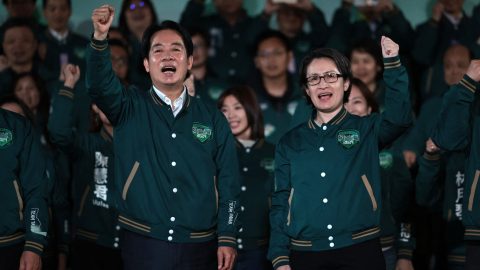
Taiwan makes a similar point in a different way. While Lai Ching-te (賴清德), its sovereignty prioritizing president-elect, will indeed be pegged back by an antagonistic assembly where his party is outnumbered, the main opposition was only able to achieve this power by distancing itself from the Chinese Communist Party in the first place. And, while elements of the opposition, like former president Ma Ying-jeou (馬英九), certainly conform to China’s line, they only do so at risk of alienating the citizens on whose vote they depend. In other words, the public might presently be divided in terms of the parties it supports, but it is increasingly unified when it comes to rejecting Beijing rule.
On the other side of the Pacific, Canada could well witness a similar hardening now, and herein lies the fatal flaw in China’s minority government blueprint when it gets caught putting it into action. The plan works as long as there is no consensus, but falls apart when the electorate is on the same page, which tends to happen when people sense self-interested, dictatorial manipulation from the outside.
And, even though opinion may be split on a whole host of issues, one notion will certainly resonate across party lines: Parliaments in Ottawa and elsewhere should represent the will of their people, not that of Xi Jinping.





Leave a Reply