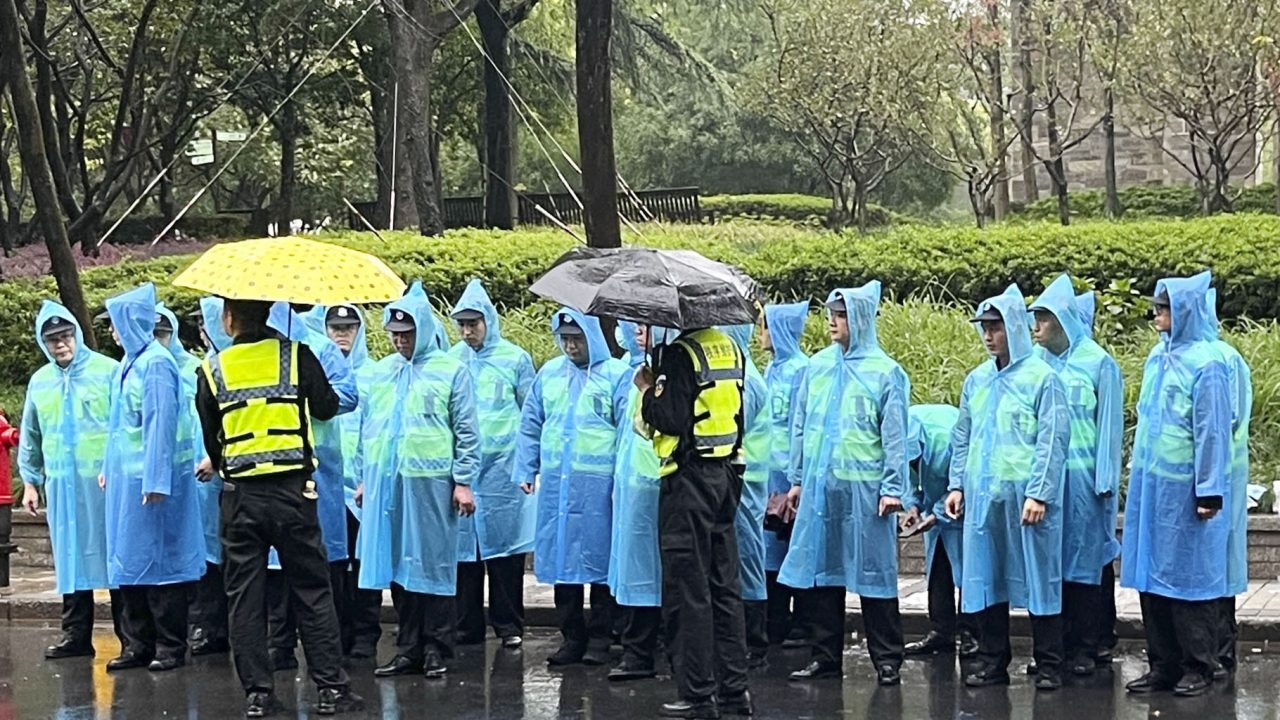
Shanghai Halloween Crackdown
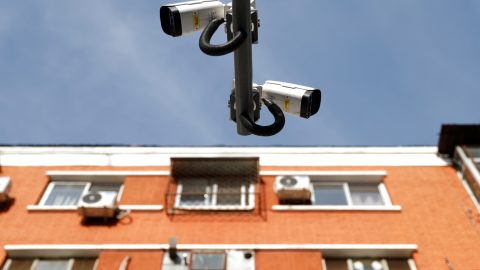
Young people wearing costumes were briefly detained and moved on by police in Shanghai during the weekend prior to Halloween. They were required to give their names, plus ID and phone numbers before being released. Although those rounded up appeared to be wearing non-political outfits, reports have suggested the reasoning behind a general ban on costumes is the proliferation of political costumes in recent years. Last year, costumes of surveillance cameras, banned Weibo posts and COVID-19 testers were seen on the streets.
Pun Crackdown
“Irregular and uncivilized” language online, including puns, is being cracked down on by the Cyberspace Administration of China. Although China’s state-run People’s Daily newspaper said the language left people “confused,” it’s likely this reflects the fact that puns and wordplay are often used to covertly criticize the government.
U.N. Statement
At a meeting of the U.N.’s General Assembly last month, Australia’s ambassador, James Larsen, delivered a joint statement from 15 countries, including the U.S., New Zealand, Japan and the U.K., calling for China to address U.N. findings that there have been serious human rights violations in Xinjiang.
“We urge China to uphold the international human rights obligations that it has voluntarily assumed, and to fully implement all U.N. recommendations including from the Office of the High Commissioner for Human Rights’ assessment, Treaty Bodies and other United Nations human rights mechanisms. This includes releasing all individuals arbitrarily detained in both Xinjiang and Tibet, and urgently clarifying the fate and whereabouts of missing family members,” the statement said.
Human Rights as Foreign Interference
During the same U.N. assembly, China’s U.N. Ambassador Fu Cong (傅聪) said Western countries were using human rights to “escalate and spread conflicts.”
“For developing countries, human rights are practical and feasible when they are in line with their own national conditions. Political manipulation and double standards are the biggest ‘tumor’ in the international human rights cause, and we firmly oppose the hegemonic acts of a few Western countries that instrumentalize and weaponize human rights,” he added.
Hungarian Activists Protest Against Battery Factories
Activists in Hungary are protesting against the construction of a large EV battery factory from Chinese company Contemporary Amperex Technology Co. (CATL, 寧德時代). In the town of Mikepercs, 250 kilometers east of Budapest, residents have expressed concerns about “pollution and environmental consequences” from the building of a new battery factory. Hungary received around 44 percent of all Chinese foreign direct investment into Europe last year and has pushed against EU regulations monitoring supply chains for human rights and environmental infringements.
Rights Lawyer Imprisoned
Last week, human rights lawyer Yu Wensheng (餘文生) was sentenced to three years in prison and his wife, Xu Yan (許艷), was sentenced to one. The sentences are for accepting an invitation to meet with European Union Ambassador to China Jorge Toledo and another European diplomat. The conviction was for inciting subversion of state power. Yu has previously spent four years in prison for defending other rights activists and calling for constitutional reforms.
“These sentences demonstrate continuing efforts to silence those who speak out for human rights and the rule of law,” U.S. State Department spokesperson Matthew Miller said.
Hunger Strike
Human rights lawyer Xu Zhiyong (許志永) has been on hunger strike in prison since October 4, according to his family. Imprisoned in 2020 for attending a meeting of lawyers and activists to discuss civil society and current affairs, Xu’s strike is against what he says is inhumane treatment in prison, including a lack of contact with his family.
Bosnia Embassy Xinjiang Posts
China’s embassy in Bosnia has been presenting Xinjiang as a place of “extraordinary development” in the days after the World Uyghur Congress held a conference in a Sarajevo hotel. “The extraordinary development seen in the Xinjiang Uyghur Autonomous Region in northwest China speaks for itself and refutes Western allegations of so-called ‘forced labour’ and ‘human rights violations’ against the Muslim population,” China’s embassy said in one Facebook post.
Organizers and participants at the Uyghur conference told Reuters they had been pressured via email and social media not to go ahead with it.






Leave a Reply