It’s a familiar scene. A former politician from one of Taiwan’s democratic partners, but not diplomatic allies, stands on a podium in Taipei and says it’s time to “recognize Taiwan as a sovereign and independent country.”
Many leaders who make trips to Taiwan after they leave office speak far more freely and candidly about support for Taiwan. Some but not all take that extra step and say that their country should recognize Taiwan, like former U.S. secretary of state Mike Pompeo did in May 2024.
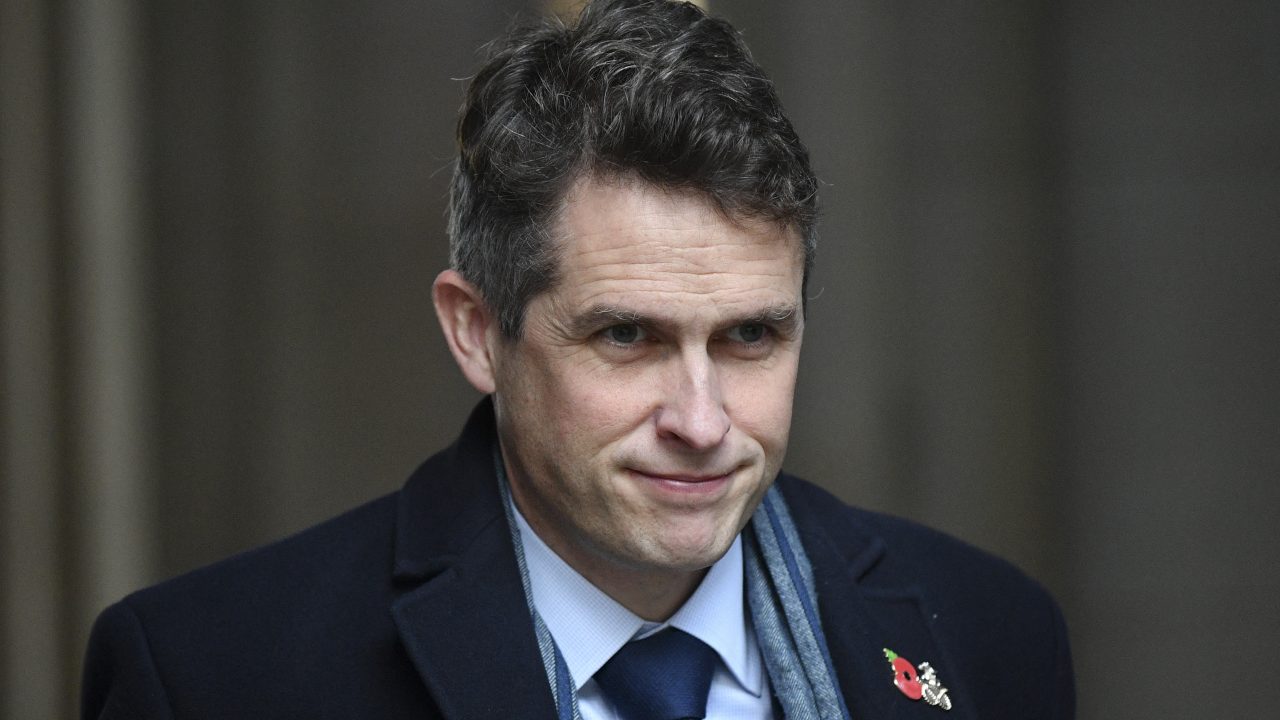
This week, former British minister Gavin Williamson addressed the foreign journalists club in Taipei and indeed said the U.K. should move closer to recognizing Taiwan.
“The reality is that Taiwan is a free, independent, democratic country in every single matter, but countries through timidity, choose not to properly recognize that, and I think that you can only continue to do that for so long. And I think that Britain should be bolder on these matters.”
Because most countries, including the U.K., have diplomatic ties with the People’s Republic of China, they are unable to recognize the Republic of China (Taiwan). This is because the People’s Republic of China will not establish ties with any country that also recognizes Taiwan, under what it calls the “One China” principle.
Many countries maintain something called a “One China” policy, typically laid down at the establishing of ties with the People’s Republic of China, where they recognize Beijing as the legitimate government of all of China. Although there are many different “One China” policies, establishing official diplomatic ties with Taiwan or even saying that Taiwan is a country are universally understood to be in breach of both the People’s Republic of China’s “One China” principle, and the various “One China” policies.
Former leaders are “no longer constrained by the rules associated with their previous positions, so they are able to talk more freely about Taiwan,” William Yang (楊皓暐), an analyst at Crisis Group, told Domino Theory in an email.
He suggested that if they still hold political office, this could also be the result of “careful political calculation, especially if they determine voicing more pro-Taiwan opinions align with their political base.”
Yang cautioned, however, that certain “pro-Taiwan opinions voiced by former foreign leaders or high-level officials [have] become a baggage for Taiwan’s international image,” and that Taiwan needs to “exercise a level of risk assessment before determining whether receiving a former foreign leader is in its interest or not.”
One such case, not directly referenced by Yang, was former U.K. prime minister Liz Truss’s 2023 visit. Truss was prime minister of the U.K. for a record 49 days, and her premiership is almost universally regarded as a catastrophic failure, after she famously failed to outlast a decaying lettuce.
When Truss came to Taiwan, then-President Tsai Ing-wen (蔡英文) rolled out the red carpet. However, The Independent later reported Truss was paid more than $120,000 to visit Taiwan, mostly by the Prospect Foundation, a government-affiliated think tank.
Truss’s visit raised Taiwan’s profile in the U.K., “but not necessarily in the way [the Taiwanese] would have liked,” according to Max Dixon, a Ph.D. candidate at the University of Portsmouth who is researching the U.K.’s foreign policy towards Taiwan.
He said via email that it “drew traction in the U.K. but was mostly framed as a desperate cling for relevance by a dead rubber prime minister,” framing Taiwan as the “preserve of right-wing politicians closely aligned with the Trumpian right.” Dixon suggested that “not all publicity is good publicity.”
Veteran Taiwanese political analyst Wen-Ti Sung (宋文笛) disagrees. “Whatever increases Taiwan’s visibility and presence on the international agenda is likely a net positive,” he told Domino Theory in a written statement.
Asked why some leaders become more pro-Taiwan when they leave office, Sung said it can give an “opportunity to present themselves as tough against authoritarianism without directly rubbing in Beijing’s face.”
At the event in Taipei this week, Williamson was pressed on why he hadn’t been more vocal about Taiwan when he was U.K. defense minister. He said he “tried to do [his] bit for Taiwan through freedom of navigation [and] pushing against Huawei,” referring to the Chinese company whose technology is being removed from the U.K.’s 5G network. But he pointed out that in the U.K., cabinet ministers have “collective responsibility” and can’t criticize government policy.
Williamson said that Taiwan, “an incredibly polite and courteous country,” itself should be “more gently assertive” in pushing its allies for steps towards recognition. He said that the way to get there, against “pushback” from other parts of the British government and “an enormous fuss” from Beijing, would be by coordinating with other countries and by going step by step, to try to taper the reaction from China.
“Britain actually has actually played a very positive role in terms of actually moving many countries to full recognition of Kosovo, even though it’s not a United Nations member,” he said, although he acknowledged it is less of a “political hot potato.”
Matej Simalcik, the executive director of the Central European Institute of Asian Studies, was in the audience listening to Williamson’s remarks. He was in cautious agreement with Williamson when Domino Theory reached out to him by email after the event: “Even when governments are inclined to pursuing relations with Taiwan, they must navigate a very thin line between improving ties with Taipei, while simultaneously making sure they don’t draw too much ire from Beijing that they would not be able to withstand.”
He didn’t mind that politicians speak more candidly after they leave office. “It can be actually helpful to have vocally pro-Taiwan voices among opposition figures, even if they were more muted while in government. They can serve as necessary watchdogs over governments’ attempts to navigate that line between Taipei and Beijing, as well as making sure that Taiwan is kept in the public discourse.”
Williamson is still a member of the U.K. parliament. He has a history of being vocal in support of Somaliland, a self-declated breakaway republic from Somalia with even less international recognition than Taiwan, including formal recognition from the U.K.
It will be interesting to see if he starts speaking up more for Taiwan when he gets home.
Corrections:
“[Wen-ti Sung] told Domino Theory in a written statement” was edited to remove the name of the platform used, at Sung’s request.
In the sentence “[Matej Simalcik] didn’t mind that politicians speak more candidly, or even change their positions, after they leave office,” “or even change their positions” was removed, at Simalcik’s request. It was a mischaracterization of his wider remarks.




Leave a Reply