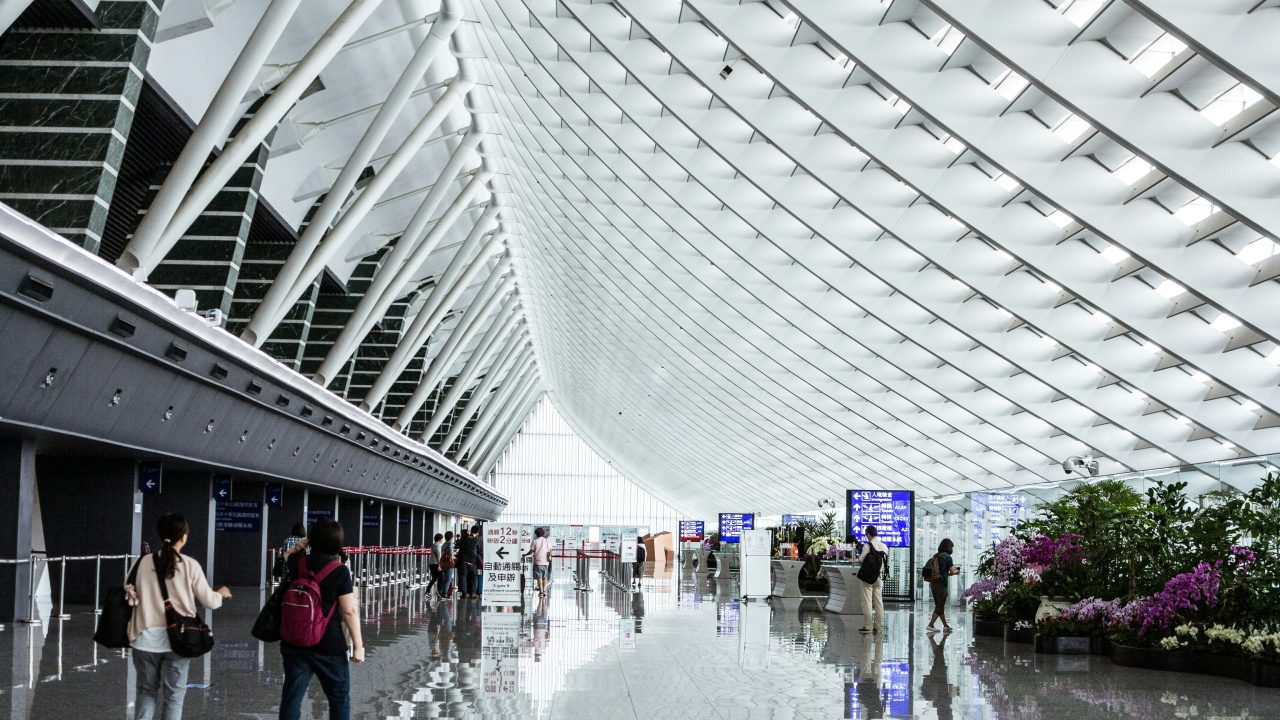
Last year, Taiwan’s Taiwan’s All-Out Defense Mobilization Agency (國防部全民防衛動員署) released Taiwan’s National Defense Handbook, a guide to surviving various kinds of emergency situations, including a hypothetical conflict scenario with China. After criticism about a lack of depth, an extended update was published in July of this year, moving the page count up from 28 to 48 pages and adding details such as how to identify enemy combatants.
However, both documents were aimed primarily at the local population of Taiwan, rather than the more than 851,000 foreign residents its Ministry of the Interior National Immigration Agency says currently live here. That gap in the market has now seen Canadian author John Groot release a free e-book containing civil defense information for members of the expatriate community in Taiwan.
Titled “Resilience Roadmap: An Emergency Preparedness Guide for Expats in Taiwan,” the guide addresses how to prepare for a possible Chinese military attack on Taiwan, as well as other emergency situations that affect the island — typhoons, earthquakes and fires. It takes readers through the process of designing their own “group emergency plan” for all of these eventualities — including advice on creating go-bags, identifying and designating key locations, maintaining emergency communications, and integrating these into a group emergency plan. It also provides advice on evacuation, supplying safe locations with adequate survival resources and maintaining health and hygiene after a disaster.
Predictably the advice focused on what to do in a war scenario has caught most media attention thus far. That begins with an explanation of the U.S. State Department advisory system, which the guide suggests would be the best indicator of the likelihood of near-term military action and is measured against the availability of outbound flights.
Within the U.S. scale, the guide says change from Level 1 to Level 2 or 3 would constitute a first warning, after which, among other things, “Flight tickets out of the country would become scarcer and more expensive.” A move to Level 4, which the guide points out could also happen without any previous warning, would constitute a last warning. At this point, “Expect a huge spike in demand for seats on commercial flights out of the country, not only by expats, but by tens of thousands of Taiwanese wanting to get out of harm’s way,” it says. “It would suddenly become incredibly hard to book a flight, and there might even be cancellations as carriers abandoned their Taiwan routes.” Beyond that, the guide says a final deadline stage would be when combat was “imminent” and no commercial flights would take place.
Broadly the advice on dealing with a conflict scenario divides into two categories: What people should do if they are leaving, and what they should do if they are staying. On the former, there is advice about how to book flight tickets. On the latter, there are granular details down to the level of what to do if someone, as a civilian, makes contact with an enemy combatant (“If contact happens, appear weak, confused and harmless.”) and recommendations about what kind of support foreigners could offer Taiwan.
For various reasons, the guide says it would be difficult for expats to fight for Taiwan in a military capacity, but helping care for others as a part of a civil defense operation is suggested as a more realistic method of contribution. As is journalism that can be shared with the outside world. “Expats who stayed in Taiwan if there was a war would have to show solidarity with the local community. It would be up to us to go along with and support what the local society here was doing,” author Groot says by email.
Groot says he started to think that some kind of cross-strait military crisis in the mid-term future was becoming more likely after Russia’s invasion of Ukraine. “That was also when a lot of people in Taiwan became focused on this issue. Open Knowledge Taiwan [a platform that advocates for the free sharing of information, which has hosted civil defense sessions for members of the public in Taiwan] was one group in particular holding informative meetings on this, and when I started meeting people at their events, the idea of a guidebook came up and I just ran with it.” As well as being involved in civil defense community in Taiwan, Groot told Taiwan’s Central News Agency he based the book on “Israeli and Swedish civil defense structures, a similar publication by the United States Federal Emergency Management Agency, and input by military experts.”
Asked about how many people he thinks are likely to follow up with the kind of contingency planning the guide outlines, and his ideal end goal for the guide, Groot says “I think people with families are the most likely to do some sort of emergency plan based on the guide. People tend to be very proactive about their kids’ safety. And I’ll be updating the guide and I hope that it becomes the ‘go to’ for emergency planning for expats in Taiwan.”
The guide has received the endorsement of civil defense activist T.H. Schee, who works with Open Knowledge Taiwan. Writing on X, he called it a “seminal work.” By email, Schee adds that the new guide is “way more practical” than the government-produced National Defense Handbook, and this means it’s actually useful for locals as well as expats. He contrasts the density of this guide with attempts to “inflate” the All-Out Defense Mobilization Agency handbook with “cute infographics” and points out it goes into much more detail on armed conflict. He also notes that the new guide is written with advice from experts “who you can reach out and name,” whereas in All-Out Defense Mobilization Agency’s effort “you can barely name who’s whole behind the curtain.”
With all that said, the new guide does remain a “prototype” which Groot intends to improve based on feedback. One area of interest could be that various forms of preparation contained within the guide require time and finances that some may not have easy access to. Asked whether this is simply a cold hard reality, Groot acknowledges “It is possible that some of the hundreds of thousands of Southeast Asian laborers and domestics might not have the money — or the freedom — to flee the country if there was a military crisis.” However, he adds that “I think your average ESL [English as a second language] teacher wouldn’t have any trouble paying for a plane ticket to Thailand, even if the price was jacked up.”
The full text of the guide is available here.
Edit: An additional clarification was added to the work Open Knowledge Taiwan does.




Leave a Reply