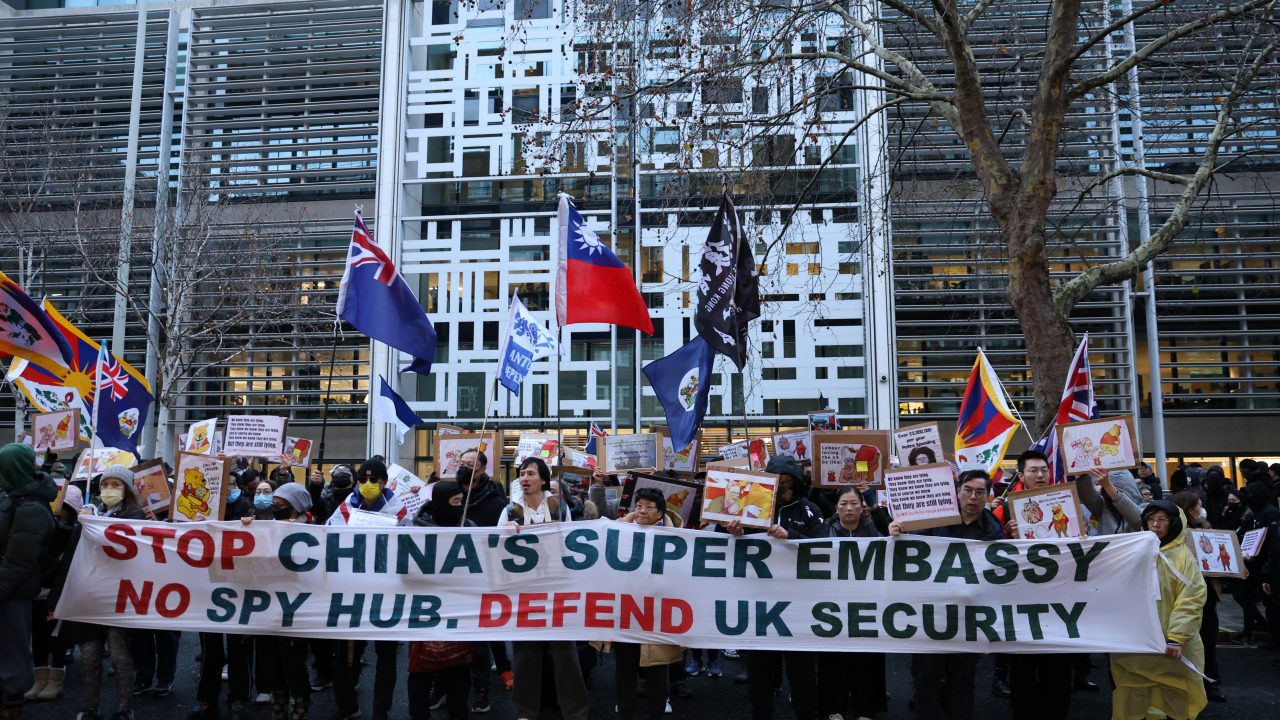
After months of delay, British Prime Minister Keir Starmer is set to finally make a decision on whether to greenlight a new Chinese Embassy at the old Royal Mint site next week.
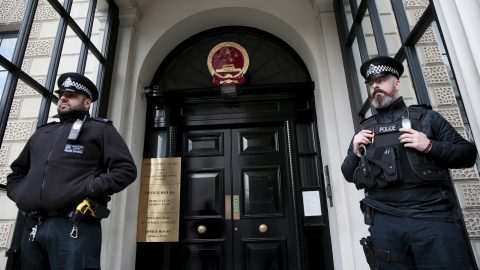
Measuring more than 610,000 square feet, the “mega embassy” would be the largest diplomatic outpost in Europe — 10 times larger than Beijing’s current embassy at Portland Place. The sheer size of the embassy has led to concerns about how it could allow a “spy ring” to operate under diplomatic cover. The tabloid press has referred to mysteriously grayed out areas on China’s building plans as potential “spy dungeons.” The Telegraph recently released unredacted versions of the building plans, which show that China intends to demolish and rebuild a basement wall that abuts fiber optic cables serving London’s financial districts in Canary Wharf and the City.
What is perhaps undercovered in this discussion is how an embassy on the Royal Mint site could facilitate subtler forms of Chinese Communist Party infiltration and influence. Take “united front” work, the CCP’s proclaimed “magic weapon,” for example. Rather than being traditional, cloak and dagger espionage, united front work is a system of deceptive influence. It is officially coordinated through the United Front Work Department, but as Chinese leader Xi Jinping (習近平) himself has explained, it cuts across more CCP organs than any other political function. In a nutshell, united front work abroad seeks to build relationships in order to align individuals and groups outside of China with Beijing’s interests. These efforts extend beyond state bodies to quasi-civil society organizations that appear to be civilian-led but ultimately serve Beijing.
Chinese embassies are an important facilitator of united front work. Before China’s consulate in Houston was shuttered in 2020, it was a hub for Chinese “science and technology diplomats,” whose role was to surveil technologies of interest and broker their acquisition. “They coordinate with overseas scientists, professional associations, diaspora guilds, and elements of the United Front Work Department in the countries where they are stationed, to identify opportunities where Chinese firms can grow relationships and invest,” according to a report by the Center for Security and Emerging Technology. The center identified the U.K. as another target for this type of technology transfer.
“The truth of the matter is this is a national effort to reach deep inside the United Kingdom and understand precisely what’s going on and steal intellectual capital. So ideas, innovation, creativity, intellectual property, all the things that are really valuable to the United Kingdom,” said former U.S. CIA director Mike Pompeo of the proposed embassy in an interview with Ross Kempsell, who runs the right-wing political news website Guido Fawkes.
Embassies also contribute to united front efforts to influence overseas Chinese communities. Sometimes this looks like fostering closer ties with diaspora communities in order to extend Beijing’s political influence across the world — for example, by mobilizing these communities around pro-Beijing issues or cultivating young political talent.
Other times, the united front coordinates transnational repression against the Tibetan, Uighur and Hong Kong diasporas. When Xi visited San Francisco to attend the APEC summit in 2024, The Washington Post reported, Chinese diaspora groups worked in concert with embassy officials in order to silence anti-Beijing protestors and stage counter protests, providing free housing to pro-China diaspora groups as an incentive. Chinese diplomats also hired 60 security guards to protect diaspora groups gathered to welcome Xi. In London, members of the diaspora have voiced concerns about how the new embassy could bolster China’s surveillance and intimidation of dissidents.
Chinese embassies also play a role in united front work that aims to exert pro-Beijing influence in other political systems. The most salient example for the U.K. is the case of Christine Lee, a British lawyer who was identified by MI5 as an “agent of influence” in January 2022. While British intelligence lacked evidence to convict Lee of any crime, she was accused of “knowingly engaged in political interference activities” on behalf of Beijing.
Lee was a close friend of and a donor for Labour MP Barry Gardiner, who was a major advocate for Chinese involvement in the Hinkley Point nuclear reactor project. “Lee’s friendship with Gardiner had been crucial in smoothing her path into Westminster, where her contacts eventually spread across the political spectrum and to the highest levels,” the BBC reported. She was a part of what U.K. officials called a “seeding operation,” which sought to slowly cultivate influence over British politicians, even at the earliest stages of their political careers. While Lee’s role might have been deceptive, it was out in the open, with no cloak and dagger needed. She had established connections to united front groups like the China Overseas Friendship Association and was a legal advisor to the Chinese Embassy in London and the Overseas Chinese Affairs Office, which formally sits under the United Front Work Department and operates out of the embassy.
Whether or not the new embassy at the Royal Mint site is approved, the U.K. must anticipate its potential role in united front work. The scale of the Royal Mint site would provide more space for convening, a basic but central function of united front work and other influence activities. The centralization of the embassy’s activities in London in one big space — as opposed to being scattered across London — might also help with coordination between different offices, which is another key characteristic of united front work. It’s also possible that Starmer’s decision to approve the embassy is indicative of a friendlier approach to China that would manifest in the approval of additional diplomatic staff. Additional staff, even if they aren’t operating like traditional spies, could evidently contribute to various types of influence work.
Starmer is expected to make a decision by January 20.






Leave a Reply