With its abundant energy and financial resources, the Middle East has become a key battleground for artificial intelligence development, and a focal point in U.S.-China technological competition. Saudi Arabia, along with the United Arab Emirates, is leading the charge on AI in the region. The U.S. recently introduced a new model for technology cooperation with the Middle East through the development of the Microsoft-G42 deal in the UAE. But Trump’s foreign policy style could introduce added unpredictability for Saudi Arabia over the next four years, which may in turn affect the stability of several ambitious new projects that American technology companies have recently announced with the kingdom.
Saudi Arabia’s technological ambitions are rooted in a desire to diversify its economy away from oil. Launched by Crown Prince Mohammed bin Salman in 2016, Vision 2030 — Saudi Arabia’s plan for economic and social reform — has increasingly focused on digital transformation as a key driver of economic diversification, including smart cities, e-governance, AI and renewable energy. Saudi Arabia’s sovereign wealth fund, the Public Investment Fund, or PIF, is the primary funding vehicle for these projects.
Driving toward Vision 2030, Saudi Arabia seeks to capitalize on China’s high-tech prowess. A study by Carnegie found that technology and economic cooperation between Saudi Arabia and China has been deepening over the past seven years. Alibaba was the first hyperscaler (i.e., a massive cloud infrastructure company) to enter the Saudi market, developing smart cities and Arabic-based AI tools. Huawei shortly followed suit. Both deals include requirements that Chinese companies transfer technical expertise and train Saudi talent. Saudi investors are able to leverage access to their market in exchange for intellectual property transfer because: 1) Chinese tech companies are increasingly facing limited opportunities abroad due to U.S. pressure on its allies; and 2) Chinese companies, as compared to American ones, are more willing and able to transfer their expertise.
Yet, the U.S. holds the keys to the essential building blocks of AI: semiconductors. The U.S. is able to influence the international trade in semiconductors via export controls and the foreign direct product rule. For the past couple of years, U.S. technology policy toward Saudi Arabia and other Middle East countries has been delicate and somewhat inconsistent. In October 2023, the U.S. broadened chip export controls by adding Middle East countries to the list of restricted destinations. Then in September, the Bureau of Industry and Security expanded its Validated End User program, which could potentially facilitate the export of chips to data centers in the Middle East. But rumors are also circulating that the Biden administration wants to implement caps on these exports.
The inconsistency in U.S. policy is emblematic of real-time calculations the U.S. is making about its strategy in the region. Trump and Biden share the goals of bolstering the U.S.’s technological supremacy and reducing China’s influence in the region. Both Biden and Trump have expressed worries about the impact that ignoring the Middle East would have on China’s influence in the region. In a 2022 trip to Saudi Arabia, Biden declared, “We will not walk away and leave a vacuum to be filled by China, Russia or Iran.” And in a July interview with Bloomberg Businessweek, Trump accused the Biden administration of not doing enough to assert U.S. leadership in the Middle East, to the effect of pushing Saudi Arabia toward China: “They’re not with us anymore, they’re with China. But they don’t want to be with China. They want to be with us.”
But the benefits of expanding the U.S.’s technological presence in Saudi Arabia, as well as the UAE, are balanced against a fear of inadvertently transferring restricted technology to China. As Commerce Secretary Gina Raimondo put it in April, “When it comes to emerging technology, you cannot be both in China’s camp and our camp.” This fear has led to unprecedented commercial deals in the Middle East that hinge on government-mandated “strings attached.” Following strong disapproval from the House China Select Committee about Microsoft’s deal with G42 to pursue AI collaboration in the UAE, Microsoft indicated that it would be scaling back the G42 deal, leasing instead of transferring key technologies. Despite the fact that the deal has been in progress for well over a year, the Bureau of Industry and Security just recently granted the license for this deal’s chip exports. The licence includes several restrictions to prevent Chinese personnel from accessing the technology.
American hyperscalers (e.g., Google and Microsoft) and chip designers (e.g., Nvidia) are themselves eager to invest in Saudi Arabia’s wealthy, energy rich market. Saudi Arabia’s Arabic-based chatbot, Allam, will be commercially rolled out next year on Microsoft and IBM platforms. The kingdom is also partnering with one of Nvidia’s rivals, Groq, to build the “world’s largest data center.” Another major development is Project Transcendence, a recently announced $100 billion AI hub that will be built by PIF and Google.
These projects are in their beginning stages. Given that commercial technology deals in the region are increasingly featuring U.S. government involvement, how will Trump’s second term affect the U.S.-Saudi technology cooperation? In short, it’s unclear.
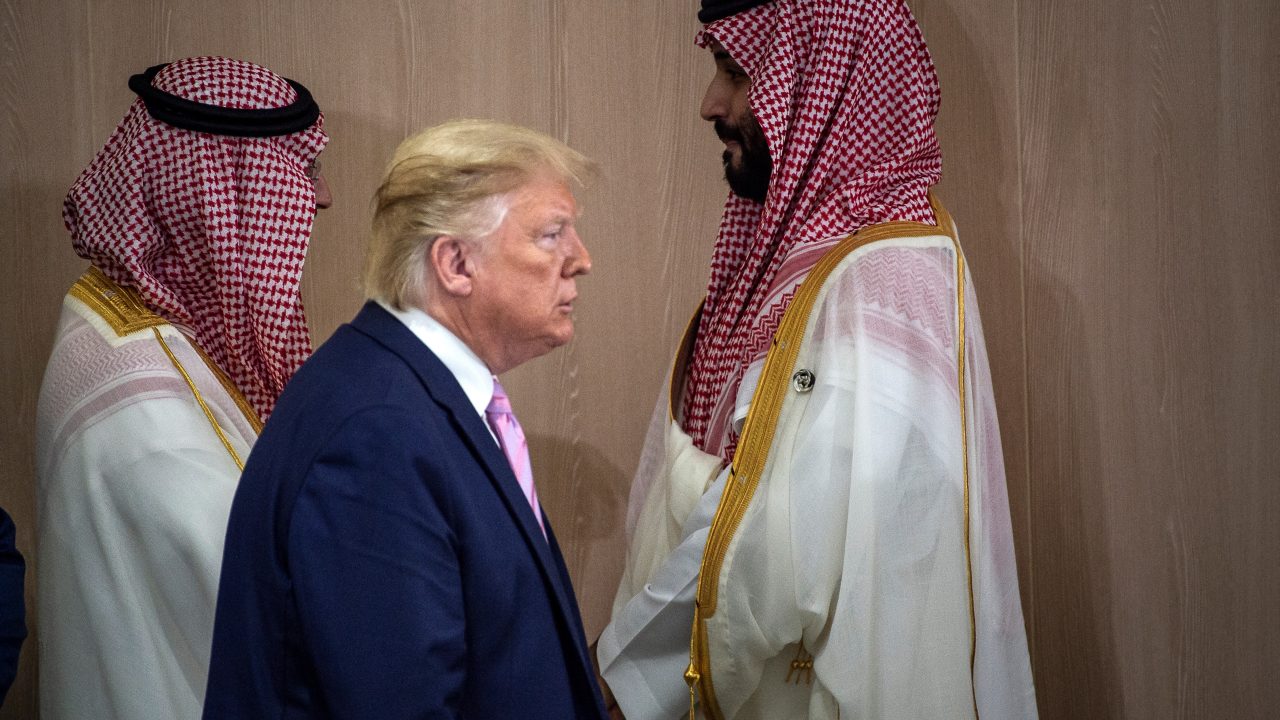
Trump has a uniquely cordial relationship with the crown prince, so much so that other Middle Eastern countries are reportedly looking to Saudi Arabia to manage the U.S.’s engagement in the region for the next four years. This could facilitate greater U.S.-Saudi cooperation on tech. Saudi Arabia was the first country Trump visited when he was president, and he has maintained a strong relationship with bin Salman since. During his campaign, Trump even went as far as to promise a security commitment to Saudi Arabia — something that the Biden administration has been working on but hasn’t yet been able to achieve due in large part to a stalemate over normalizing relations with Israel following the war in Gaza. “I’ll always protect them,” Trump told Bloomberg. Trump also has extensive business ties to the country, including with PIF, the sovereign wealth fund involved in Saudi Arabia’s major AI initiatives. PIF has invested $2 billion in Jared Kushner’s private equity firm. And just last month, Trump was spotted sitting next to the head of PIF at a UFC fight. This week, a new Trump Tower project in Riyadh was announced.
It’s also possible that Trump will try to take a hard line with Saudi Arabia by imploring them to totally extricate themselves from Chinese tech. Indeed, he has been criticized for having a zero-sum worldview. Some experts believe that pressuring Saudi Arabia and other Middle Eastern countries to make zero sum choices would be ineffective and could potentially backfire. According to one expert, the U.S. “will have to become comfortable operating in regions and sectors in which U.S. and Chinese influence overlap.”
But Trump’s foreign policy is ultimately difficult to predict because he has a penchant for ambiguity and unilateral “deal-making.” Additionally, entanglements in the Middle East might come in conflict with “America First” foreign policy, although it is unclear when this would be the case. And Trump is evidently eager to be involved with Saudi Arabia to some extent, expressing a desire to expand the Abraham Accords — a series of normalization agreements that the Trump administration facilitated between Israel and several Arab countries, which Saudi Arabia has not yet joined.
As the U.S. transitions to a Trump administration for a second time, we can only guess at what will come of U.S.-Saudi tech cooperation.


Leave a Reply