
The Middle East is the new strategic battleground for U.S.-China competition in artificial intelligence. Not only does the region have access to the energy required to power AI, but it also boasts high internet penetration rates and subsea fiber optic cables that carry 90% of Europe-Asia data traffic. Saudi Arabia and the United Arab Emirates also possess an abundance of capital and are eager to become leaders in AI. The U.S. sees this potential — and an opportunity to pull the region farther out of China’s orbit.
The Biden administration has proven itself adept at crafting a dense web of pragmatic and rhetorical tools for amplifying the U.S.’s presence in AI development in the Middle East, particularly the UAE — layering government-endorsed private sector deals, executive-level communications and export controls. But it is apparent, particularly from continuously shifting export controls, that the U.S. doesn’t yet know how and to what extent it should limit the flow of AI technology to the Middle East.
Private Sector Deals
It is through the private sector that the U.S. can tangibly reduce Chinese ties to the Middle East. For example, Microsoft’s $1.5 billion investment into the UAE’s top AI firm, G42, led the company to agree to divest from China and remove Chinese hardware from its infrastructure. The U.S. Commerce Department was heavily involved in this deal — some reportedly calling it Commerce Secretary Gina Raimondo’s “brainchild.” Indeed, the deal led to a first-of-its-kind intergovernmental assurance agreement created in consultation with the U.S. and UAE governments. The collaboration also includes the creation of a Microsoft cloud region in Kenya, which will compete with Chinese infrastructure provided by companies like Huawei.
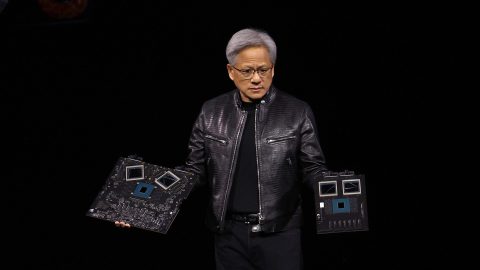
Some worry that this deal will cause controlled technology, primarily Nvidia’s advanced chips, to leak to China. But the involvement of Microsoft in the deal benefits U.S. national security interests in multiple ways. First, Microsoft knows how to be compliant. Second, Microsoft is a hyperscaler that provides cloud services, which means that it can provide AI to G42 without building physical infrastructure locally. In August, Microsoft was reportedly planning to scale the agreement back by leasing its AI products to G42 instead of transferring sensitive technology to the UAE, as it had originally intended to do.
Executive-Level Communication
High-level communications facilitate this kind of deal-making by signaling assurances to key players. Case in point, a memorandum on advancing the U.S.’s leadership in AI released last week references “the co-development and co-deployment of AI capabilities with select allies and partners,” presumably to reassure the world that partnering with the Middle East is a good idea for U.S. national security.
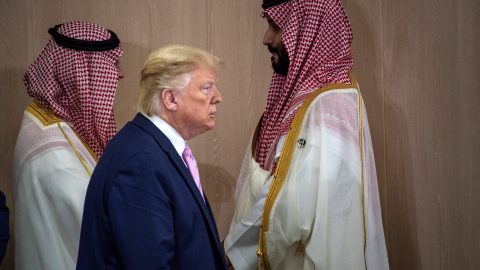
On September 23, the White House released a statement outlining joint principles for cooperation with the U.A.E. on AI, following U.A.E. President Sheikh Mohamed bin Zayed Al Nahyan’s visit to Washington. The statement is brief, outlining their intention to jointly promote the ethical development of AI and align regulatory frameworks. But it sends three important messages.
First, it signals to American and Emirati companies that the U.S. won’t be a fickle partner in AI development. Since the U.S. Commerce Department is a gatekeeper to advanced semiconductor chips, this statement might provide the private sector with some assurances that if they enter into a transnational agreement, they won’t have to deal with a drastic shift in export rules. Second, the statement signals to concerned parties — including in Congress and the Pentagon — that the U.S.’s national security interests will be respected.
Finally, the statement signals to the U.A.E. and other regional powers that the U.S. won’t enforce a zero-sum choice between itself and China. The principles outlined are vague enough to allow room for Chinese and American influence to overlap in the region. Perhaps the U.S. realizes that if its export controls are too restrictive, the Middle East might lean further into AI collaboration with China.
Export Controls
Despite the articulation of a high-level strategy, ever-evolving export controls on advanced semiconductor technology to the Middle East illustrate that the U.S.’s approach is still coming into focus. Since 2023, Saudi Arabia and the U.A.E. have been included in U.S. chip controls, which means that American companies are required to obtain a license to sell advanced chips to any entity in these countries. In August 2023, Nvidia confirmed that the U.S. was restricting the export of some of its most advanced chips to “some Middle East countries.”
In September, Semafor reported that the U.S. had begun selling cutting-edge Nvidia chips to the U.A.E. earlier this year. Later that month, the Commerce Department published a new rule that allows data centers in the Middle East and elsewhere to apply for a Validated End User status, so that U.S. suppliers can ship to authorized data centers without having to apply for individual licenses. But sentiment seems to have shifted slightly again this month, as the Commerce Department might implement a cap on advanced Nvidia chip exports to Persian Gulf countries.
Although the U.S. might be clear on its intention to amplify its own technological influence in the Middle East while reducing China’s, it is evidently not certain on how to best mitigate the risks.





Leave a Reply