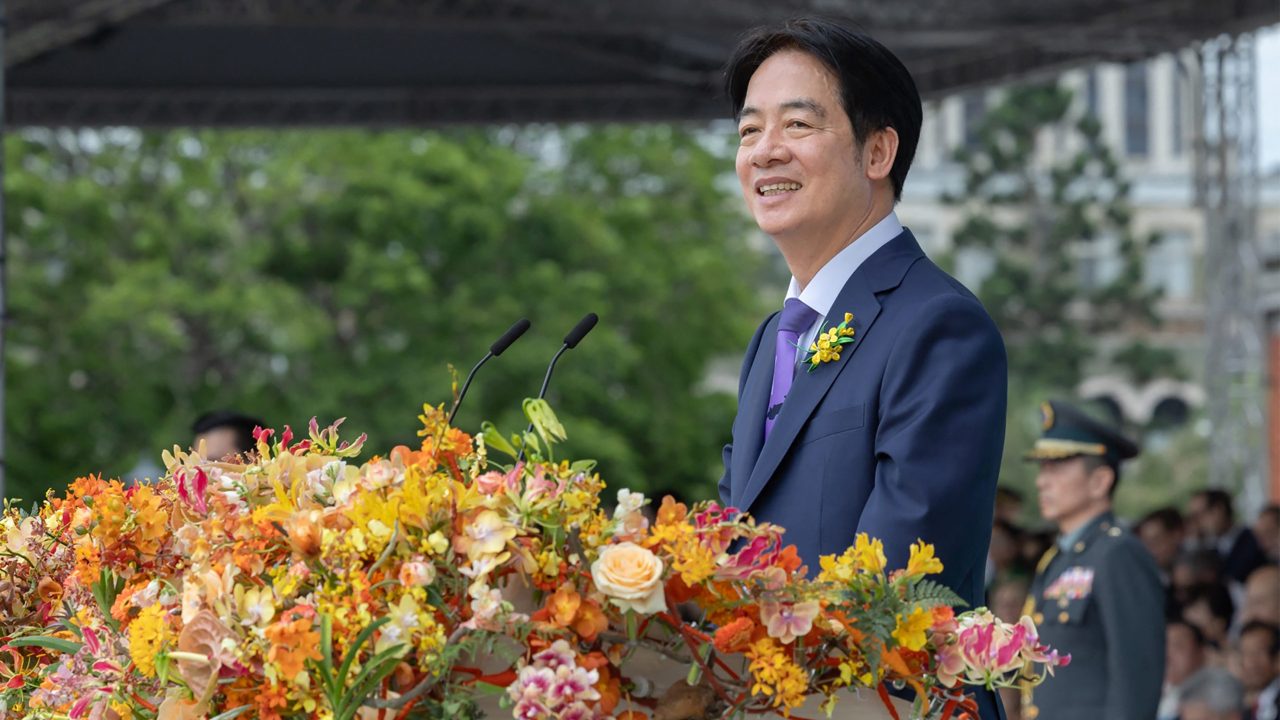
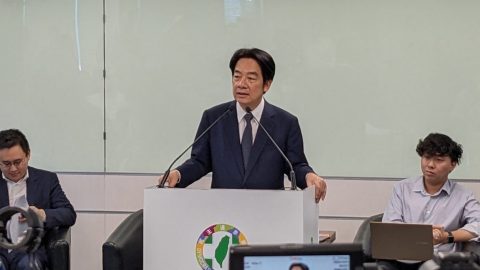
When Taiwanese President Lai Ching-te (賴清德) gave his inauguration speech on May 20th, many foreign listeners were hoping for clues about his international posture. Apart from on China, these were thin on the ground.
What’s more, something was completely absent: the New Southbound Policy. As former president Tsai Ing-wen’s (蔡英文) signature foreign policy program, this raised an interesting question: would Lai keep the initiative or would he abandon it for something of his own?
Two months into Lai’s presidency, we now have an answer. On Friday July 19, Taiwan’s Minister of Foreign Affairs Lin Chia-lung (林佳龍) told media: “The government is planning to launch a ‘New Southbound Fund’ modeled on state-backed funds in Central and Eastern Europe under the National Development Council,” according to a Nikkei Asia report.
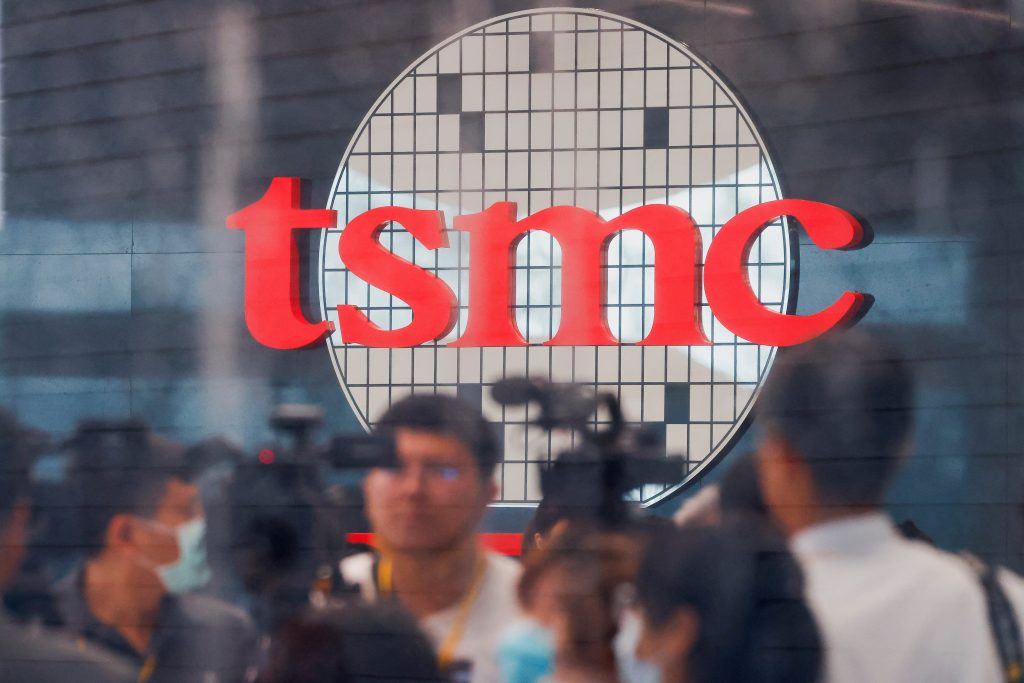
InfoTimes recently reported that Taiwan will set up three semiconductor industrial parks: in Japan, in the Czech Republic and in a New Southbound country, possibly Vietnam, the Philippines or Thailand. It would appear that Lai’s strategy will be to tie New Southbound countries into the wider international semiconductor web that Taiwan has started to weave, in response to other countries’ desire to decouple, derisk or “friendshore” their supply chains.
Foreign minister Lin told the media that the state-backed funds in Central and Eastern Europe have “played a very positive role in encouraging high-tech cooperation investment.” A note of caution should be offered here; while there have been successes, including recently, overall the success of these funds in encouraging Taiwanese companies to invest has been muted.

Tsai introduced the New Southbound Policy in 2016. While developments with the U.S. and Central and Eastern Europe came to overshadow it, it remained a key part of her international platform, and the annual Yushan Summit that supported it was always given full attention by Tsai and her administration.
The New Southbound Policy is a program to engage with countries in South East Asia, South Asia and Australasia. It followed the Go South policy of Lee Tung-hui (李登輝) that was also continued by his successors. The New Southbound Policy is distinguished from Go South in part because it extends to India and the subcontinent where the latter did not, but also because it places more of a focus on cultural and people to people ties. Josie-Marie Perkuhn, from the Center for Asia-Pacific Strategy and Security at Kiel University, put it like this: “the New Southbound Policy goes beyond economic pockets.”
Many have questioned the effectiveness of the New Southbound Policy, pointing out that it didn’t deliver large economic benefits. However, the experts I spoke to tended to take the view that economic results were less important than the people to people connections, and so judged it less harshly. Karl Lee Chee Leong (李志良), from the Institute of China Studies at the University of Malaya, noted that ties with Southeast Asian countries were also helped by Taiwanese companies relocating out of China due to the U.S.-China trade war.
There was widespread agreement amongst all I spoke to (before last Friday) that Lai would continue to pursue the New Southbound Policy. Sun Chi-pen (孫治本), the Director of the Preparatory Office at the Taiwan India Association, pointed out to me that China is more hostile to Lai than to Tsai, so Lai will need even better relations with other Asian countries.
At a Taiwan Foreign Correspondents Club event on July 18, former top Taiwanese trade negotiator John Deng (鄧振中) said that “many countries also hope and request Taiwan to … invest or help them establish their own industry.” Karl Lee already told me before Friday that semiconductor diplomacy would be more emphasized, but after Minister Lin’s announcement he said that the semiconductor industrial zone would be a “gamechanger” for whichever Southeast Asian country received it, with the upstream and downstream supply chain all integrated into one location.
Lee said that the Philippines might be a safer choice politically, but the existing supply chain is less robust, whereas Vietnam and Thailand do better in this regard. Thailand recently agreed a new bilateral investment agreement with Taiwan, which is a relatively rare win for Taipei.
One of my interviewees, Chen Ping-Kuei (陳秉逵) from the Department of Diplomacy at National Chengchi University, gave a fascinating contrarian view. He has argued that the New Southbound Policy is not about the targeted countries at all. Rather, it was intended to reassure the U.S. that the Tsai administration would pursue a moderate and undramatic foreign policy that wouldn’t alarm Washington, and wouldn’t damage U.S.-China ties. Chen didn’t say this to me, but I detect echoes of George W. Bush’s displeasure with former President Chen Shui-bian’s (陳水扁) attempts to push for more Taiwanese international space in American fears that Lai will be a “pragmatic worker for Taiwanese independence.”
Chen believes this is why the New Southbound Policy focused on people to people ties rather than asking countries to choose between Taiwan and China. To some extent, it is ironic that during Tsai’s second term those breakthroughs came anyway. Chen pointed out that obviously Taipei still wanted them, it just didn’t want to signal that it was seeking them.
In this light, Chen believes that Lai will still maintain the New Southbound Policy because he also wants to reassure the U.S. that he is a reliable foreign policy actor and that he is neither tilting to China nor jeopardizing the U.S.-China ties himself. In this vein Chen thinks Lai is also unlikely to propose any new flagship diplomatic policies.
Others agree. Josie-Marie Perkuhn from Kiel University thought that Lai’s administration will try to improve ties with Europe, especially with the possible election of Donald Trump, but she doubted that there will be a banner effort as Lai is likely to be focused on domestic issues in his first term. Sun Chi-pen of the Taiwan India Association said that Lai will look more to India but cautions that this will be difficult.
Since Lai’s election, important agreements between Taiwan and India have been reached. These include a Memorandum of Understanding between national governments to allow India migrant workers to work in Taiwan, and a cooperation between Taiwan’s Powerchip Semiconductor Manufacturing Corp and India’s Tata Electronics to build a new foundry in Gujarat.
Based on Friday’s announcement, Lai is recommitting to the New Southbound Policy but is taking it back to its Go South roots with a renewed focus on economics. In this he appears to be betting that Taiwan’s semiconductor industry lead over the rest of the world, now semi-protected by the U.S. restricting China’s access to advanced chipmaking technology, will be enough to overcome New Southbound Policy countries’ concerns that engaging with Taiwan will lead to Chinese ire.
All eyes will now turn to see which country will receive the investment and industrial park.




Leave a Reply