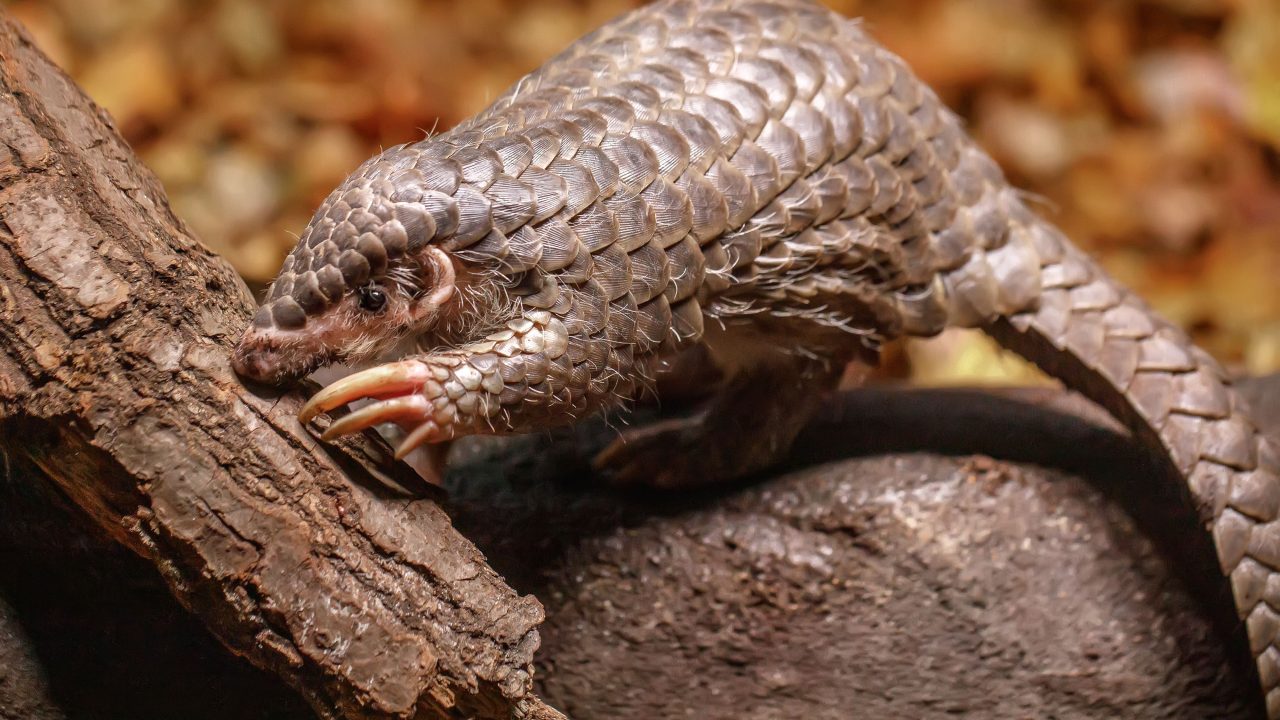
In April 2022, two animals left Taipei Zoo and began a long journey to Prague in the Czech Republic. There, an unexpected event would propel them to stardom. Their arrival was the culmination of arduous and painstaking work over three years, in the face of many obstacles. This is the story of Taiwan’s other unofficial ambassadors, the pangolins.
The cooperation between Prague and Taipei zoos does not begin with pangolins. Curator of Taiwanese Endemic Animals Flora Lo (羅諠憶) told me the Taipei Zoo joined EAZA, the European Association of Zoos and Aquaria, in 2018. That year, a Malayan tapir called Moko (貘克) was transferred from Prague to Taipei, where he fathered two calves before sadly dying in 2023. Even before this, Curator of Small Mammals Pavel Brandl says the Prague Zoo had considered the possibility of keeping pangolins for years. However, a key event in 2019 truly opened the door for this significant partnership.
Zdenek Hrib, the mayor of Prague, made a high-profile visit in March of that year, in what would become a city-level pivot from China to Taiwan. During his meeting with Ko Wen-je (柯文哲), the then-mayor of Taipei, Lo says the pangolin cooperation was agreed, although she qualifies it’s hard to know who actually initiated it because the idea had already existed for some time.
It’s impossible to escape the fact that, against the backdrop of the Czechia-Taiwan-China triangle, the transfer of the pangolins was both political and politicized. However, it should also be pointed out that once the initial meetings and agreement between the mayors had taken place, the project was led and completed by the zoos. David Steinke, representative of the Czech Economic and Cultural Office in Taipei, has a lot to say about pangolins, but he emphasizes that his office was not involved in the process at all, except that they knew Hrib had initiated it.
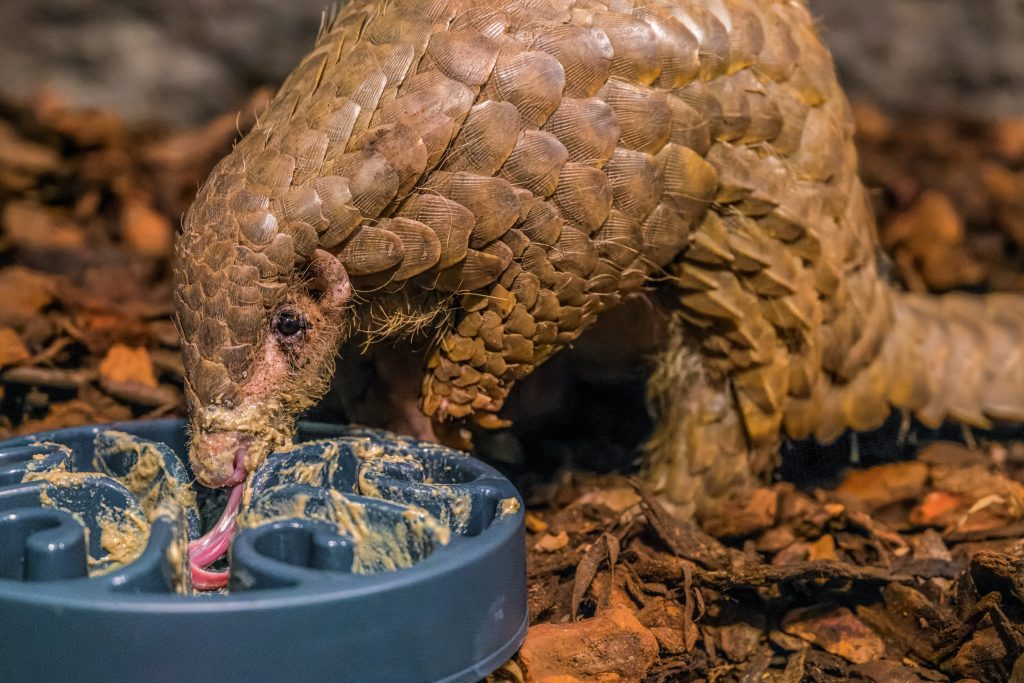
Both Lo and Brandl explained at great length the challenges of keeping pangolins in captivity, particularly outside their native range. Their natural diet is termites and ants, especially their larvae and eggs. It is illegal to collect these in Czechia because they are protected. In Taipei Zoo they usually eat a special artificial diet, whose exact formula is confidential. It would be impossible for Prague to perfectly replicate it, so the animals transferred would have to adapt to a similar local recipe. Other challenges included sourcing the ingredients. The Prague Zoo needs 100-120 kilograms of bee larvae a year and they can only be harvested in May and June. In addition to all this, pangolins are easily stressed and disease is also a major concern.
This meant it would take years to build up the expertise of Prague’s keepers before they were confident to receive the pangolins. This should have involved training in Taipei, but the disaster of COVID-19 befalling the globe in 2020 made this impossible. Instead, the knowledge transfer was carried out via email and video call. Lo says she practically became a YouTuber, recording countless clips of how to design the exhibits and how to keep the pangolins, as well as of Taipei’s individuals exhibiting all kinds of behaviors and explaining what each meant. Fortunately for Prague, there were already pangolins from Taipei at Leipzig Zoo in Germany, so keepers went there for practical experience.
There was another set of challenges as well. Pangolins are a CITES 1 endangered species. This means that the International Union for Conservation of Nature heavily regulates the movement of live animals, carcasses and animal products, especially across national borders. And there, of course, is the rub. The IUCN doesn’t recognize Taiwan. It can be found on their website as “Taiwan, Province of China,” but none of the 1,400 member organizations of the IUCN are Taiwanese. In comparison, 60 are Chinese, including the China Association of Traditional Chinese Medicine.
There are known workarounds for Taiwanese organizations to get the necessary permits, obviously. But they make things harder, and on top of this there are separate disease prevention protocols, airline and airport regulations, and then both Czechia and Taiwan have their own national processes. Lo gave the following example: To get an export permit from the Taiwanese government, you first need proof that you have already been awarded the relevant import permit. However, to get an import permit for the Czech Republic, they require evidence that you have the right export permit from the sending country! Kafka, one of Prague’s most famous sons, would be proud.

The two pangolins selected, male Bao (寶) and female Tang (糖), had to go through extensive preparation. They had to be quarantined before leaving, they needed to be trained to accept their specially designed traveling crates and they started to adapt to some new foods. The final cherry on the cake for this challenging time was that Lo broke her leg in the weeks before their departure and so was unable to go with them, adding further uncertainty into that most crucial period.
Fortunately for everyone, the trip itself in April 2022 went relatively smoothly. After they arrived, Tang adapted to the new diet easily, but Bao needed some time to accept it. According to Brandl, their new home in the Prague Zoo is the same pattern of exhibit they were used to in Taipei, especially their sleeping boxes and artificial burrows, but in Prague visitors can see and enjoy them in the darkness of a nocturnal exhibit, as opposed to their daylight enclosure at Taipei Zoo.
The great miracle of the project is that shortly after Tang and Bao were introduced to each other in Prague, Tang became pregnant and some months later a baby pangolin, Siska, was born. It took Taipei a long time to “crack” the secret to breeding pangolins, and this was the first time for a European zoo to achieve it. It’s to the Prague Zoo’s great credit that they were able to have success so quickly. Czech representative Steinke told me Siska means “pine cone” in Czech, evoking her scaly appearance. He also suggested that the experience of Tang and Bao is not unique — he has subsequently been told by some Taiwanese that one of their children was born nine months after a visit to the romantic Czech capital.
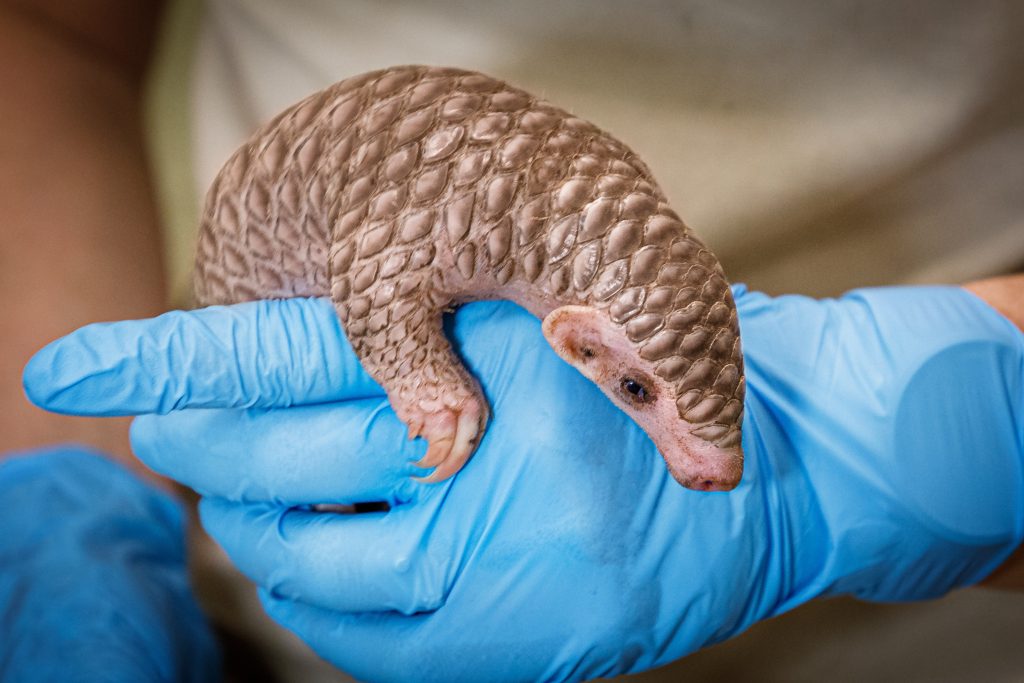
Siska’s successful weaning also involved more high-level husbandry from the Prague keepers. This wasn’t Tang’s first pregnancy, and it was a known issue that she could have trouble producing milk. Brandl explained that Siska was fed by the keepers at first but she was returned to Tang between feeds, who slept with her and did the rest of the job. Then, after two weeks Tang actually started to lactate again. One of the reasons given by Lo for cooperating with European zoos was because “they are professional in wildlife conservation work, they have a lot of experience in that” — this is a good example.
Siska’s birth was a huge boon for the Prague Zoo and for Czech-Taiwanese cooperation. Brandl says her name is known by all zoo visitors and even in neighboring countries. Steinke says “pangolin” (穿山甲) is the only Chinese word he knows how to say. He frequently reaches for the pangolin program as an example of cooperation between Czechia and Taiwan outside of traditional domains like semiconductors. Her arrival has elevated the pangolins to stars at the zoo, helped because Brandl says as a young animal she is interested in her surroundings and the people around.
How much zoo visitors really associate the pangolins with Taiwan is hard to know. A lot depends on decisions made by the Prague Zoo about how to display the animals. In Leipzig Zoo their connection to Taiwan is not particularly emphasized, based on my visiting experience some years ago.
This situation is not helped by the fact that Tang, Bao and Siska are properly termed “Chinese” pangolins. In Taiwanese media the appellation “Formosan” is often used, but all the professionals interviewed for this piece used the name Chinese pangolin. As “godfather of Taiwanese conservation” and professor at National Pingtung University of Science and Technology, Kurtis Pei (裴家騏) explained, the Taiwanese population is not considered a separate subspecies.

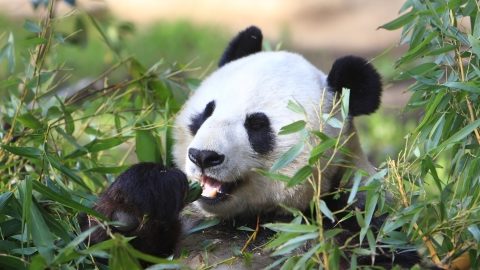
Chee Meng Tan (陈志明), from the University of Nottingham Malaysia, is a scholar of what is usually described as the “panda diplomacy” of the PRC. He does think this pangolin program is an animal diplomacy effort, but he made a key distinction: Pandas are unique to China and therefore associated with it. Plus, it helps that we perceive them as “cute.” Tan says it’s hard for China to generate soft power that doesn’t smell like propaganda, so its panda diplomacy, less tarnished by this, is likely to continue for a long time.
Conversely, pangolins are found in many countries including, obviously, China (there are a total of eight different species worldwide). Therefore people won’t inherently associate them with Taiwan. Tan says what Taiwan is attempting to do is juxtapose itself by saying “we’re a small country but we’re conserving biodiversity as much as we can,” and contrast this with people’s perception of China as “a country that is consuming quite a bit of the pangolins for medicinal purposes.”
Taiwan is somewhat justified in this. Pangolins are in dire straits globally, with the local demand for bushmeat and the huge market pressure of Chinese demand for scales for traditional medicine meaning that in most range countries populations are heavily poached. To give some sense of the scale of the problem, in 2019 eight tons of scales were seized in a single shipment going through Hong Kong. A conversation I had with a conservationist at a wildlife sanctuary in Vietnam last year indicated that local poaching had plummeted during the pandemic, in part due to an association between pangolins and the virus. It will be interesting to see whether this is true globally now the world has opened up again.
So how was Taiwan able to turn the plight of its wild pangolins around? The international trade of pangolins was regulated after 1975, which effectively stopped large quantity trading right away. Pei explained that after Taiwan’s Wildlife Conservation Act in 1989, the domestic game meat market still existed but decreased gradually and then sharply dropped in the 1995-1997 period.
More recently, it’s the changes in Taiwanese farming practices which have had the most impact. Pei said pangolins are sensitive to land pollution because they inevitably consume soil due to their foraging habits. Pangolins don’t have teeth — they use a long and sticky tongue to “scoop” up ants and their eggs. Not only does soil naturally stick onto their tongue, pangolins will consume some small stones because without teeth they need something in their stomach to grind up their food.
According to Pei, many farmers have become more environmentally friendly, decreasing the toxicity of the farmland, but he also said that a lot of land has simply stopped being farmed and now lies fallow. Additionally, the education about pangolins in Taiwan has improved greatly, and many of the rescue animals that come in are now brought by farmers themselves.
Nick Sun (孫敬閔), also a leading pangolin expert from National Pingtung University of Science and Technology, says that due to Taiwan’s law enforcement and the relatively low price a pangolin carcass would fetch, there is no market pressure to poach Taiwan’s pangolins for the illegal international trade, nor is there any domestic demand for pangolin scales to be used in traditional medicine.
All of this put together means Taiwan’s population is now healthy and rising, with individuals more frequently seen, even in suburban areas.
Where does all this leave Taiwan’s putative “pangolin diplomacy?” Chee, the panda diplomacy scholar, said because China is a major trading partner, many countries might not be interested in dealing with the politics of it, unless they are already antagonized by Beijing. Pei described how Taiwan finds it very difficult to engage directly in pangolin conservation efforts in countries in Southeast Asia and Africa because of China, although he pointed out that many students come to Taiwan to study and go back to their home countries to be actively involved in pangolin conservation. Somewhat ironically, Sun said National Pingtung University of Science and Technology has “a cooperation with mainland China, comparing pangolin samples.”
Pei also questions if there is a true conservation case for sending pangolins abroad, given that captive breeding in zoos is slow and that Taiwan has shown how wild populations will recover in good conditions. Lo from the Taipei Zoo disagrees. She says that while wild conservation is the first action, a zoo population is a necessary “plan B.” Lo was also keen to emphasize that this is first and foremost a conservation and education project, not an act of international diplomacy, which she said was “an ancillary benefit.”
Brandl says that probably next year Siska will leave the Prague Zoo for a new home. No one I spoke to was prepared to discuss exactly what the future holds for this pangolin cooperation, but everyone seemed genuinely upbeat about its general prospects. None of them particularly welcome the political lens that I like many others cast upon it — they are too busy trying to keep animals alive and species from going extinct. In its own way that may be the most Taiwanese thing about its pangolin conservation efforts: It’s a small and passionate community that can’t escape global and cross-strait politics. Diplomacy it may well be, but I suspect many are jealous of Siska and her tough scales that leave her impervious to these kinds of questions.




Leave a Reply