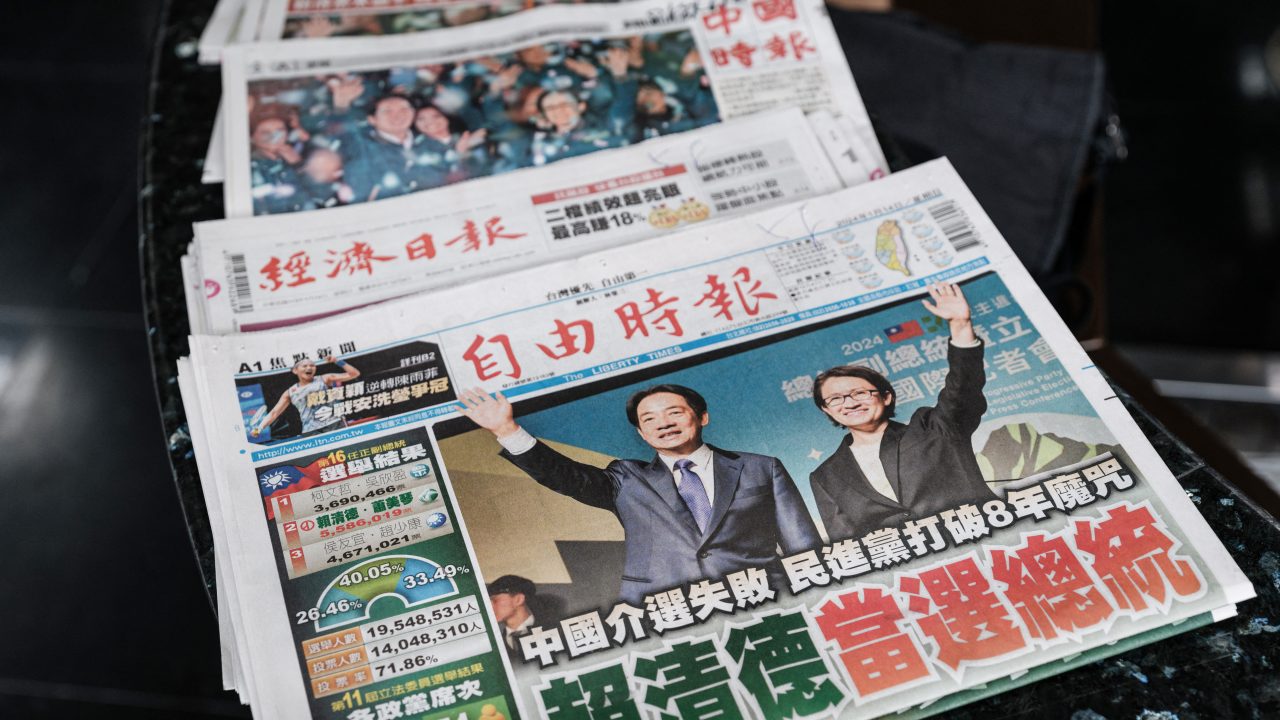
All three major parties were winners in the 2024 Taiwan general election.
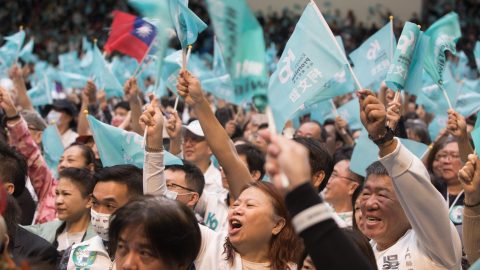
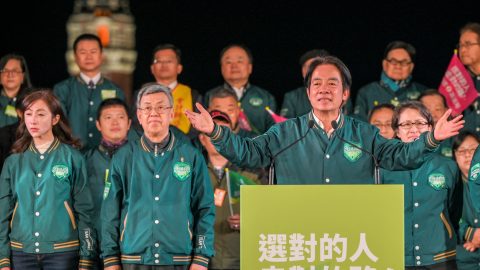
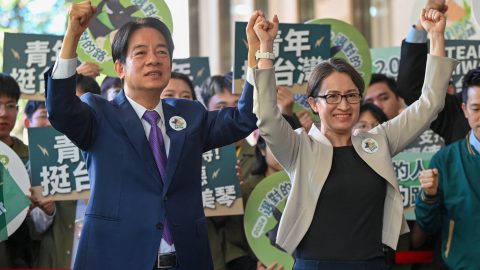
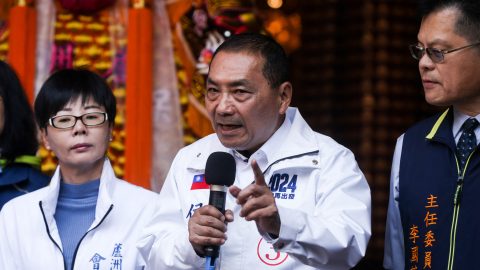
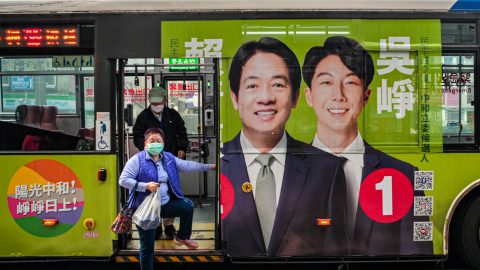
Lai Ching-te (賴清德) of the Democratic Progressive Party (DPP) won the presidential election with 40.05% of the vote. Hou Yu-ih (侯友宜) came up short with 33.49% percent of the vote, but his Chinese Nationalist Party (KMT) won the most seats in the Legislative Yuan, 52, compared to 51 for the DPP. And Ko Wen-je (柯文哲) of Taiwan People’s Party (TPP) challenged the longstanding dominance of KMT and DPP by winning 26.46% of the vote in the presidential election and eight seats in the legislature.
According to Taiwan’s Central Election Committee, voter turnout was 71.86%. 19,548,531 people were eligible to vote, and 13,947,506 valid votes were cast. Turnout in 2020 was 74.90%, with 14,300,940 valid votes cast.
Voter age distribution was as follows: 2,849,229 voters between the ages of 20 and 29; 3,229,209 voters aged 30 to 39; 3,885,393 voters aged 40 to 49; 3,531,252 voters aged 50 to 59; 3,290,652 voters aged 60 to 69 age; 1,850,180 voters aged 70 to 79; 754,513 voters aged 80 to 89 contribute; and 158,103 voters over the age of 90.
The next step is to choose the president or speaker of the Legislative Yuan. Both the DPP and KMT have expressed a willingness to work with the TPP, reportedly offering the position of deputy speaker in exchange, which could be taken up by either former Taipei deputy mayor Vivian Huang (黃珊珊) or former New Power Party (時代力量) legislator Huang Kuo-chang (黃國昌), both of whom took won seats as TPP legislator-at-large nominees.
Voting for president of the Legislative Yuan is scheduled for February 1, marking the start of the new legislative term. A secret ballot will be conducted to determine the positions of speaker and deputy speaker.
Former legislator Kuo Cheng-liang (郭正亮) said the next premier will most likely be Presidential Office Secretary-General Lin Chia-lung (林佳龍), Executive Yuan Deputy Premier Cheng Wen-tsan (鄭文燦), former minister of culture Cheng Li-chun (鄭麗君) or Kaohsiung Mayor Chen Chi-mai (陳其邁). “At the moment, it seems Lin Chia-lung has the greatest hope and is the most likely candidate for Executive Yuan Premier, because Cheng Li-chun is not too knowledgeable on finance, Chen Chi-mai is still Kaohsiung’s mayor, Cheng Wen-tsan works well with others but he belongs to DPP’s New Tide faction (新潮流), and the Executive Yuan can’t have everyone from the same faction,” Kuo told News Vernacular (新聞大白話) on TVBS.
As Taiwan’s political landscape evolves, the DPP needs to take a good look in the mirror. The party is increasingly behaving in a manner similar to that of the KMT during former president Ma Ying-jeou’s (馬英九) two terms in office.
With the loss of half of its youth votes to the TPP, despite securing a historic third DPP presidency, the party will have less room for mistakes.
Mirroring the early trajectory of the DPP, the TPP is popular among young and independent voters. Winning eight at-large legislative seats positions them as kingmakers in the Legislative Yuan.
The KMT stands at a critical juncture, requiring the strategic reconsolidation of talent and resources for a resurgence. Notably, it has, for the first time, garnered fewer party votes than presidential votes. Calls for KMT Chairman Eric Chu (朱立倫) to resign are growing.
Less than 48 hours after the election, China retaliated against Taiwan for electing the DPP’s Lai by poaching Nauru, one of Taiwan’s few remaining diplomatic allies. Tien Chung-kwang (田中光), Taiwan’s deputy foreign minister, said Nauru had been offered financial support from China surpassing what Taiwan offers to its allies by a significant margin. Nauru had asked Taiwan for 125 million Australian dollars ($83.23 million) to maintain an immigration detention facility but flipped recognition to China before a final answer was given.
This makes Nauru the 12th country to cut ties with Taiwan since current president Tsai Ing-wen (蔡英文) took office in 2016. However, the current administration has been creating meaningful exchanges with democratic countries around the world, despite its lack of formal diplomatic relations with them.
On Wednesday, the Asian Volleyball Confederation announced that Indonesia is set to host the Asian U20 Men’s Volleyball Championships, which were initially planned for July in Taiwan. Taiwan’s Central News Agency reports the Iranian Volleyball Association cited a protest for “political reasons” from China as the reason for the change.



Leave a Reply