
For the past forty years, a pillar of U.S. trade policy with China was our belief that economic development will lead China to open up politically with the expansion of rights that comes with such an opening. We were wrong.
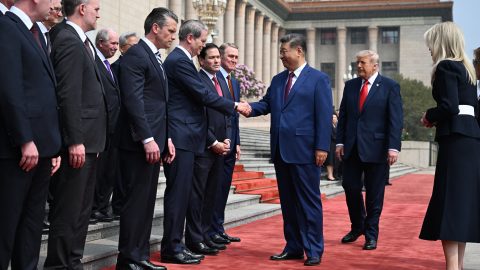
Chinese President Xi Jinping (習近平) emerged in 2012 with a belief that the Chinese Communist Party’s rules of governing — repressed human rights, massive state ownership, aggressively subsidized industry and theft of Western technology — will defeat free markets. Xi has not succeeded in defeating the West, but it’s a mistake to think the West has defeated China’s economic model of mercantilism, repression and state control.
From the 1950s until today, the U.S.’s most successful trade relationships have been overwhelmingly with democratic nations. When we trade with repressive regimes, we do so on the premise that the growth of trade will lead to demand for more freedoms, which in turn will eventually lead to greater trading opportunities.
“Free Markets, Free People,” is a tag line, but it’s also the basis for trade that serves U.S. interests.
The rise of China under Xi as a U.S. trading partner challenges our long-held premise of democracy being a superior system for economic growth. Repression of political rights, the absence of rule of law and the theft of Western technology are enabling China under the C.C.P. to stay competitive with the U.S.
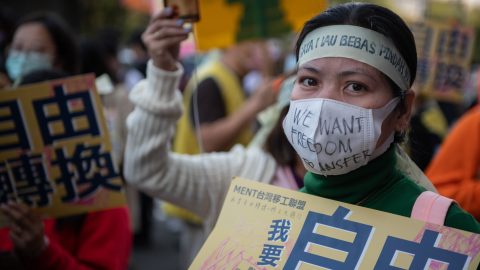
Whether it be clothing from Uyghur forced labor or shipments from port workers in Shenzhen unable to organize, China’s cost advantage is not rooted in low-wage workers, but in a political system that represses the rights of workers. From chemical runoff from factories to the continued construction of high-pollution coal-fired power plants, China’s environmental problems are not due to a lack of regulators, but rather a political system that silences activists and media.
It would be unrealistic to expect Xi to see the increase in China’s GDP under his reign and have him not think his system works just fine. Yet, the problem is not Xi and the C.C.P. believing their system works. Rather, the U.S. may want to consider the uncomfortable truth that a regime might well be able to use repression to drive economic progress to the point it allows it to keep up with the West.
Xi is not a man pondering the ideas of Adam Smith or thoughts of Milton Friedman. Xi is firm in his belief that a Lenininist-Marxist model of controlled commerce and controlled people is superior to the Western model of free markets and free people.
When we design investment restrictions and tariffs against China, we must keep in mind that the C.C.P.’s repressive government structure is in itself an unfair trade advantage.
Mark Simon is former group director for Next Digital, parent company for Apple Daily.




Leave a Reply