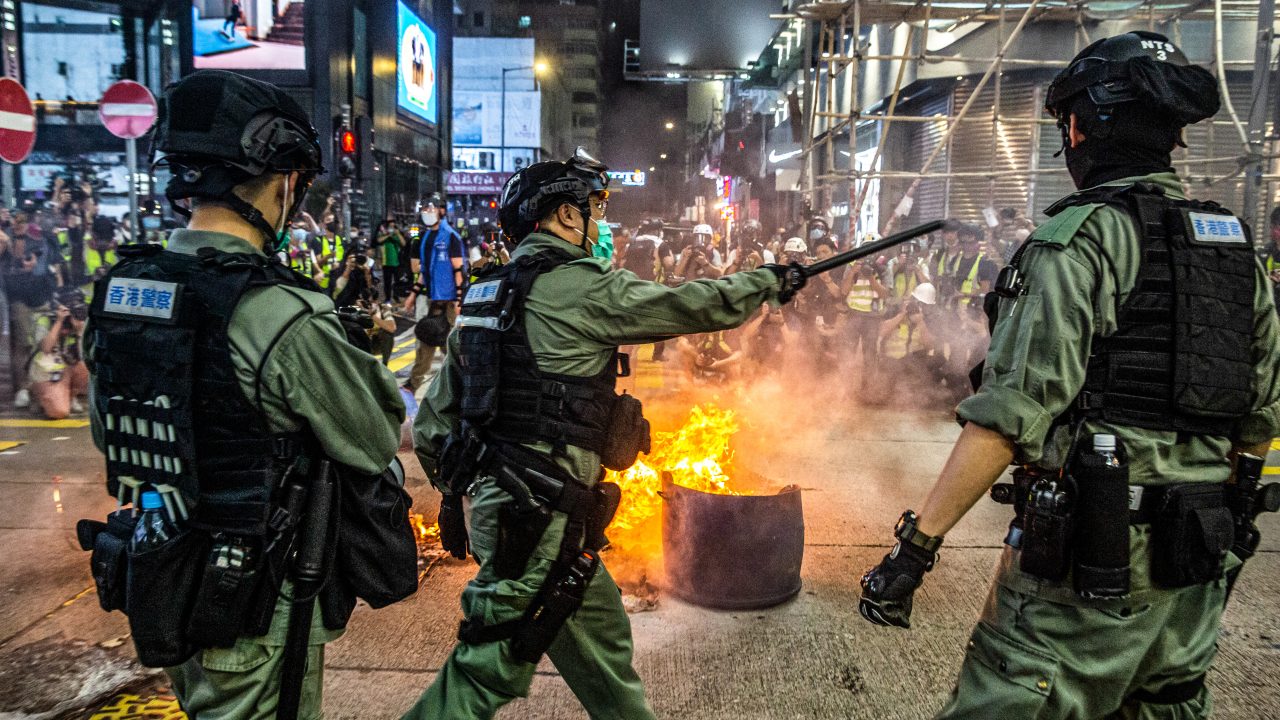
For those who want to advocate democratic change, justice or rule of law for Hong Kong right now, here is the deal: You must be willing to make a choice between imprisonment or life being hunted as an exile and then endure the freezing of your bank accounts, the arrest of your family members, the loss of your profession, the slander of your reputation, the destruction of your business and the declaration of your bankruptcy.
You will be a target of espionage, surveillance and humiliation campaigns. If you are captured, you will be charged with newly contrived crimes before the sentences of the last expire. Torture and disappearance cannot be ruled out, and, even if you are lucky enough to ever be released, you will be denied employment, harassed in the street and subjected to oddball infringements to what remains of your freedom, like enforced patriotic tours to mainland China.
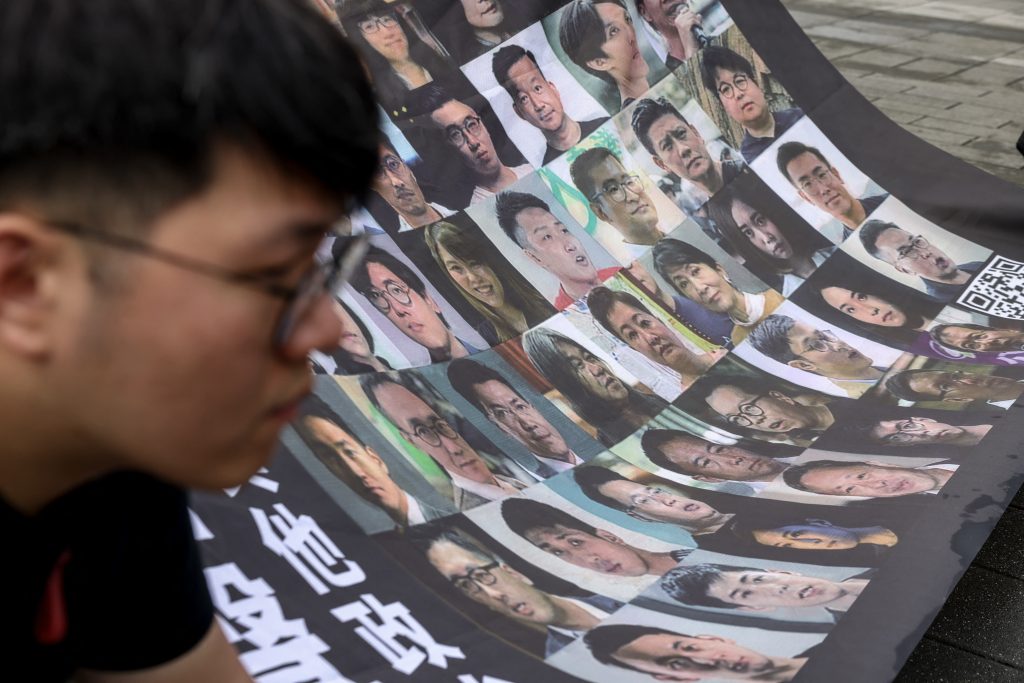
But none of this is enough in the malevolent minds of Hong Kong authorities. It never is. Thus, just this month alone, they have added the cancellation of passports for six overseas activists, the ban on any form of donation or financial transaction with them, the payment of damages to police officers by protesters, and what appears to be the eviction of a high-profile activist’s mother from her social housing unit.
From one perspective, this crackdown catalog is a tribute both to the indefatigability of the many Hong Kongers who continue to speak out, including some from the city itself, and the power of their activism. Authorities would not need to resort to such extravagance if they sat as comfortably in their positions as they appear. Yet it also stands in stark contrast to the governments of democratic countries, who have responded to this litany of human rights abuses with nothing like the same flair and imagination.
For example, while, for safety reasons, the entirety of China, Hong Kong and any state still willing to extradite to that petty pair are off limits for those dissidents still lucky enough to possess travel documents, the proponents of the city’s mutation into an extreme police state like its chief executive, John Lee Ka-chiu (李家超), remain legally able to breeze in and out of most global capitals, like London, at the drop of a hat.
The officers of the police force that does his dirty work meanwhile are able to attend shindigs in Canada, embark on tours of Australian cyber coordination centers and holiday where they please, despite the obvious risk that they might combine work with pleasure by intimidating government opponents during their vacations.
And, as it becomes more and more impossible for exiled supporters of democracy and freedom of expression to perform any kind of business with the city in which they were born, the personnel in Hong Kong Economic and Trade Offices are utterly unhindered as they conspire new money channels for their pro-Beijing pals back at home during cozy “fireside chats” in fashionable cities like New York, Milan and Seoul.
Not only is this imbalance of opportunity weighted in absolutely the wrong direction, but it defies logic, too. For instance, Hong Kong is unapologetically operating an alleged espionage campaign on United Kingdom soil, accusing the country of being a hotbed of “lawless wanted criminals” and trampling all over the Sino-British Joint Declaration that was supposed to regulate Hong Kong’s 1997 transfer to Beijing rule. Yet the U.K. still does little more than wag its finger and frown whenever another outrage against Hong Kongers is committed.
Across the English Channel, the European Union has taken four years since the passage of Hong Kong’s overbearing National Security Law to plod towards issuing sanctions, and, although, on the other side of the Atlantic, Washington has been devising a specific toolkit to slap Hong Kong authorities back for their derogations to human rights norms, its passage and follow-up has been so far underwhelming.
Yes, it did (eventually) hold firm on an entry ban for Lee, preventing him from joining the 2023 Asia-Pacific Economic Cooperation summit in San Francisco. However, when the Hong Kong legislature unanimously passed “Article 23” legislation that can see people jailed for up to ten years for dressing in the wrong slogan, it merely announced the extension of visa bans to unnamed lawmakers without restricting their access to global financial institutions.
Why these people were spared the immediate ignominy they deserve while U.S.-based pro-democracy activists are publicly held up as bounty targets for Chinese Communist Party fanatics is a mystery. Why the entirety of the lawmaker class was not also sanctioned is similarly difficult to fathom, given that every single one of them voted for the legislation in the full knowledge that they only hold such a privilege because their political rivals have been jailed and citizens denied universal suffrage.
But measures should not stop there. You want to see the northern lights in Sweden, but you signed up for the Hong Kong police? Try Murmansk instead. Your daughter dreams of studying music in Vienna, but you are a national security judge? Perhaps we can refer you to the Wuhan Conservatory of Music as a replacement (unless she can convincingly demonstrate that she is paying the tuition herself). You’d like Hong Kong Economic and Trade Offices to continue their activities in major business centers across the world? Too bad, that kind of space will be reserved for others who are not associated with transnational repression like Taiwan.
One fear is that taking such action will only lead Beijing to accelerate its control over Hong Kong. However, this ignores the speed at which the takeover is already happening and how opting for the light touch has yielded no tangible returns so far. There are also concerns about sanctions and visa refusals hitting the wrong people, as if somebody could accidentally put on a Hong Kong police uniform or hand down a national security judgment without understanding the implications of their decisions.
Unlike China, where whole generations have grown up entirely within the Chinese Communist Party’s disorienting information ecosystem, people in Hong Kong know exactly what the party represents, exactly how it operates and exactly what crimes it commits. Presently, however, the thousands upon thousands who are enduring pain and punishment as a result of such crimes are precisely those who refused to participate in them. It is long overdue for the books to be balanced.




the reason western governments won’t sanction the ccp is that they are run by trans-national corporations who want to do business in china. if they want to do business in china they can’t embarrass the ccp. simple as money talks; bs walks.