Walis Pawan (郭明吉) remembers his grandfather, one of the Seediq Indigenous people who rebelled against Japanese rule and carried out a massacre at a school in 1930. “It’s fine,” he replied when asked if he could be quoted. “It’s not like we are ruled by the Japanese anymore.”
The Wushe Incident is often called the Musha incident after its Japanese name. In 1930, people from the Seediq ethnic group, pronounced say-jack, rebelled against Japanese rule in Nantou in central Taiwan. They attacked the school in Wushe Village, massacring more than 100 Japanese, including children. In return, Japan killed hundreds of Seediq people, with many more commiting suicide.
The rebellion was led by Mona Rudao (莫那·魯道), an aging chief from the Alang Gluban tribe. In the aftermath, what was left of the Alang Gluban were forcibly relocated out of their traditional home in Mhuwe above Wushe to a valley much lower down in Nantou. Walis’s grandfather was among them. He survived retribution after his father-in-law, a chief from a different tribe, provided him with an alibi.
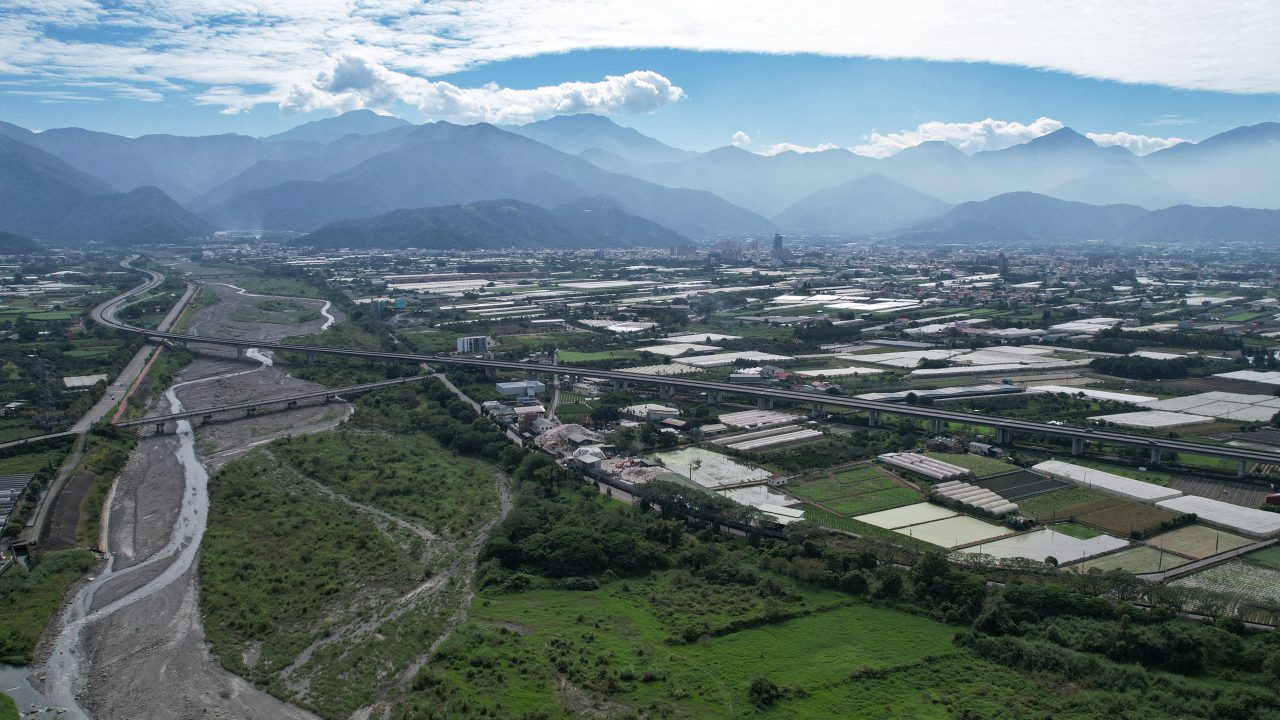
Most of the Alang Gluban forced to relocate were the elderly, women or children. Walis’s father was among them, and his grandfather would have been one of the few adult men to make the trip. Walis lives there still, and the village bears the name of his people: Qingliu (清流) is the Chinese for “clear stream,” the meaning of Alang Gluban.
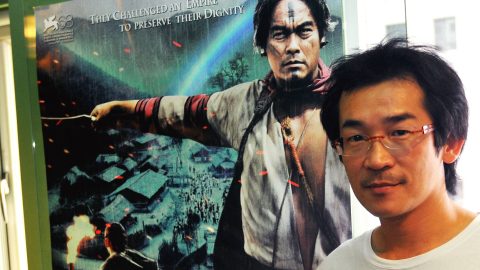
The story of Mona Rudao’s rebellion against the Japanese was later immortalized in the film “Warriors of the Rainbow: Seediq Bale” (賽德克·巴萊) which was released in 2011. Two weeks ago, it was announced that the original two-part version, previously only released in Taiwan, would be shown in China for the first time.
The timing and the content of the promotional material suggest that this decision was taken because of recent tensions between China and Japan. A poster for the movie reads: “Bloodbath against the Japanese invaders, crushing the Japanese militarist plot.” On Wednesday, ahead of the movie’s release, China’s Taiwan Affairs Office said it hoped compatriots on both sides of the Taiwan Strait would remember history.
One Taiwanese film industry insider told Domino Theory at the time that it was “laughable and shameful” that China would use the movie as anti-Japanese propaganda when it has such a history of oppressing its own people.
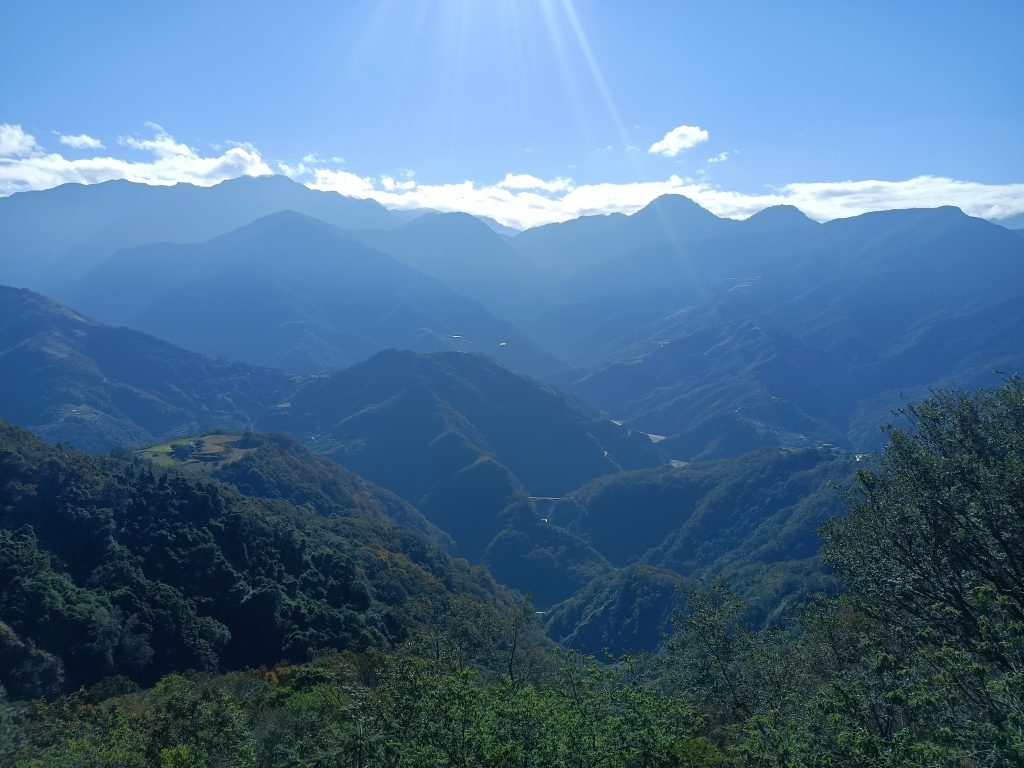
In Taiwan as a whole, the film is feted as the first blockbuster to tell a Taiwanese Indigenous story. But in Qingliu, it resonates less. Even for the elders who had lived closer to it there wasn’t much spark.
Walis, whose brother had served as a production consultant on the movie, said re-releasing the film in China is a government issue that doesn’t affect Seediq. “It’s a matter between China and Japan. They are using a movie about us to say how we feel, but China didn’t come to talk to us.” But he reiterated: “We don’t feel deeply about it or get very emotional about it.”
We were joined at the table by Takun Walis (邱建堂), Walis’s cousin (Seediq naming is patronymic — Walis’s father was called Pawan and Takun’s father was also called Walis). Like Walis, Takun is considered something of a local historian. He worked with Walis’s brother Dakis on the educational material in a small museum about the Wushe Incident that now sits unmaintained on the edge of Qingliu.
As a student at National Taiwan University, Takun was part of a successful effort in 1973 to return Mona Rudao’s remains to his homeland. They had been kept at the university since their discovery in the mountains in 1933. Takun said that Mona Rudao’s skeleton had not been on display, it was just kept, as if an animal specimen, to send a warning about the outcome of resistance.
Mona Rudao is now interred inside the monument to the rebellion in Wushe Village. It is not his home in Mhuwe, but it is the place where he wrote his name into history.
Takun’s voice and demeanor are notably harder than Walis’s when he talks about the Wushe Incident. But he agreed that Seediq people don’t think about the movie being used in Chinese attacks on Japan. However, it is clear where his antipathies lie. “If you really understand this history, of course, you will dislike Japan in your heart.” But, Takun lamented, most young Seediq don’t understand the Wushe Incident.
Multiple other people I spoke with, who did not want to feature in this article, confirmed Walis and Takun’s view that Seediq people do not overly care about this issue.
After the Republic of China arrived in Taiwan at the end of World War II, Alang Gluban people were free to leave Qingliu and return to the high mountains. But many stayed. Walis and Takun still living there today shows one way how the historical events cast their shadow into the present. The use of the movie in Chinese-Japanese relations is another.
The school where the initial massacre happened is today a set of offices for Taiwan’s national power company, and the hydropower plant that the Japanese built in Wushe. A peeling information board by the entrance marks it as the exact location of the beginning of the Wushe Incident.
This was not the school that the Japanese students attended, however. It was for their Han Taiwanese counterparts. The Japanese were visiting for a field day. In their segregated system, their regular classes were taken at a different school a few hundred yards away.
That site is still the elementary school in Wushe. It sits tucked into the mountainside, overlooking the reservoir the Japanese created for their power plant. Ironically, by the time of the Wushe Incident many of the Seediq people who were truly local to Wushe had already left after their land was inundated.
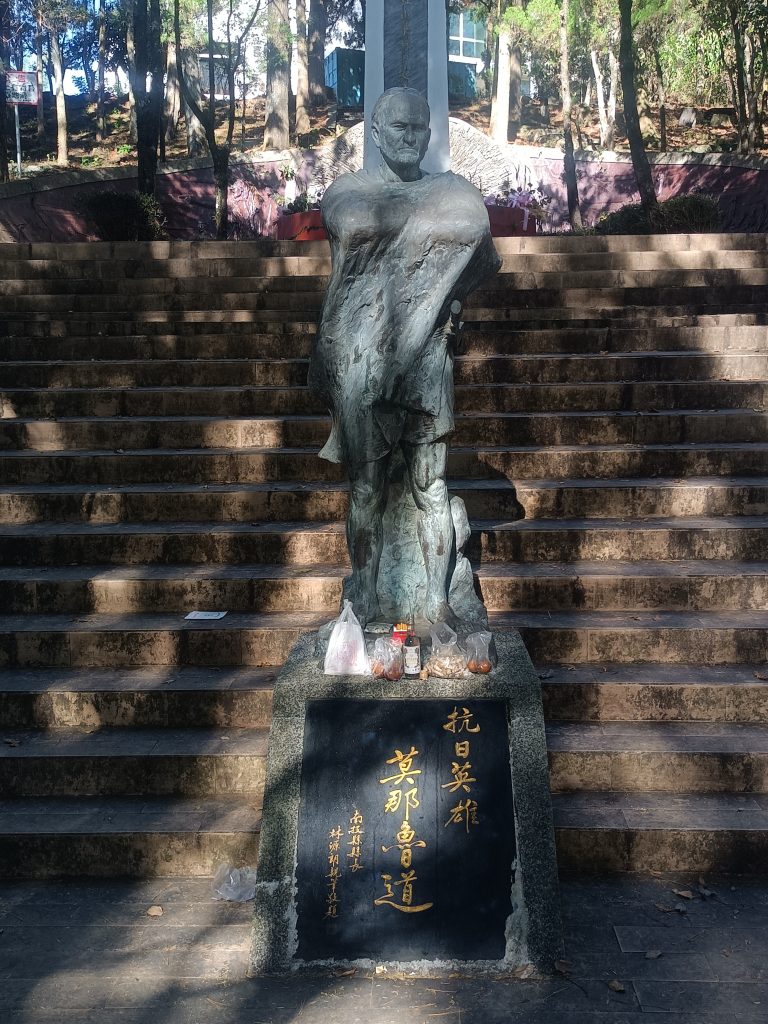
The school today, now with significantly fewer students than a century earlier, is overlooked in turn by a statue of Mona Rudao in the Wushe Incident Memorial Park. At his feet lie offerings: nuts, cigarettes and kaoliang liquor.
Under the main monument behind Mona Rudao was something more surprising: paper flower votives used by Buddhists. It was put to me that it is extremely unlikely these were left by anyone Seediq. It seems that others still remember the Wushe Incident.
Walis, Takun and other Seediq I spoke to on my visit to Wushe and Qingliu are not overly concerned about how their story, the film, might be being used in a geopolitical love triangle between China, Taiwan and Japan. I didn’t get the sense that they felt any of the above had earned the right to their concern. It just didn’t seem relevant.
While I was in Wushe, the Taiwanese government announced that it would be releasing a list of Indigenous victims of political repression by the R.O.C. in the post-war period after Japan left. There’s no reason to think that the timing is connected to China’s attempt to weaponize Japanese colonial crimes against Indigenous Taiwanese.
But I have to say, sitting next to Mona Rudao and looking down towards the plains, it wasn’t clear whose interests are being served.
“Warriors of the Rainbow: Seediq Bale, Part 1: The Rising Sun Flag” is released in Chinese cinemas today.




Leave a Reply