
Taiwan is a politically charged place, with contentious party politics and high voter turnout rates. As Taiwan’s democracy has matured since the 1990s, the landscape of youth political participation in Taiwan has seen two major shifts. First was a nearly 50% jump in youth voter turnout (ages 20 to 29) between 2016 and 2020. The next big shift happened in the ensuing years, as Taiwanese youth switched their allegiance from the Democratic Progressive Party (DPP) to the up-and-coming Taiwan People’s Party (TPP).
A key factor in explaining these shifts is evolving political memory. Young voters in 2020 were influenced by a political memory shaped by the events of the late 2000s and 2010s. Ma Ying-jeou’s (馬英九) presidency, the Sunflower Movement and the 2019 Hong Kong protests led to a strong focus on defending Taiwan’s democracy from China and from politicians — mainly the Chinese Nationalist Party (KMT) — who wanted to foster closer ties with China. The 2024 election confirmed the emergence of a new generational consciousness among young voters, fueled by a political memory that is less centered on animosity toward the KMT and China and more focused on domestic policy issues like wages and housing prices. The TPP resonates more with this attitude, and this led young voters to shift their support away from the DPP in the 2024 presidential election.
2020 Election
The 2020 presidential election showcased the growing momentum of youth political engagement in Taiwan. Youth voter turnout in this election jumped to over 70% from roughly 55-60% in 2016 and 2018, according to a study commissioned by the Central Election Commission. Young voters (ages 20 to 29) overwhelmingly supported then-President Tsai Ing-wen (蔡英文), contributing to her landslide win. The foundation for this support had been laid many years before.
June Lin (林倢) was in her final semester of college in March 2014 when KMT politicians in the Legislative Yuan attempted to unilaterally bypass the committee review of the contentious Cross-Strait Service Trade Agreement, aiming to force the bill to the legislative floor without proper review and input from the public. Many were infuriated by this lack of respect for democratic procedure, and opponents of the legislation worried that liberalizing trade with China would make Taiwan vulnerable to Chinese economic coercion and political influence. The incident created a sense of crisis for Taiwan’s democracy among the younger generation, according to June. Demanding a clause-by-clause review of the agreement, protestors — many of them students — broke into and occupied the Legislative Yuan on March 18. June joined what became known as the Sunflower Movement because one of her friends had gotten involved and camped out in the Legislative Yuan for the duration of the three-week occupation.
The Sunflower Movement activated young people in the political sphere. “After the Sunflower Movement, we believe, if we speak for ourselves, our voice can be heard and something can be changed,” said Eddy Lin (林彥廷 ), cofounder of the Taiwan Youth Association for Democracy. But this increased proclivity toward civic participation didn’t result in increased youth voter turnout for several years. According to June, the relatively low youth voter turnout in the 2018 local elections and the subsequent widespread victories around Taiwan for the KMT was a rude awakening for the Sunflower Movement generation, and a reminder that their votes matter.
Another rude awakening for young voters was the increase in Chinese aggression toward Taiwan during Tsai Ing-wen’s first term, as well as China’s treatment of Hong Kong during the 2019-2020 Anti-extradition Law Amendment Bill movement. “I remember vividly that when we saw … the Hong Kong police were hitting their own … those scenarios are unbelievable for Taiwanese, especially young generations,” said Eddy, “we just want to make sure Taiwan will not be another Hong Kong.”
Chao-lung Liu (劉兆隆), a professor at the National Changhua University of Education and an expert in youth civic engagement in Taiwan, noted that leading up to 2020, Taiwan saw an influx of immigrants from Hong Kong, who helped shape the political attitudes of young Taiwanese. Top Taiwanese universities welcomed scholars from Hong Kong, and the Mainland Affairs Council facilitated the arrival of students who had been prosecuted in Hong Kong, allowing them to study in Taiwan.
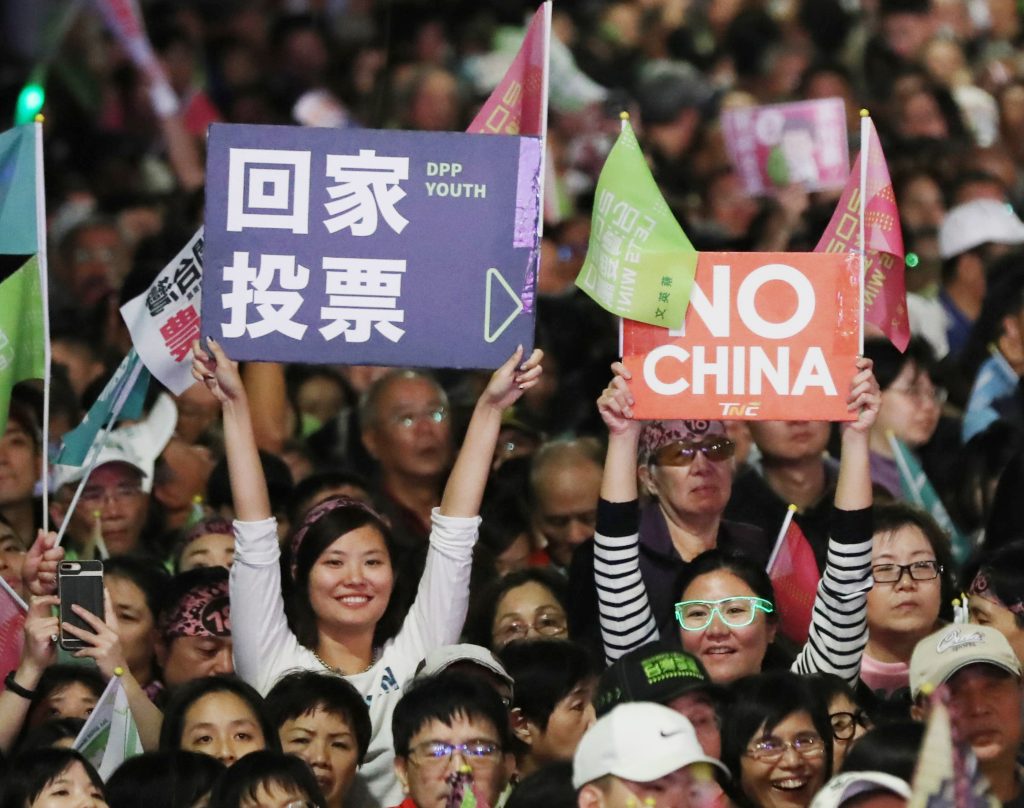
When young voters went out in droves to vote in the 2020 presidential election, they supported the DPP. June said that the Sunflower generation has a soft spot for the DPP, as “the party that participated in the democratization of Taiwan.” Even today, the Sunflower generation is still staunchly pro-DPP and anti-KMT. A poll conducted by My-Formosa.com in 2023 found that the Sunflower generation — roughly defined as individuals in the 30 to 39 age group — has the highest positive feelings and the lowest negative feelings toward the DPP of any age group, except those over 70 years old. They also reported the highest rate of negative feelings toward the KMT by a margin of 10%.
2024 Election
Over a decade after the Sunflower Movement, its legacy remains important to young Taiwanese. Hsu Hsin-fang (許馨方), a recent college graduate who wrote her senior thesis on youth civic engagement in Taiwan, describes the Sunflower Movement as a political awakening that “showed young people the power of collective action.” However, the young generation’s political memory is no longer centered on negative feelings toward Chinese influence and the KMT. Rather, young voters are rejecting entrenched party politics and the traditional ideological divide of the DPP and the KMT. This led young people to shift their support from the DPP to the TPP in the 2024 election.
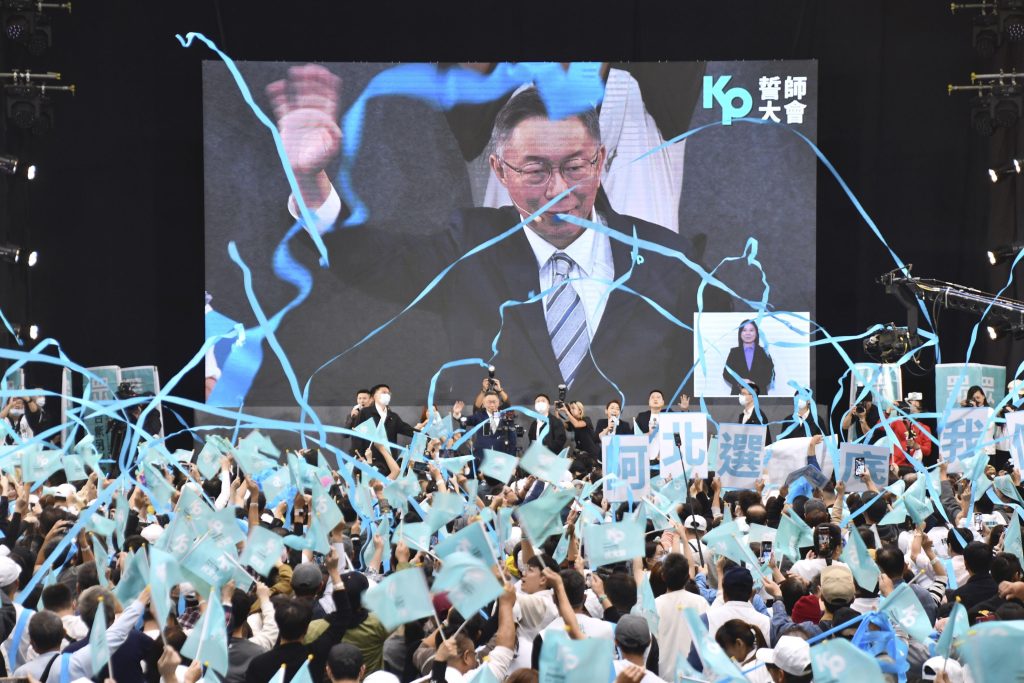
Although TPP candidate Ko Wen-je (柯文哲) did not win the presidential election, he did gain 26% of the vote, which is impressive for Taiwanese politics, historically dominated by the KMT and DPP rivalry. Although Taiwan has not processed age-related voting data for the 2024 presidential election, according to a poll conducted by My-Formosa.com a couple days before, voters in the 20 to 29 age bracket overwhelmingly supported Ko Wen-je at 41.4%, 21.5% higher than the average across all age groups. And young voters not only liked Ko, they broadly liked the TPP, evidenced by the party’s wins in the Legislative Yuan.
According to Chia-hung Tsai (蔡佳泓), a professor National Chengchi University specializing in Taiwanese elections, youth support for the TPP accounts for the drop in support for the DPP from 57.1% in 2020 to 40.05% in 2024. Polling data shows that the current generation of young voters have the highest negative feelings and the lowest positive feelings toward the DPP of any generation. This age group least wanted to see DPP candidate Lai Ching-te (賴清德) elected president. This is a dramatic shift from the attitude of their older siblings in the 30 to 39 age bracket.
According to Hsin-fang, the recent graduate who wrote her thesis on civic engagement, this switch happened because young people are rejecting the traditional ideological division of independence vs. reunification in favor of a political approach reflected by the platform that Ko ran on, which prioritizes “issues directly impacting their daily lives, such as employment, housing, wages and climate change.” The historical issues that define the KMT/DPP dichotomy, and that motivated and shaped youth political engagement and voting patterns in the 2010s, “may not feel as urgent or personally relevant to the young generation today,” Hsin-fang said.
Even though Lai won the presidential election in 2024, losing support from young voters is a major issue for the DPP. This is particularly apparent in the Legislative Yuan, where the KMT and TPP gained seats in 2024. Now that the DPP and KMT are roughly at parity, with 50 and 51 seats in the Legislature, respectively, the TPP’s eight legislators constitute a potentially decisive swing vote.
Regaining youth support is not a lost cause for the DPP, but it will have to alter its strategy and messaging to do so. “If the DPP keeps counting on national identity as it recruits young voters, I think the gap between the DPP and young voters [will become] larger,” said Professor Tsai. But young voters remain flexible in choosing who to throw their support behind, particularly following the recent corruption scandal in the TPP, according to Hsin-fang. “The future is the younger generation,” she said, and they will vote for whoever promises to materially improve their lives.







Leave a Reply