If the Trump administration’s primary objective were to make Chinese companies reliant on the American tech stack, then it would allow Nvidia to export chips far superior to anything currently on offer in the Chinese market.
If its goal were to help Nvidia maximize its revenue, based on the idea that more research and development money would help the company remain dominant in the long run, then it would allow Nvidia to export its most advanced Blackwell architecture, the chips Chinese tech firms like Tencent and Alibaba are most interested in buying.
If its goal were to use the United States’ computing advantage to win concessions from China on issues such as rare earth metals or fentanyl, then it would negotiate Nvidia chip export licenses as part of a broader trade deal.
If its goal were to undermine China’s push for tech self-sufficiency, then it would make sure that Beijing plans to actually let its companies buy the chips before striking a deal to let Nvidia sell them.
If its goal were to secure good will from Beijing, then Trump would tout the value of the chips on social media, not emphasize how far behind America’s top-shelf offering they are.
If its goal were to make sure the U.S. doesn’t aid in the development of China’s A.I.-powered weaponry, then it wouldn’t allow Nvidia to sell chips to China at all.
And if its goal were to govern according to the will of American voters, it would listen to the bipartisan chorus of lawmakers who have vigorously protested the Nvidia export deal.
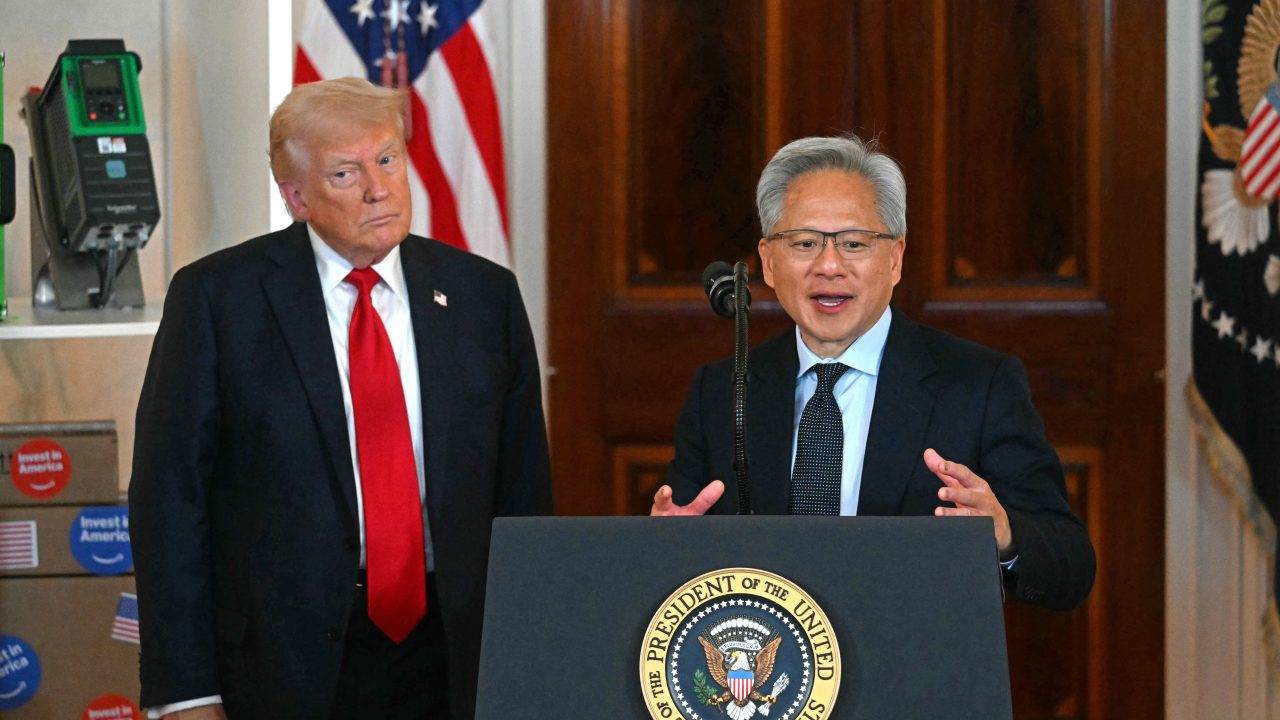
Trump’s announcement on Monday that the U.S. will allow Nvidia to sell its H200 chips in China, while taking 25% of the proceeds, does none of these things. So what does it do?
Bloomberg reported on Tuesday that the Trump administration made the decision after concluding that China’s most advanced chipmaker, Huawei, already offers AI systems with comparable performance to those built using H200s. It reportedly sees the deal as a happy middle ground between banning chip exports outright and letting China access the best tech.
The Institute for Progress, a Washington think tank, released a report this week stating that the H200 is almost six times as powerful as Huawei’s best chip. Even if Huawei already has caught up, it still cannot produce enough chips to meet domestic demand in China. That leaves a gap in the Chinese market that the H200 could fill.
It’s not clear, however, whether Beijing will allow Chinese companies to buy the H200. Earlier this year, when the Trump administration reversed export controls on the pared-down H20, Chinese regulators stepped in to discourage companies from buying them. On Tuesday, the Financial Times reported that Beijing was already considering taking similar measures to restrict the purchase of the H200.
China’s top priority, as clearly outlined in its latest five-year plan, is to achieve technological self-reliance. Beijing has shown a willingness to sacrifice the short-term interests of its tech industry to get there.
So on one side, you have Jensen Huang, Nvidia’s CEO, who has proven shockingly blase about China military ambitions, and Chinese tech companies, which are so desperate for Nvidia’s chips that they have been caught illegally smuggling them. On the other side, you have members of both parties in Congress, nearly every U.S. chip policy expert, and perhaps Chinese President Xi Jinping (習近平) himself.
Trump is attempting to chart a middle path that will make everyone happy. But in practice, the deal only has two real winners. Huang and Nvidia’s shareholders will get marginally richer. And the Chinese AI industry will get a lifeline while its chip industry works to eliminate the only major technological advantage the U.S. has left.
Trump’s instinct for compromise has won him many achievements on the international stage, but the only thing this deal will compromise is national security.


Leave a Reply