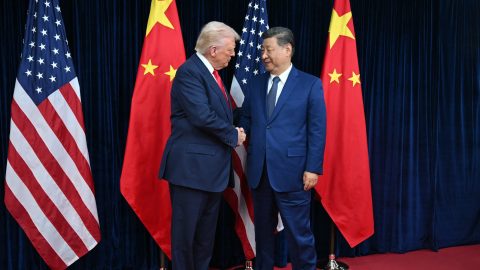
Four lawmakers have reintroduced a bill targeting China’s role in the fentanyl crisis, as Congress attempts to shape U.S. priorities ahead of Xi Jinping’s (習近平) planned visit to Washington next month.
The CCP Fentanyl Sanctions Act would sanction Chinese entities involved in the illicit trade of fentanyl and its precursor chemicals, from chemical makers to the ports involved in its shipment. The bill makes use of Chinese chemical companies’ exposure to the U.S. banking system, the House Select Committee on China said in a statement.
Republican Representatives John Moolenaar and Dan Newhouse joined Democrats Ro Khanna and Jake Auchincloss in sponsoring the legislation.
“The Chinese Communist Party must be held accountable for helping manufacture the fentanyl crisis,” said Newhouse. “For too long, they have subsidized and exported illicit narcotics, and Congress must take aggressive action to counter this epidemic that’s ruining American lives and families.”
Fentanyl killed more than 70,000 Americans a year at the peak of the opioid crisis. The drug, as well as the chemicals used to make it, is overwhelmingly manufactured in China, which also supplies the world’s legal market for opioids.
Historically, Chinese fentanyl makers operate on both sides of the law, often advertising their illicit products openly in online marketplaces. After China banned the export of fentanyl to North America at the first Trump administration’s urging in May 2019, many companies began shipping chemical precursors to Mexico instead, where cartels synthesized the product themselves.
The U.S. has attempted to cooperate with the Chinese government on drug enforcement for decades, with mixed results. A recent, well-publicized research paper in the journal Science credited the present decline in fentanyl overdoses, which began in 2022, in part to efforts by the Biden administration to aggressively lobby the Chinese for their help.
But the second Trump administration’s mercurial approach to trade policy has complicated the continuation of those efforts. Speaking to reporters following a meeting with his Chinese counterparts in the Philippines in July, Secretary of State Marco Rubio said that the realization of Chinese commitments remains “a work in progress.”
“We think in the long term this poses a threat to China as well, so I would hope that they would have an interest in being cooperative,” Rubio said. “I think we’ve made some progress on that front, but not entirely where we need to be.”
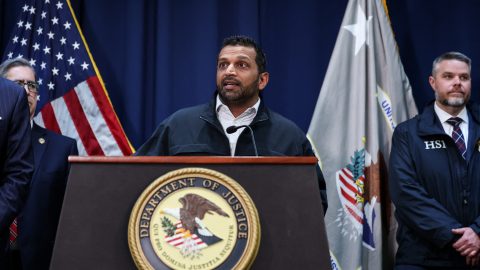
Reuters recently reported that the Trump administration has cultivated closer cooperation with Chinese and Russian law enforcement than its predecessors. FBI Director Kash Patel has made multiple trips to Beijing in the past year, hoping to win commitments on fentanyl enforcement, as well as cyber fraud.
Yet concerns remain that Trump’s personalist approach to China has failed to extract the sort of policy commitments that many officials say can only be won through careful planning and sustained diplomatic pressure.
China’s role in the fentanyl crisis has long been viewed as an issue tailor-made to appeal to Trump’s MAGA base, animated as it is by concerns about the deindustrialization and community decay of America’s heartland.
Fentanyl deaths have continued to fall during the second Trump administration, though the rate of decline has slowed slightly. Experts attribute the success to some combination of Chinese action, the increased availability of the antidote drug naloxone and the grim reality that many Americans susceptible to opioid addiction have already been killed.
Beijing maintains that its pharmaceutical industry is not straightforward to regulate, and that the United States’ drug problems are largely of its own making. But there is strong evidence that Chinese actions in the past have had a significant impact on U.S. overdose rates, an effect due in part to the sensitivity of drug abuse rates to small shifts in supply.
“Thousands of families in Massachusetts have been scarred by fentanyl,” said Congressman Auchincloss. “Chinese chemical manufacturers that are exporting this addictive poison to American shores should bear the full force of U.S. sanctions and anti-money-laundering measures.”




Leave a Reply