Beijing says it is “gravely concerned.”
Just before midnight on Friday, President Donald Trump gave the greenlight for “Operation Absolute Resolve” to seize Venezuelan President Nicolas Maduro from power. Within just a few hours, Maduro and his wife Cilia Flores were captured from a heavily guarded compound in Caracas and put on the USS Iwo Jima headed for New York.
The Trump administration is justifying the intervention as necessary to the enforcement of U.S. law. Maduro and Flores have been charged with drug and weapons-related offenses and are currently awaiting “the full wrath of American justice,” according to Attorney General Pam Bondi. Heads of state are granted immunity from criminal prosecution under U.S. and international law but Trump does not recognize Maduro as the legitimate president of Venezuela. Secretary of State Marco Rubio told ABC News that congressional authorization was not necessary because this was a law enforcement operation as opposed to an invasion.
Rubio elaborated in an interview with CBS on Sunday that the U.S.’s quarantine of Venezuela’s oil shipments will exert “a tremendous amount of leverage” on the government, leading to changes that “further the national interest of the United States” and create “a better future for the people of Venezuela.” When asked why the U.S. did not capture any of Venezuela’s other political leaders, Rubio called Maduro the top target. “The number one person on the list was the guy who claimed to be the president of the country that he was not.”
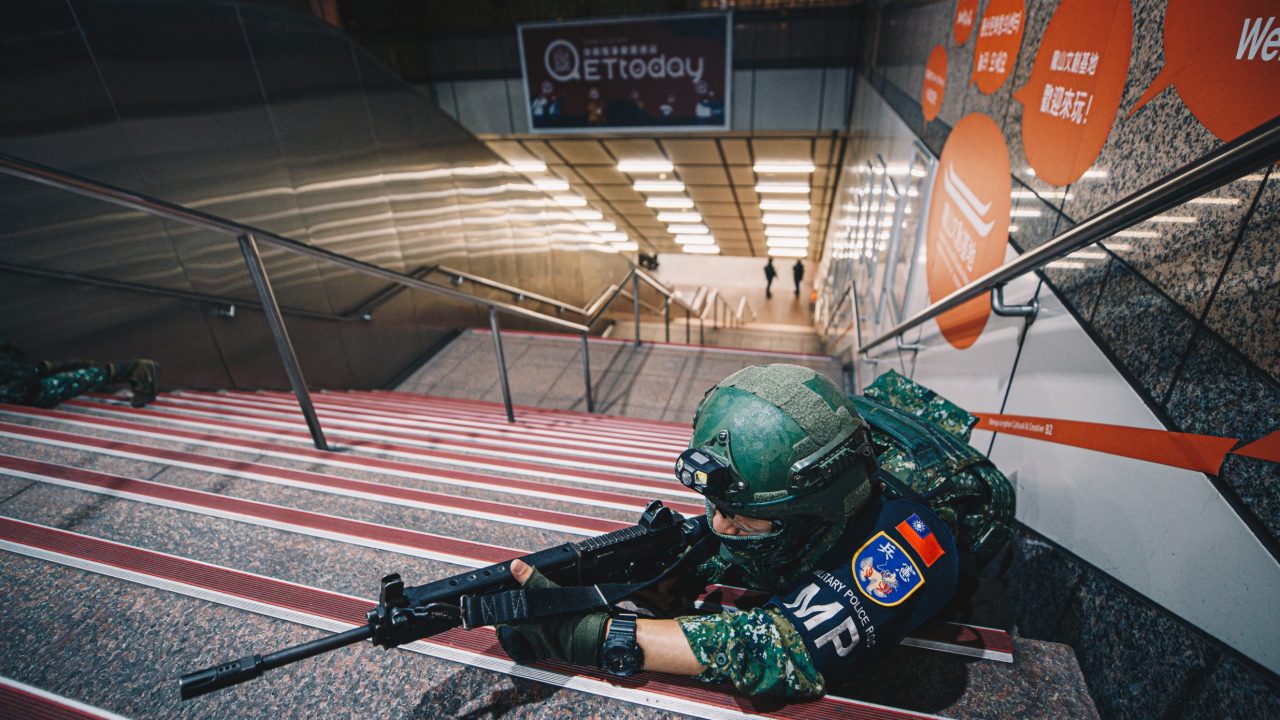
The parallel to China and Taiwan is obvious. Beijing does not believe Taiwanese President Lai Ching-te (賴清德) is a legitimate head of state. If China were to annex Taiwan, it would justify that intervention on the grounds that Taiwan is a part of China. Beijing contends that however it chooses to deal with Taiwan is a matter of its own internal law and politics. Social media commentators and political pundits across China, the U.S. and Taiwan are saying that the spectacle of the Maduro regime’s decapitation sets a precedent for China to do the same to Lai.
Capturing or killing Taiwan’s president as a shortcut to unification would be incredibly risky for Beijing. First, taking out Lai would not collapse the state or topple Lai’s Democratic Progressive Party (DPP). Unlike Venezuela’s dictatorship, in which loyalty flows via entrenched patronage channels tied to Maduro, Taiwan is a democracy. Taiwan’s constitution outlines clear rules for succession with the vice president first in line, followed by the president of the Executive Yuan. Taiwan expert Shirley Kan argued in a report for the Global Taiwan Institute that Taiwan likely has a protocol list detailing a much longer line of succession. Kan said Taiwan should tighten up this protocol, including by defining vacancy and assigning separate lines of succession for other top leadership positions.
The military chain of command in Taiwan would also be resilient. This chain of command is codified in law, military authority is separate from party politics, and civilian control is institutional. To be sure, Taiwan’s military is historically tied to the Chinese Nationalist Party (KMT) authoritarian rule and its imposition of martial law in Taiwan. Some amount of tension between the military and the ruling DPP persists.
Second, eliminating Lai would not eliminate Taiwan’s resistance to Chinese annexation. Lai’s legitimacy rests in the will of the Taiwanese people — unlike Maduro, Lai isn’t the spine of his own regime. He is, of course, indispensable as Taiwan’s leader and the face of its democracy. But Taiwan has a robust civil society. If decapitation were to precede a Chinese attempt at annexation, hundreds-of-thousands-strong humanitarian, religious and civil defense networks would mobilize. Religious and humanitarian groups in Taiwan, in particular, are long-standing and well-trained in crisis response.
Taking out Lai would make him a martyr for democracy. Quarantining semiconductor exports, like how the U.S. is quarantining Venezuelan oil exports, would create an international crisis. China is Venezuela’s main oil customer. But the whole world relies on Taiwanese chips.
Taiwan is not Venezuela. Decapitating it would be a disaster. Beijing knows this, so its approach is not immediate and dramatic, it is systemic: gray zone operations, psychological pressure, political isolation and the spread of disinformation.





Leave a Reply