
After the U.K.’s Strategic Defence Review was released at the start of this month, the Labour government said it would implement all of the 62 recommendations. Strategically, this means moving the armed forces’ central purpose to “war-fighting readiness” and adopting a “NATO-first” defense policy, involving the U.K.’s “biggest contribution” since it was founded — setting the ambition to spend 3% of GDP on defense in the next Parliament.
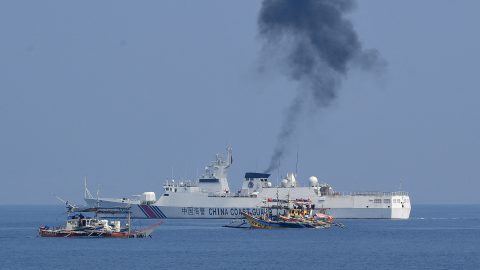
Within this overall paradigm, China is a frequent point of reference. The review categorizes China as a “sophisticated and persistent challenge,” with Chinese technology and its proliferation named as “a leading challenge for the U.K.” already. “Growing Chinese assertiveness” is considered “a key driver of regional and global instability,” with military drills around Taiwan and “aggressive actions” in the South China Sea noted.
This does not represent a dramatic change in rhetoric from that which has come out of the British state over the last few years.
In 2022, MI5 Director General Ken McCallum warned of “a strategic contest across decades” with China, in which the Chinese Communist Party was coordinating large scale influence operations and cyber security threats.
In 2023, the previous Conservative Party government’s Integrated Review Refresh said “China’s more aggressive stance in the South China Sea and the Taiwan Strait” are threatening to create a world defined by danger, disorder and division — and an international order more favourable to authoritarianism.”
What is newer is a particular emphasis on China’s technological progress and an attempt to generate the U.K.’s own military technology to compete with it.
“One of the main lenses on China is a technological lens and … this enormous investment in technology that we’ve seen in China over many years actually fundamentally means that European forces, U.K. forces in any war in the next decade are going to be facing Chinese technology,” Grace Cassy, a contributor to the review and associate fellow at Chatham House, said in an online interview at the think tank last week.
“[T]hat, I think, is the lens that really has informed how we thought about China as a threat — that it’s really Chinese technological superiority that is requires us to up our game.”
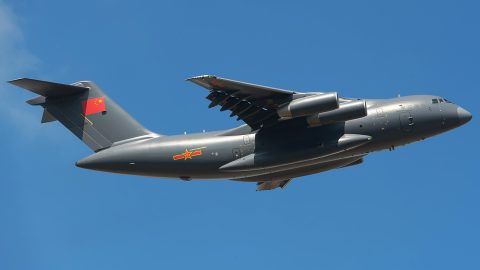
The U.K. and its allies have had a prominent reminder of this dynamic in the past month. When conflict broke out between India and Pakistan, Pakistan relied on Chinese missiles and air defense systems. Following reports that five Indian jets were downed, some defense analysts suggested China emerged as the real winner.
The suggested response to this within the review is not that the U.K. should direct more of its own forces toward the Indo-Pacific, though. In three key “roles” the report identifies for the U.K., defending its own territories is listed first, defending in the Euro-Atlantic is listed second and “shaping the global security environment” comes in at third.
Experts have observed this marks a contrast with the Indo-Pacific “tilt” set out in the 2021 integrated review, and is a response to the war in Ukraine and the U.S. government’s view that Europe should become more directly responsible for its own security.
Grace Cassy said the alternative approach with regards to China would be “supporting allies who will have more of a footprint” in the Indo-Pacific, while being “ready to deal with the kind of technology that comes out of Chinese supply chains to other potential adversaries” — likely referring to Russia. Both of these ideas are set in the context of developing the U.K.’s own military technology.
That ambition also comes with the intent to cut China out of military supply chains. The section on “alliances and partnerships” in the report is introduced with the ideas of pooling financial and technological resources with allies and building industrial and supply chain resilience.
“I think the supply chains are the other critical component, so [it’s] not just that European militaries will be faced with Chinese technology, but also that a lot of our own production might rely on on parts that might be produced in China,” Marion Messmer, senior research fellow in the International Security Programme at Chatham House, said.
“This is apparently already a challenge for a lot of munition production in Europe where crucial parts need to be sourced from China … [R]eforming those supply chains to make sure that we source from our partners rather than from potential adversaries is going to be really crucial,” Messmer added, pointing to the Ukraine war as key evidence of how important this can be.
Responses to the report have, of course, depended on the direction they come from.
NATO’s Secretary General Mark Rutte used his speech in the U.K. this week to welcome it. “It will strengthen and modernize Britain’s armed forces and enhance NATO’s collective defense,” he said.
The Chinese Embassy in the U.K. described the report as “steeped in Cold War mentality and ideological bias” and said it deliberately misrepresented China’s defense policy in order to provide an “excuse for the U.K. to expand its own military.”
One quite separate issue for the U.K. government looms large, though. As soon as a review like this is set to paper, it risks going out of date. AUKUS is mentioned 23 times in the document, but just this week the Pentagon has launched a review of the U.S.-U.K.-Australia security alliance, throwing its future into doubt.
It’s one thing having a plan, it’s quite another following through on it when the world is so full of moving parts.



Leave a Reply