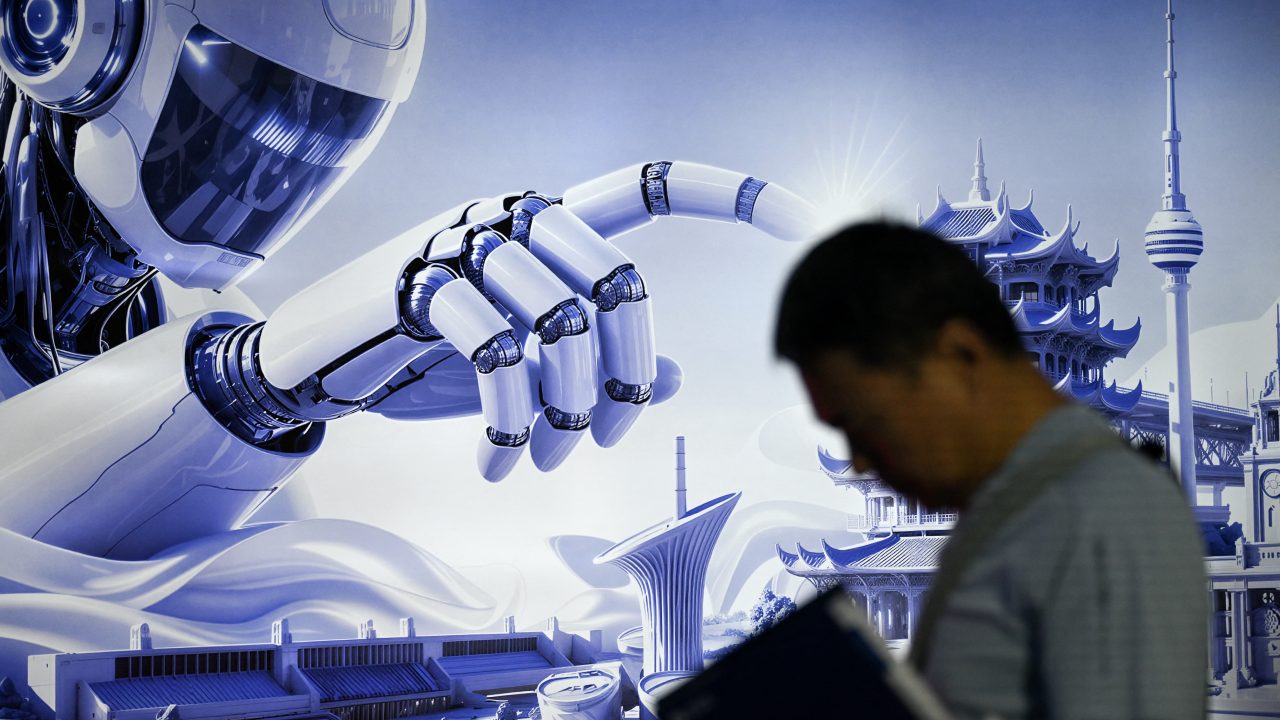
The U.S. and China will discuss artificial intelligence safety in mid-September, Reuters reported, following up on a May agreement to “start talking” about best practices and guardrails for AI.
The talks have already begun unofficially. At the G20 Innovation Ministerial in Chapel Hill last week, White House science and tech advisor Michael Kratsios said he met with China’s science and technology minister, Yin Hejun (阴和俊), on the sidelines. Treasury Secretary Scott Bessent, who is expected to lead the mid-September meeting, also had “limited” exchanges on AI with Chinese counterparts at a G20 finance meeting last week, CNBC reported.
Signaling some degree of common ground in the lead-up to their AI safety bilateral, both countries signed the Carolina Principles for Emerging Technologies at the G20 Innovation Ministerial. The Carolina Principles, which Kratsios reportedly advocated for countries to adopt, discourages the creation of AI-specific legislation. The agreement calls for countries to apply existing, sector-specific regulatory frameworks to emerging technology, only creating new legislation for “novel considerations” not addressed by existing laws.
President Donald Trump administration’s approach to AI safety similarly focuses on limiting regulation, which it views as burdensome to the industry. Within hours of assuming the presidency in January 2025, Trump revoked a Biden-era executive order that required AI developers to disclose the results of safety tests to the government before releasing their models to the public.
In July 2025, the administration released the AI Action Plan, which encourages AI infrastructure buildout, adoption across sectors and speedy innovation. The plan argues for the removal of red tape and the procurement of models that are free from top-down ideological bias. “AI is far too important to smother in bureaucracy at this early stage,” the plan reads. At the end of 2025, the administration issued another executive order which sought to forbid state laws from contradicting the federal government’s “minimally burdensome national policy framework for AI.”
The release of Anthropic’s Claude Mythos 5 this year — which can be used to exploit security flaws in software systems — motivated a shift in Trump’s approach. In June, the administration issued an executive order that created a voluntary process for AI developers to submit their models to the government for testing for a period of up to 30 days. The order signals more openness to AI safeguards but faces several critiques, including the fact that the evaluation method is not available to the public, the administration has slashed the staff of agencies that would be involved in testing, and the government will only review closed AI models, leaving open Chinese models off the table and potentially giving them an edge in the market.
On the other hand, China’s AI regulations follow a strategy that Chinese public policy scholar Xue Lan (薛澜) calls “agile governance.” Or as The New York Times put it, “move fast but obey the rules.” China currently has a patchwork of evolving regulations that are administered by various agencies and address various specific harms of AI. These regulations, which might be incorporated into a more comprehensive national policy at some point in the future, are largely focused on protecting populations that are vulnerable to fraud or manipulation like children and the elderly, as well as the moral, ethical and social implications of AI content.
For example, the 2021 framework for algorithmic transparency calls for all algorithmic technologies to promote Core Socialist Values, adhere to mainstream values and disseminate positive energy. The 2022 regulation on deepfakes is similar, but also calls on service providers to identify users, label content and proactively dispel rumors. The 2023 generative AI interim rules make providers of AI services responsible for their content and require that all AI models be submitted to the Cyberspace Administration of China for content security tests before they are released to the public. China has also issued measures to govern the labeling of data used to train AI, which helps prevent politically sensitive data from influencing model outputs.
The AI safety bilateral will be the first of its kind since 2024, which was hampered by mutual distrust. Whether the meeting this month devolves into a discussion of AI-related grievances like Chinese model distillation and U.S. export controls remains to be seen.
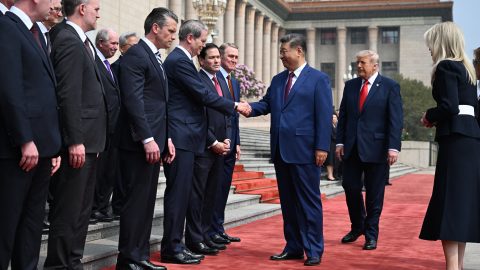
When Trump and Chinese President Xi Jinping (習近平) meet at the White House on September 24, the U.S. government plans to raise AI safety again, Nikkei reported yesterday.



Leave a Reply