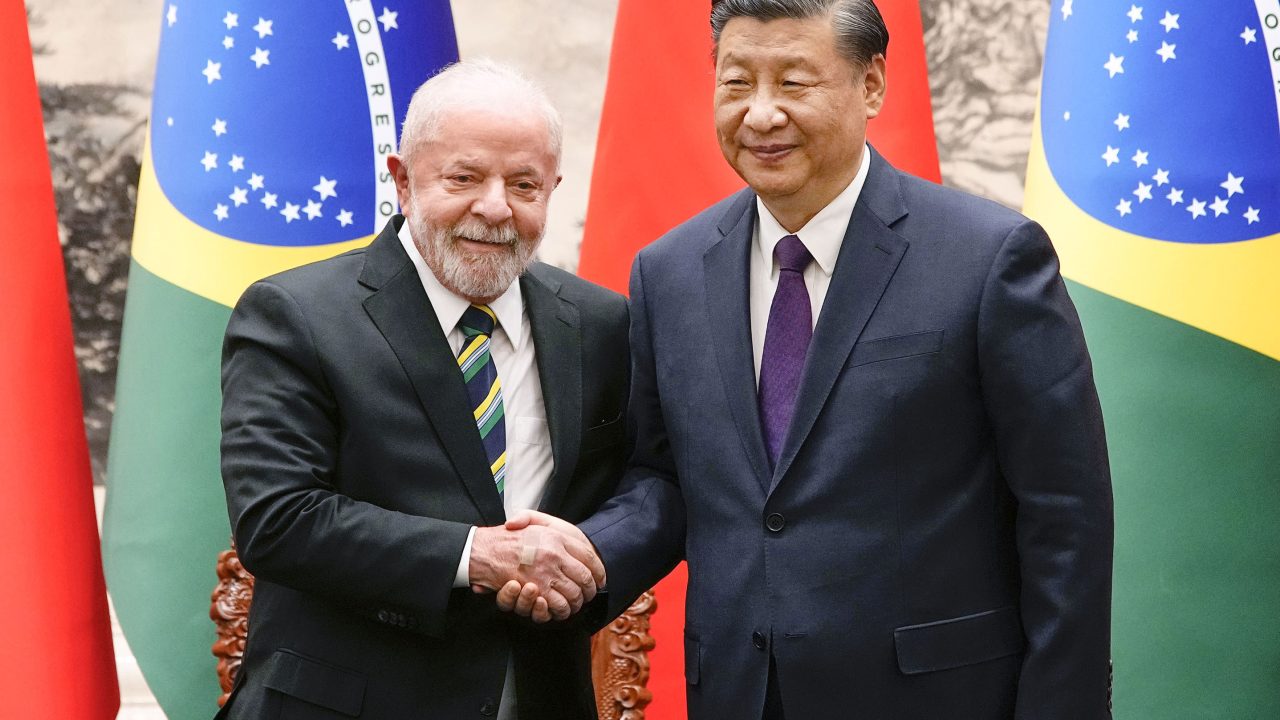
Brazilian President Luiz Inacio Lula da Silva said last month that he is assembling a “proposal to join” China’s Belt and Road Initiative, or BRI, which he plans to discuss with Chinese President Xi Jinping (習近平) at the Asia-Pacific Economic Cooperation forum this November. Brazil’s absence from the BRI to date has been notable, given that Beijing has several times asked Brazil to join the BRI and the two countries have robust trade and investment relations. Brazil is also one of only three countries in South America that is not a member of the initiative. Chinese media have reasoned that Brazil is no longer swayed by criticism from the West, but the reality is likely more complex.
There are several possible explanations for this shift. Lula, who assumed the presidency in January 2023, is more pro-China than former president Jair Bolsonaro. But this is not the full story. China’s record of extractive and unstable foreign direct investment in Brazil may have led Lula to think that the BRI is the key to more robust, consistent and sustainable Chinese investment. And Lula is likely to have concluded that the benefits of BRI membership outweigh the potential costs to Brazil’s relationship with the U.S.
A New Administration
There was a distinct shift in Brazil’s rhetoric toward China when Lula took office in 2023. Bolsonaro initially took a fairly radical anti-China stance, although he tempered his position on China during his presidency. In contrast, Lula, who accelerated Brazil-China relations during his first terms in office (2003 to 2010), declared during his visit to Beijing in 2023 that “Nobody can stop Brazil from continuing to develop its relationship with China.”
Over the past year, Lula has expanded Brazil’s trade with China, securing major wins for the agribusiness sector. China and Brazil officially opened the corn export corridor, which led to the first bulk shipment of Brazilian corn to China. Lula’s administration also negotiated with the Chinese government to approve 38 new meat processing plants in Brazil, the largest number of such licenses China has granted to Brazil at one time. These facilities can now ship meat to China, Brazil’s top destination for beef, pork and poultry exports. Lula also spearheaded a deal with China to bypass the dollar when doing trade between the two countries.
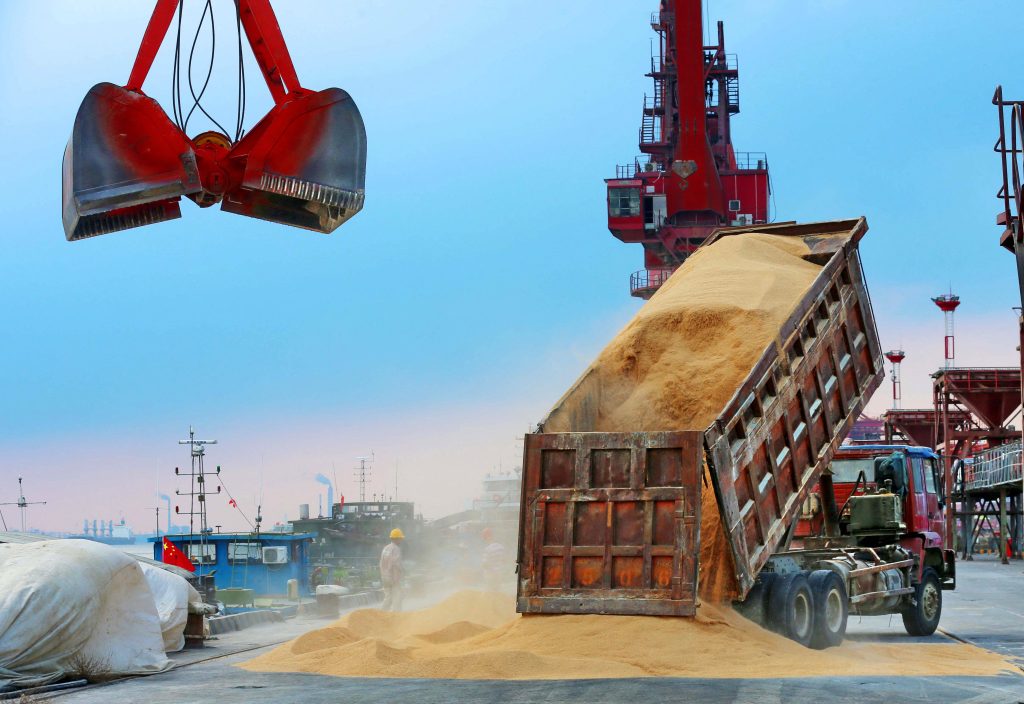
But past Brazilian presidents have hinted at joining the BRI without following through. In 2018, then-President Michel Temer said he attached high importance to the BRI and was willing to expand development cooperation with China. In 2019, Bolsonaro and Xi agreed that the Belt and Road Initiative “may be linked” to Brazil’s development initiatives. And Lula himself has shown some tepidness toward the BRI. During his visit to China in April 2023, many thought he would join the initiative and were surprised when he did not.
Lula is likely wary of mixed reactions at home. According to a Pew Research poll, anti-China sentiment in Brazil has increased in recent years, shifting from net favorable in 2019 to net unfavorable in 2023. In the political sphere, while many in Lula’s Worker’s Party want closer economic ties with China, Bolsonaro allies hold the largest benches in Brazil’s National Congress.
Fluctuating Chinese Investment
Past Brazilian administrations likely did not see sufficient upside in BRI membership. For the majority of the 2010s, Chinese investment in Brazil was abundant. While Chinese direct investment into Brazil was still in its nascent stages in 2010, it grew throughout that decade, surging as other investors withdrew from Brazil during its economic recession and political instability in 2015. Since 2005, China has invested about $71.64 billion, which is more than it has invested in any other Latin American country. However, a closer look at Chinese investment levels since 2018 reveals an unstable supply over the past several years. Chinese investments in Brazil dropped to $1.3 billion in 2022, a 78% drop compared to 2021 and the lowest value since 2009.
To be sure, 2022 was a tumultuous year for China in terms of COVID-19 infections, protests and lockdowns. But while Chinese investments dropped in Brazil that year, there was a net increase in Chinese investments globally, suggesting a realignment of China’s strategic priorities. Hsia Hua Sheng, an economist from the Sao Paulo Business Administration School of the Getulio Vargas Foundation, told Reuters that in the wake of the Ukraine conflict and heightened U.S.-China tensions, China may have decided to focus its investments on BRI member nations.
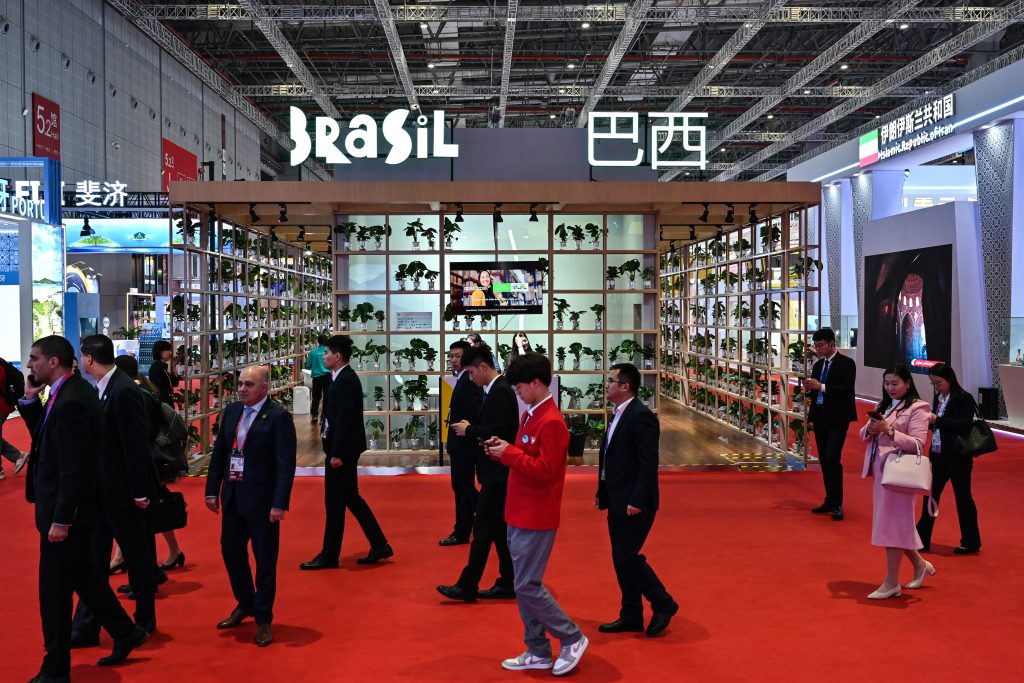
Lula is likely angling for investments that foster trade diversification and long-term economic prosperity. China’s investments in Brazil to date have been critiqued for being low value and extractive, focused on building export corridors that facilitate the flow of grains and oil to China but lead to adverse environmental and social impacts in Brazil. The Brazilian business community is interested in obtaining BRI investment to support Brazil’s logistical and technological infrastructure. And Brazil needs investment to develop its national logistical integration, industrial capacity and technology sector. In his comments about the BRI last month, Lula made clear that he will need to assess what the BRI can do for Brazil, saying, “what is in it for Brazil if we participate in this business?”
Balancing China and the U.S.
Writing last month in the state-run Global Times, Chinese Foreign Minister Wang Yi (王毅) clearly viewed Brazil’s potential accession to the BRI as a triumph of China’s global development strategy and a denunciation of “Western” criticisms of China’s approach. It is no secret that the BRI contributes to China’s goal of enhancing its influence through South-South cooperation. But even if Lula officially decides to join the BRI, it wouldn’t be a decision that is as straightforwardly pro-China as Wang has indicated.
Brazil benefits from its relationships with the U.S. and China and does not want to choose between them. Brazil has a strong economic relationship with China, and the two countries collaborate in institutional forums like BRICS. But the U.S. actually invests more in Brazil than China, amounting to $81 billion in 2022. And Brazil has the economic might to balance its relationships with the two countries via pendulum diplomacy, extracting concessions without fully committing to either side.

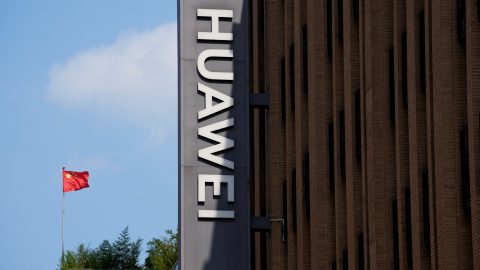
Lula prefers to lean into Brazil’s relationship with China more than the U.S. would like, and joining the BRI might present some additional degree of political cost. But this doesn’t mean that Lula’s administration or future Brazilian leadership won’t also be able to balance Brazil’s relationship with the U.S. Even if Brazil joins the BRI, it would still have leverage because it’s important to U.S. interests — Brazil’s decisions impact South American regional stability, it’s a contributor to deforestation and transnational crime, it can cooperate with the U.S. in international institutions, and it’s an increasingly vital supplier of food and oil globally. This leverage explains why the U.S. has continued forging ties with Brazil despite its involvement in the increasingly anti-Western BRICS and its collaboration with Huawei following the U.S.’s explicit disapproval.
Brazil will only become a more important global player in the coming decades. If Lula decides to join the BRI, it would signal Brazil’s further alignment with China. When it comes to courting Brazil, it’s the U.S.’s game to lose.


Leave a Reply