Nearly 200 Iranian missiles rained down on Israel on Tuesday, but due to Israel’s advanced and multilayered air defense system, only one civilian died. In this article, we take a look at some of the new weapons that Taiwan is introducing for its own air defense, and tackle the question of why Taipei is acquiring two relatively similar defensive systems, Land Sword 2 (陸射劍二) and NASAMS (National Advanced Surface-to-Air Missile System), both of which could be said to be “medium range” systems, existing in the gap between Stinger and Patriot (to take two relevant systems that Taiwan already has in service).
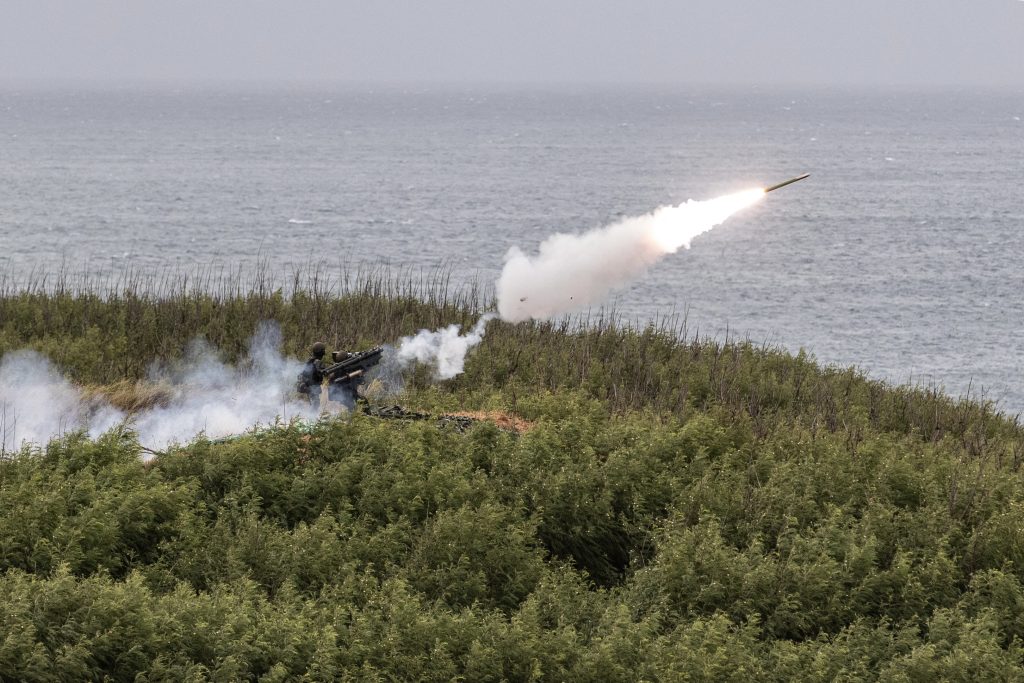
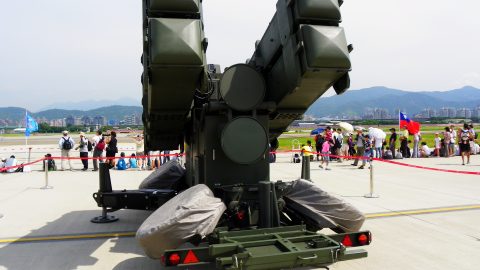
Land Sword 2 is an air defense system that uses the Sky Sword 2 (天劍二) TC-2 air-to-air missile developed domestically for the Taiwanese air force. It has a range of 15 kilometers. Land Sword 2 has entered service with the army, which will initially field six batteries including 30 launchers. Land Sword 2 also shares lineage with the TC-2N air defense system used by the Taiwanese navy, but TC-2N missiles have a booster stage that gives them a longer range.
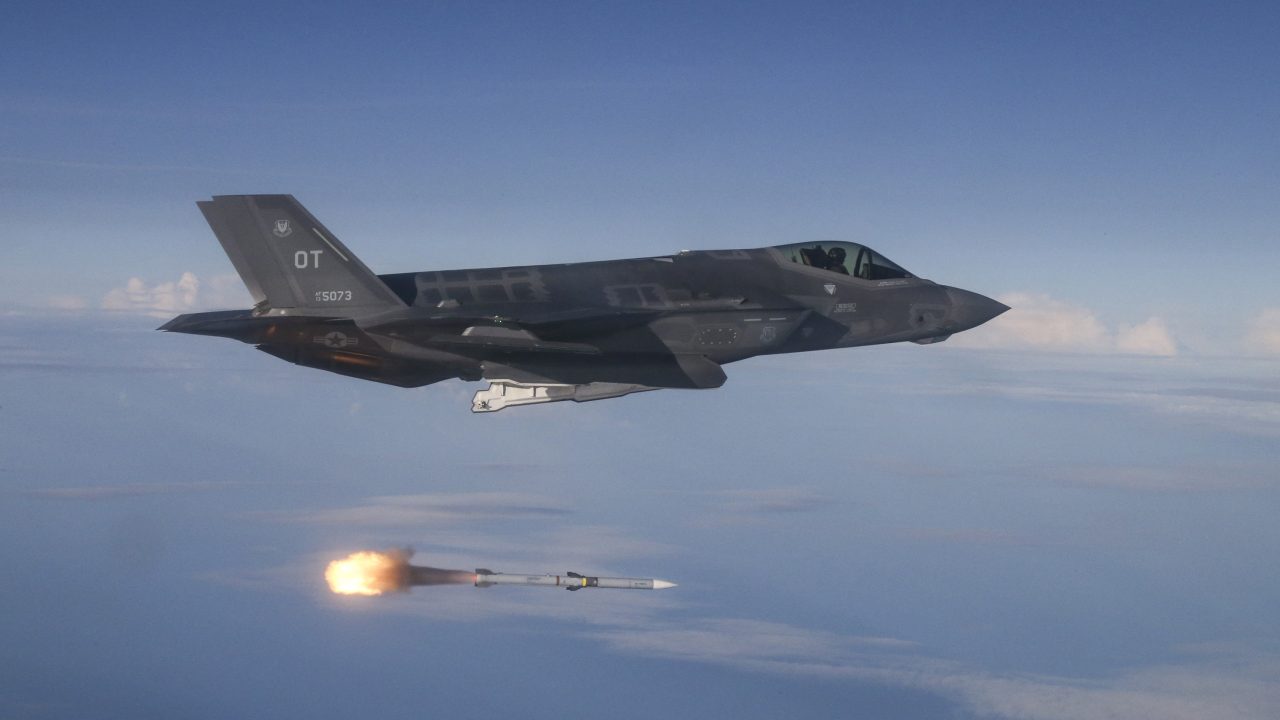
NASAMS is an air defense system that uses several different air-to-air missiles, including the AIM-9X Sidewinder, the AIM-120 AMRAAM and the AMRAAM-ER. These missiles are effective to different ranges, but overall NASAMS is said to have an effective range of 50 kilometers. NASAMS is jointly developed by Norwegian company Kongsberg and American company Raytheon. Taiwan has purchased four batteries of NASAMS from the U.S. which were due to arrive this year but have not yet.
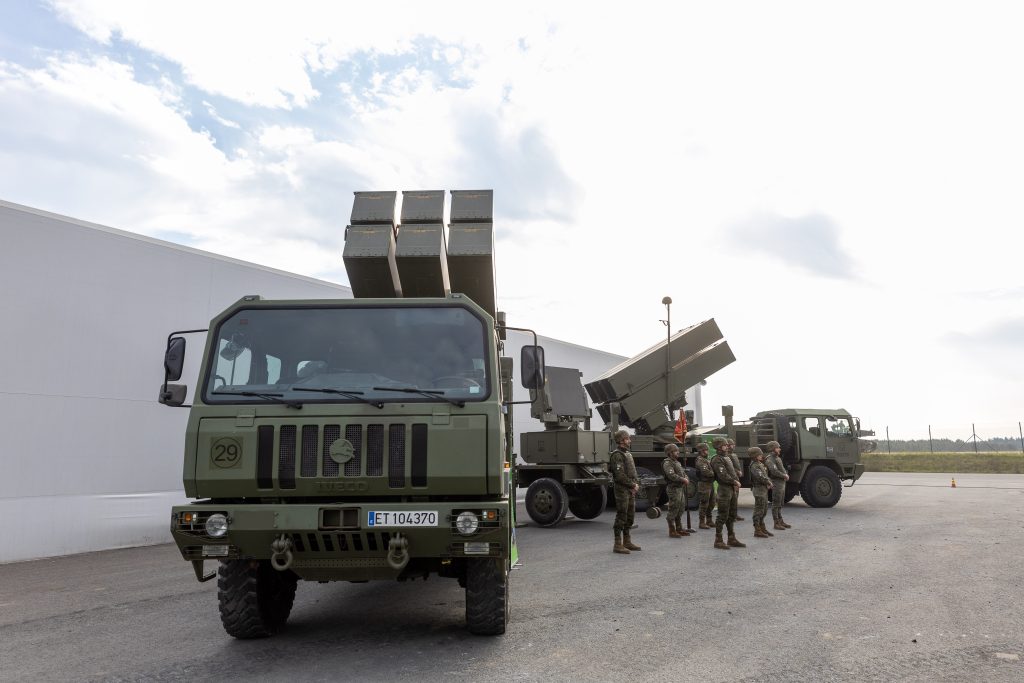
In an excellent article earlier this year, Taiwanese media Central News Agency discussed some of the reasons why Taiwan is acquiring both systems. To summarize the key argument of the piece, NASAMS has a longer range (good!), but is procured in low numbers (bad!), and so Land Sword 2 can supplement and plug the gaps that NASAMS doesn’t cover. The article also explains that these medium-range systems are better suited to engaging threats at a lower altitude than the long range systems that Taiwan has, Patriot and Sky Bow 3 (天弓三型) TK-3.
In the Central News Agency article, the rationale for purchasing both systems is given in pure military terms, but I think there is more to it. Below I offer five additional reasons why Taiwan is buying both systems, and why it is right to do so.
The first is quality. The experts Central News Agency consulted somewhat skirt this issue, but the reality is that NASAMS is almost certainly a better system in most respects than Land Sword 2. The fact that the range is longer means that it can act as an “umbrella” for a larger area (as the Central News Agency correctly points out). It also means that a battery has more time to deal with enemy missiles that are targeting sites close to the battery, and time is everything.
Beyond range, NASAMS likely comes with a more advanced radar than Land Sword 2, and the Sidewinder and AMRAAM missiles it fires are likely more advanced than the TC-2s. We can say this with some confidence because the U.S. throttles the technology it gives Taiwan access to (to some extent), which in turn means that subsequent generations of indigenous systems Taiwan develops tend to “lag” their international counterparts. Additionally domestic systems will still use parts purchased from abroad and these may also not be the most advanced system available. While there may be certain dimensions where an indigenous Taiwanese system outperforms, overall it is likely some way behind.
Why not then, you ask, simply buy only NASAMS and not bother with Land Sword 2?
Because, to the second point, quantity has a quality all of itself. If there is one thing we have learned from Ukraine (there is more than one thing), it’s that a country defending itself from an aggressor cares a lot about having any kind of air defense system, and comparatively little about what kind it has. In fact, Ukraine has gladly accepted donations of the relatively old HAWK air defense system that Taiwan is now replacing (if only Taiwan would join other countries in giving its Hawks to Ukraine).
Ukraine has convincingly demonstrated that you can build a credible air defense system out of many composite parts, something no one would have attempted prior to the Russian invasion. Necessity is the mother of invention, Ukraine is the mother of FrankenSAM.
In March of 2022, Ukraine told the U.S. it needed 500 Stinger air defense missiles a day (and this is just one system, albeit a smaller one). On Monday of this week, Ukraine shot down 67 Russian drones over Kyiv. Taiwan has ordered 246 missiles for Land Sword 2 and “nearly 300” missiles for NASAMS. This is clearly inadequate, but it would be worse if Taiwan had only ordered one of the two systems.
NASAMS is manufactured internationally, by Raytheon and Kongsberg. They have their own supply chain, and many international customers (Ukraine not least among them). If Taiwan were to choose only NASAMS, it would put itself into a queue and attach itself to a single bottleneck, both of which are undesirable. Choosing to bring in multiple new systems means more systems on the ground, faster.
This effect is even exaggerated for Taiwan because it is unlikely to find international buyers for its own system so it can fully prioritize itself, if only it had the determination to increase production for its own use.
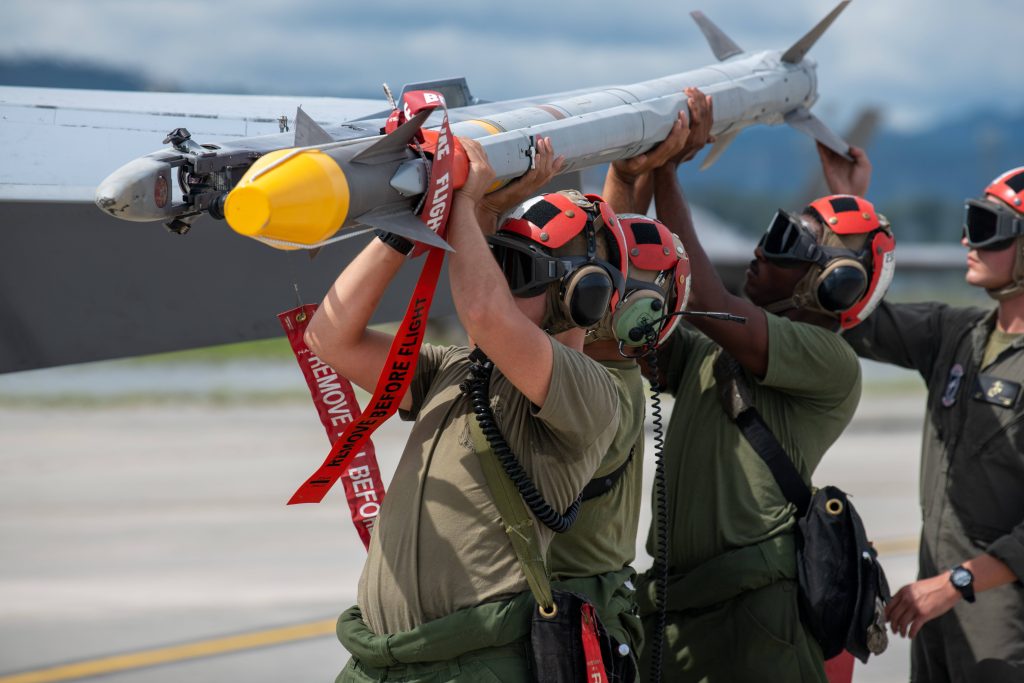
The third point is a virtue that NASAMS has and Land Sword lacks. Unlike many air defense systems, both are adapted from and integrated with an air-to-air missile (which is one reason why they have a relatively short range). The huge potential benefit of this is that the system can use the stock of missiles an air force already maintains for its jet fighters.
This matters more for Taiwan than for most militaries, because it is generally believed that Taiwan will not be able to maintain much offensive air capacity through the first onslaught of a Chinese attack. In the worst case scenario, Taiwan would have hundreds of air-to-air missiles and no planes to fire them from. NASAMS means that those missiles still have a role to play to defend Taiwan.
However, while NASAMS can fire several different types of air-to-air missile in the Taiwanese air force’s inventory, it cannot use Taiwan’s TC-2. Unfortunately, neither can Land Sword 2. While the missiles it fires are still described correctly as TC-2s, they are purpose built for the system and existing air force stocks are not fireable by the batteries. It’s not clear what technical challenges would need to be overcome, but it seems worthwhile to solve them in the future.
Fourthly, buying NASAMS is good for Taiwan’s relationship with the U.S. American defense analyst Ivan Kanapathy pointed out at a recent event in Taipei that Taiwanese arms purchases reduce the trade deficit with America somewhat and send a clear message to American politicians that Taiwan is investing in its own defense. A message that those politicians can take back to their constituents and show that they are helping the American economy. Taiwan would be better off if it was able to buy from multiple international sources, but it’s undoubtedly also true that Taipei needs to be rewarding its principal ally, the U.S., by investing in its military systems.
There is simultaneously another unappreciated point here, which is that NASAMS is to some extent a Norwegian system. While Taiwan isn’t buying it from Norway, it’s useful to demonstrate that this model of acquiring military systems can work, since there are certainly other systems that Taiwan would like to procure in a similar manner.
Having a system which uses missiles produced internationally also means that Taiwan could, in theory, be resupplied with ammunition during wartime, which as Ukraine has shown could be vital (although whether in practice this would be possible or whether a war across the strait would last that long is a different question).
Finally, obviously, is the domestic component. Taiwan needs a healthy defense industry of its own. To that end, it needs to be developing and acquiring its own systems, even if they are somewhat inferior to what the U.S. has to offer. Not only does this mean that more of Taiwan’s defense spending is recycled into the Taiwanese economy, with more control over the production, Taiwan can exert more control over the quantity issue identified earlier in this article. More in-house knowledge also gives Taiwan more ability to hedge for the future, whether that is over concerns that the U.S. might be less interested in selling to Taiwan, or perhaps in making Taiwan a more attractive partner for countries that want to invest into their own defense industries.
In the end, Taiwan needs to maintain a large enough air defense capacity that, after weeks of conflict with China preceding and even following an attempted invasion across the strait, the Taiwanese military is still able to contest the air space over and around Taiwan. NASAMS and Land Sword 2 are simultaneously suited to this task and insufficient for it in the numbers so far procured.
It’s a tiresome refrain, but Taiwan simply needs to do more.
An earlier version attributed the piece by Taiwan’s Central News Agency to United Daily News




Leave a Reply