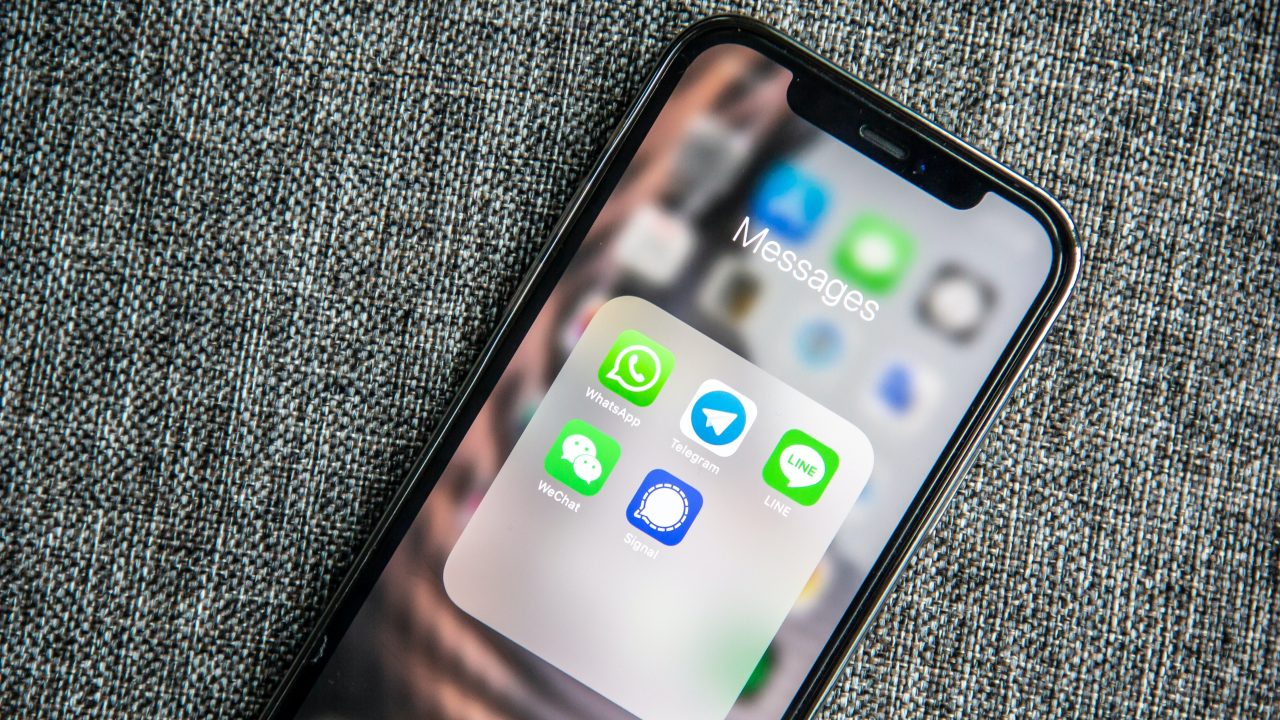
A central plank of the way many U.S. thinkers differentiate between the U.S. and China is their approach to technology. China’s approach is often characterized as Digital Authoritarianism, with one key idea within that being that super apps like WeChat — platforms that integrate a wide variety of services, with a shared access point and payment system — heavily centralize data and in doing so enhance the Chinese government’s ability to surveil and influence its citizens.
The idea that increasing Chinese power would mean the spread of such an approach is common. “The world itself would be a much more authoritarian, corrupt and dictatorial place. It wouldn’t be a welcoming place for Americans, who cherish their freedoms and their liberties and so on,” Dan Blumenthal, the director of Asian studies at the American Enterprise Institute, said when asked why Chinese hegemony would be bad for the average American citizen recently. “The Chinese would enforce their will as they’ve done in Hong Kong and other places to make more countries authoritarian and dictatorial.”
However, there are reasons to believe that this divide won’t remain as clear cut — and that the U.S. and its allies may choose to adopt super apps themselves, albeit it remains to be seen exactly what shape they will take.
“I’m a failed American because I am a believer. And I believe it will come to America in due course,” said Laura McKracken, advisory board member of the Payment Association, at a recent webinar hosted by the Technology and Management Centre for Development at the University of Oxford. McKracken thinks cultural changes across generations could facilitate the shift. “Things are changing in the West because you’ve got the evolution of Gen Z … Gen Z is growing up [and] they are really saying that they want to be influencers, they want to be creators. They’re adopting this whole idea of ‘social commerce,’” she said. She added that within existing apps the “plethora of choice” required more organization, and thus “you’re going to have consolidation. You’re going to have cannibalization.”
The obvious case for this prediction coming true is that it’s already easy to find those in the U.S. or European business communities who see super apps as something of an “untapped” resource. Elon Musk, most notably, has openly declared the aim of turning X (formerly Twitter) into a super app.
But there is more to this than the desires of future influencers looking for convenience and billionaires looking for profits. Because super apps could also offer more fundamentally useful services than e-commerce and social media.
“What if Chinese platforms can offer digital health care services within five or ten years, at 25 percent or 50 percent lower costs because of the digitisation? How many governments can resist that?“ Wim Vanhaverbeke, professor of digital strategy and innovation at the University of Antwerp, asked at the same webinar as McKracken.
What he was referring to was China’s experience with WeDoctor, an online platform that operates within WeChat, connecting large numbers of stakeholders to provide online medical services. In 2022 it was said to have 250 million users, accessing services such as chronic disease management. “Patients with conditions such as diabetes, hypertension or asthma can receive personalized care plans, monitoring tools and access to specialists to effectively manage their conditions remotely,” for example.
Speaking to Domino Theory via video call, Vanhaverbeke explains that against a backdrop of demographic aging, with shortages of health care staff, health care systems in Europe and the U.S. are in need of efficiency savings. This makes the efficiency of a potential health care super app, which can connect up medical services — be they day-to-day or medical research — a compelling prospect.
This possibility is harder to dismiss than the expansion of e-commerce apps, but it raises two concerns. First, the issue of privacy, particularly around medical data. Second, the related issue of the significant power that would be granted to whoever owned such a platform, either from the data it controlled or the capital it generated. The likes of Elon Musk already command absurdly large swathes of investment within today’s economy, and this kind of development risks exacerbating that.
In answer to these points, Vanhaverbeke makes the case that the precarious nature of health care right now, plus the inherent usefulness of this solution, means the choice is not really whether we accept super apps or not, it’s more that European and U.S. governments can either begin to regulate them and grow the technology now or wait until it’s too late. “You can’t just run away from it,” he says.
In Vanhaverbeke’s view, the better option would be encouraging these platforms (perhaps with subsidies) now, and in doing so directing them away from services we don’t want them expanding into. (E-commerce mixing with health care data, for this writer, doesn’t sound great, for instance.) Basically, governments would intervene early on to avoid these platforms becoming privacy-destroying monstrosities, and instead make sure they serve a wider public interest, decided democratically.
Now, there will rightly be skepticism around this kind of centralization. McKracken pointed out during her talk that “Especially the Americans have visceral reactions [against super apps] — they’re like, ‘No, it will never happen.’” And even advocates acknowledge the potential risks. But once you frame the issue around something like health care, rather than getting more convenient access to social media or buying cheap junk, it at the very least emphasizes the need for serious consideration.
Ultimately, that all leads to a question: Can a rational discussion be had about technology like this, in the atmosphere of geopolitical tension between the U.S. and China, when so much store is set on technology as a key divide between the two?







Leave a Reply