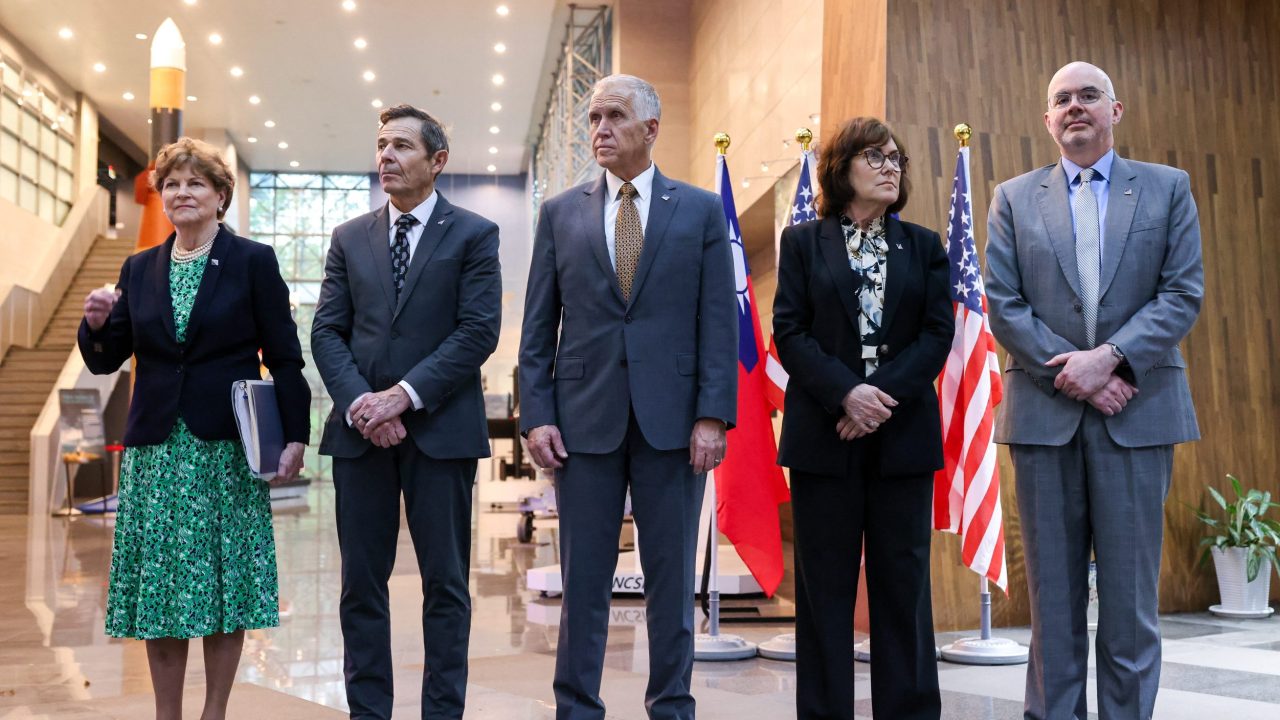
In the lead-up to Donald Trump’s trip to Beijing last week, U.S. lawmakers passed a series of resolutions aimed at steering the president toward a tougher stance on China.
A House resolution calling on Trump to prioritize the release of pro-democracy activist Jimmy Lai (黎智英) and other political prisoners passed by a 414-0 vote. A letter directly calling for Trump to approve a $14 billion arms sale to Taiwan drew signatures from both parties. In a May 1 resolution, a bipartisan group of 16 senators expressed concern about the growing threat that China poses to U.S. national security and economic interests.
“The United States Senate is sending a clear message: Remember who Xi Jinping and the PRC are,” Senator Chris Coons said in a statement at the time, referring to the People’s Republic of China.
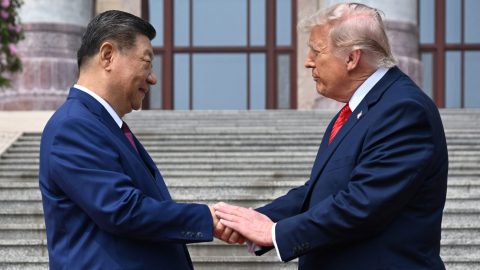
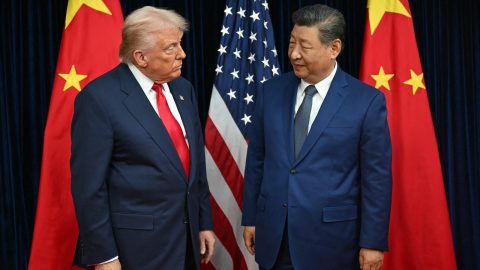
During his trip to Beijing last week, Trump took a different tack. He took a conciliatory tone when speaking about China’s leader, Xi Jinping (習近平), prioritizing a display of friendship over any public rebuke on Taiwan or human rights.
After the summit, Trump said that he considers the pending arms sale to Taiwan to be a bargaining chip in his dealings with China, apparently contradicting a longstanding pillar of U.S. Taiwan policy that Washington will not negotiate with Beijing on support for its democratic ally. The Trump administration has said that its Taiwan policy remains unchanged.
Yet Trump’s remarks have put him temporarily out of sync with the U.S. Congress, which for years now has maintained a consistently tough stance on China, while being more straightforward than the executive branch in its support for Taiwan.
“We are deeply disturbed by President Trump’s refusal to defend America’s support for Taiwan during this summit, including by consulting with President Xi regarding U.S. obligations to help provide for Taiwan’s defense,” Democratic members of the Senate Foreign Relations Committee wrote in a statement following the summit. “We call on the Administration to formally notify the $14 billion in U.S. arms sales that Congress pre-approved in January 2026.”
They added: “As established by the Taiwan Relations Act of 1979, Congress will continue to ensure that the United States supports Taiwan, including by rejecting any attempt to alter the status quo by force or coercion.”
“It’s a bipartisan view that we can’t allow China to just militarily take over Taiwan,” Democratic Congressman Ro Khanna said in a Monday appearance on CNBC’s “Squak Box.” He went on to add: “I don’t think that our view that Xi Jinping should not militarily coerce Taiwan should be a bargaining chip.”
There have also been indications, however modest, that congressional Republicans are ready to push Trump back toward a tougher stance on China. On Friday, Senator Roger Wicker of Mississippi shared a clip on X of former Secretary of State Mike Pompeo calling Xi Jinping “without a doubt the coldest and most ruthless leader I’ve encountered.”
On Saturday, Senator John Curtis, a Republican from Utah who visited Taiwan earlier this year, wrote in a post on X: “Taiwan’s recently approved supplementary defense budget is an important investment in deterrence and stability in the Taiwan Strait—and shows that Taiwan takes its self-defense seriously and stands ready to purchase defense systems from the United States.”
He concluded: “Approving the $14 billion arms sale package honors America’s well-established commitments to Taiwan and will help safeguard our national and economic security.”





Leave a Reply