
The engineers who head each day to Hsinchu Science Park to grind out the world’s most advanced AI chips have brought spectacular wealth to the surrounding areas.
The satellite town of Zhubei, to Hsinchu’s northwest, boasts the highest per-capita Porsche sales in Taiwan. Tesla chargers line the public parking lots. At a local cafe, housewives compare notes on buying real estate abroad.
But Zhubei’s boom has also earned it a unique position in Taiwanese politics. In the 2024 presidential election, Zhubei handed the insurgent Taiwan People’s Party, or TPP, and its founder, Ko Wen-je (柯文哲), a surprising 38% of the vote.
Now, two years later, with Taiwan’s local midterm elections fast approaching, the TPP is on the verge of a collapse nearly as spectacular as Zhubei’s rise.
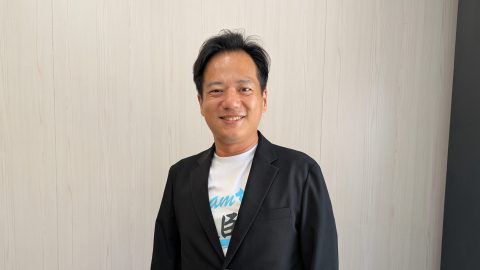
The party’s hopes for the future now rest in part on the shoulders of its Zhubei mayoral candidate, Chiu Chen-yuan (邱臣遠), a former head of the TPP’s legislative caucus who briefly served as acting mayor of Hsinchu last year.
Chiu’s career progression — from national legislator, to acting mayor of a major city, to mayoral candidate for a satellite town of that city — isn’t so unusual in a party built largely around the charisma of Ko, who was already a national political figure when he founded the TPP.
“Looking at the typical career path of a politician, one usually starts as a grassroots representative, then moves up to city councilor, legislator and eventually municipal mayor,” Chiu said in an interview at his campaign office in Zhubei last month. “My path, however, has been somewhat in reverse. My trajectory actually mirrors that of the TPP.”
But it is striking that the TPP, a party that has wielded considerable influence in Taiwan’s legislature since it captured eight seats there in 2024, may now have to win in places like Zhubei if it wants to survive.

The good news: Voters in Zhubei are practical and free-thinking, hewing less closely to the traditional blue coalition, green coalition dichotomy that defines local politics in many parts of Taiwan. But Chiu’s national resume might not be such a boon here. Voters who spoke to Domino Theory said they are looking for a candidate laser-focused on local issues.
Danny Lin (林佑倫), a 48-year-old department head at Foxconn and father of a 3-year-old boy, said the livability of the area is his primary concern. “We’re all way too busy at work,” Lin said. “The only time we really have is weekends and off-work hours. So as long as you can shape an environment that’s comfortable, where I can truly unwind … as long as you do a solid job, or you have a real vision and a concrete plan, we will give you our vote.”
The bad news: Third parties in Taiwan have a long history of flaming out. In the early 2000s, the People First Party controlled nearly a quarter of the national legislature. But it faded from relevance as its founder aged. In 2014, the Sunflower Movement protests — which emerged in opposition to then-President Ma Ying-jeou’s (馬英九) efforts to encourage more economic integration with China — spawned the New Power Party. But that group soon fell apart as well, falling prey to infighting over how to ally itself with Ma’s much larger opponents, the Democratic Progressive Party.
Ko, a former surgeon, founded the TPP in 2019 when he was mayor of Taipei. The TPP offered a practical-minded alternative to the partisan politics of the DPP and KMT, an attractive sales pitch to the sort of young, highly educated tech workers who populate Taiwan’s prosperous northern cities.
Ko continues to enjoy significant popularity and was widely seen as a potential repeat presidential candidate in 2028. But earlier this year, he was sentenced to 17 years in prison on corruption charges. Ko has appealed that verdict, but the legal process could take years. In the meantime, he is barred from running for public office.
Ko’s conviction has left the day-to-day leadership of the TPP in the hands of Huang Kuo-chang (黃國昌), a former leader of the New Power Party who now serves in the legislature. Huang has been accused of voluntarily subordinating his party to the KMT, with whom TPP legislators have voted in lockstep on major issues like defense spending. Huang’s approach was underscored by his decision earlier this year not to seek the New Taipei City mayorship, an office he was widely understood to covet.
Which leaves less known figures like Chiu to battle it out in the affluent trenches of Zhubei.
“Every election is an existential battle for the TPP,” Chiu said. “A young party cannot survive solely on digital air combat and national hot-button talking points. Leaders have to be willing to get their shoes muddy.”



Leave a Reply