Semiconductors and Artificial Intelligence
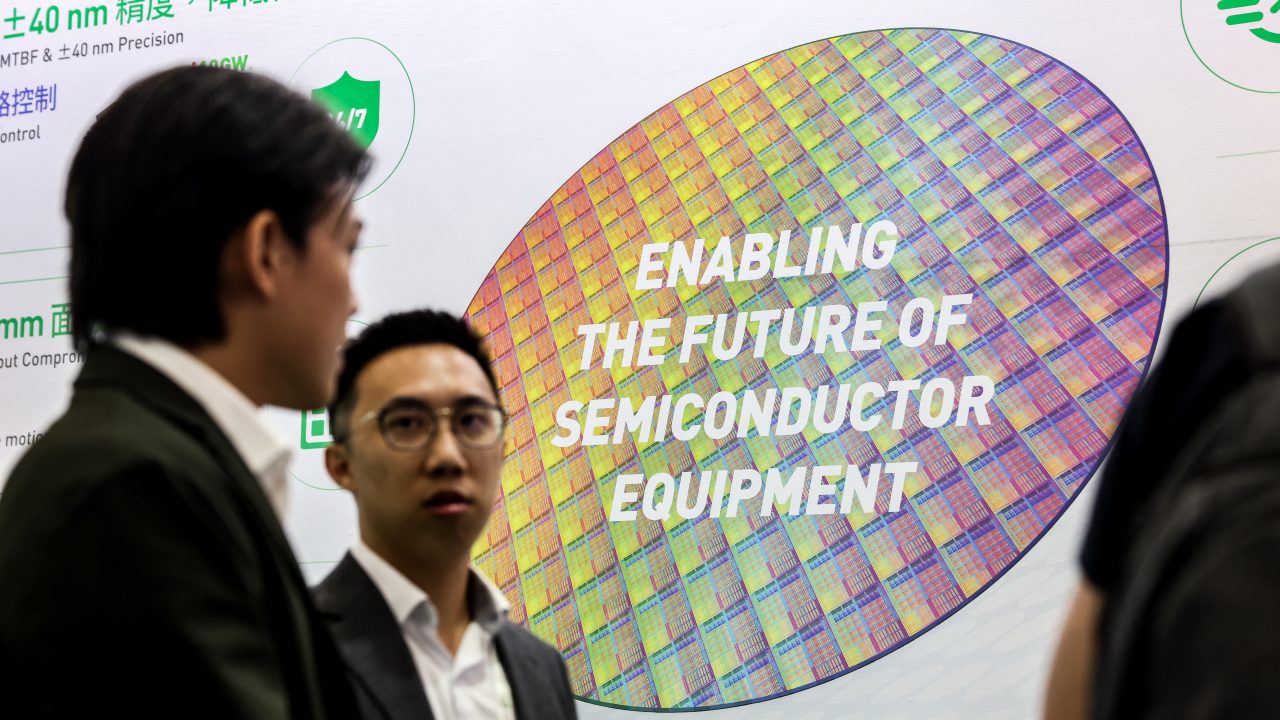
Global AI demand is continuing to drive Taiwan’s economic growth. The Philippines-headquartered Asian Development Bank recently raised its projection for Taiwan’s GDP growth in 2026 to 11%. Across the first half of the year, Taiwan’s economy grew over 14%, with tech exports rising 65% in terms of dollar value. The manufacturing sector grew at the fastest pace in more than five years in September, according to the manufacturing purchasing managers’ index.
Continuing Taiwan’s legacy of public-private cooperation on tech, the cabinet announced last month that the government plans to invest 300 billion New Taiwan dollars ($9.51 billion) through 2033 to support research and development and talent cultivation for the domestic chip industry. On Teachers’ Day, President Lai Ching-te (賴清德) announced that Taiwan is investing NTD 11.76 billion by 2029 to help equip educators with digital and artificial intelligence skills. Taiwan’s Ministry of Health and Welfare organized a conference this week to showcase applications of 3D medical imaging and metaverse technologies in medicine.
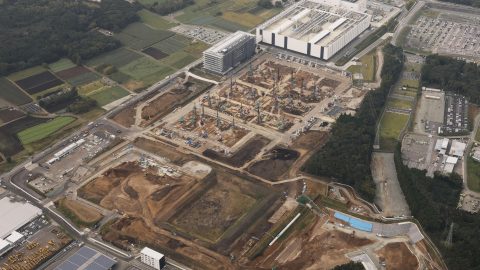
TSMC broke ground on the new Baipu Industrial Park in Kaohsiung last month. The company will build two facilities, including a technology validation laboratory and a talent training center. Both are set to open at the end of 2029.
Outside of Taiwan, TSMC is reportedly considering building a second U.S. campus in Dallas, according to anonymous sources who spoke to UDN and Reuters. The investment would build on the $265 billion that TSMC has already pledged to invest in the U.S. TSMC Arizona began high-volume production at its first fab in 2024, while three other fabs are at various stages of construction. TSMC is planning for more than nine facilities in Arizona, including spaces for research and development and packaging. Taiwan’s Ministry of Economic Affairs said last month that it has approved applications for TSMC to invest $44 billion in the U.S. so far.
The approximately 500 Taiwanese engineers who are reportedly working for TSMC in Arizona will now be served by the new Taipei Economic and Cultural Office in Phoenix. The office opened on Monday despite repeated objections from Beijing. “Every Arizona elected official should show the courage necessary to support the partnership between Arizona and Taiwan,” Arizona Governor Katie Hobbs said during the opening ceremony.
International companies are also investing in Taiwan. AMD’s chief executive, Lisa Su, told reporters in Taipei yesterday that the chip designer plans to expand its investment in Taiwan’s semiconductor ecosystem beyond the $10 billion it pledged in May. In response to a question from Domino Theory about preparing for potential cross-strait conflict, Su said that “for all businesses it’s good to have geographic diversity.” “But there’s no question Taiwan is absolutely critical to the semiconductor supply chain and very, very critical for AMD,” she added.
Additionally, Amazon is becoming a shareholder of Taiwanese printed circuit board, or PCB, maker Gold Circuit Electronics after purchasing about 1.86 million shares at NTD 856 each last week. Earlier in September, Google announced that it is expanding its Taiwan office space by 60%.
Taiwanese prosecutors continue to confront illegal dealings with China in the development and trade of chips. Lin Hao-yuan (林浩原), head of the Taiwan office for Chinese chip designer Lontium, was indicted for operating an unregistered Chinese office. Lin was charged with contravening the Act Governing Relations Between the People of the Taiwan Area and the Mainland Area, which prohibits Chinese companies from conducting business in Taiwan unless they have received approval.
Just earlier this week, the New Taipei City Prosecutors Office indicted 10 people for profiting over NTD 300 million on a scheme to divert controlled AI chips to China. The defendants, who have been charged with fraud, forgery and money laundering, evaded U.S. export controls by falsely claiming that the National Chung-Shan Institute of Science and Technology was the final destination for chips that were resold to Hong Kong to ultimately supply Chinese military weapons.
The Administration for Cybersecurity, housed under the Ministry of Digital Affairs, announced last month that it plans to shore up existing defenses and expand the scope of cybersecurity governance to information and communications tech products and supply chains in order to guard against AI-enabled cyberwarfare. Taiwan will also seek access to international frontier AI models, strengthen mechanisms for sharing threat intelligence and enhance domestic cross-sector collaboration on cyberdefense. This follows an AI-assisted cyberattack by China-linked actors in July, which compromised “at least 85 government user accounts, extracting more than 2,500 personnel records before expanding the attack to Taiwan’s nuclear safety agency and at least seven energy companies,” the Financial Times reported.
Defense and Space Technology
When it comes to geopolitics and defense tech, the elephant in the room is the $14 billion U.S. arms package for Taiwan that President Donald Trump has continued to stall since his May summit with Chinese leader Xi Jinping (習近平). At the 2026 Resilient Taiwan for Sustainable Democracy International Forum, which took place in Taipei last month, Anduril founder Palmer Luckey told reporters that the delay was affecting his business. “[O]ur business with Taiwan would be in a different place if you had that $14 billion moving forward,” Luckey said.
There is still no movement on this package following Trump’s most recent summit with Xi in Washington. Speaking to reporters last week, Taiwan Deputy Foreign Minister Francois Wu (吳志中) stressed that arms sales to Taiwan serve U.S. interests by “allowing Taiwan’s semiconductor industry to continue contributing to the world.”
U.S.-Taiwan collaboration on defense tech is flourishing at other levels of government. For example, Taiwanese startup SteadyBeat, which specializes in edge AI and acoustic intelligence, signed a memorandum of understanding with Orange County, New York in September to expand its U.S. operations and promote research and development and talent cultivation for next-generation unmanned systems. Potential cooperation with the U.S. Military Academy, or West Point, was emphasized at the signing ceremony in Hsinchu. In Taiwan, the National Defense University tests SteadyBeat’s solutions and shares the results with the Taiwanese military, Chairman George Hsueh (薛宗智) told Domino Theory. SteadyBeat would like to replicate this model with West Point in the U.S.
In terms of supply chain cooperation, leaders at Shield AI, an American aerospace and defense tech company that makes AI software for drones, recently said that Taiwan’s share of the materials and components used in their aircraft rose from 1% to 16% in the past couple of years, and could soon reach 25%.
In other drone news, during live-fire drills in Pingtung County last month, Taiwan tested multiple types of attack drones for the first time. The drills demonstrated to the international community “that the armed forces have confidence in their ability to defend national sovereignty,” President Lai said in remarks after the exercises.
Two MQ-9B SkyGuardian drones also underwent flight testing in Taiwan last month. These are the first two drones to be tested out of the batch of four that the U.S. promised to Taiwan. The SkyGuardian drones specialize in surveillance and reconnaissance as opposed to offensive capabilities.
Finally, Taiwan completed delivery of the T-5 Brave Eagle advanced jet trainer program on September 24. The program was launched in 2017 as part of former President Tsai Ing-wen’s (蔡英文) push for indigenous defense production. Taiwan’s military now has 65 Brave Eagle jets.




Leave a Reply