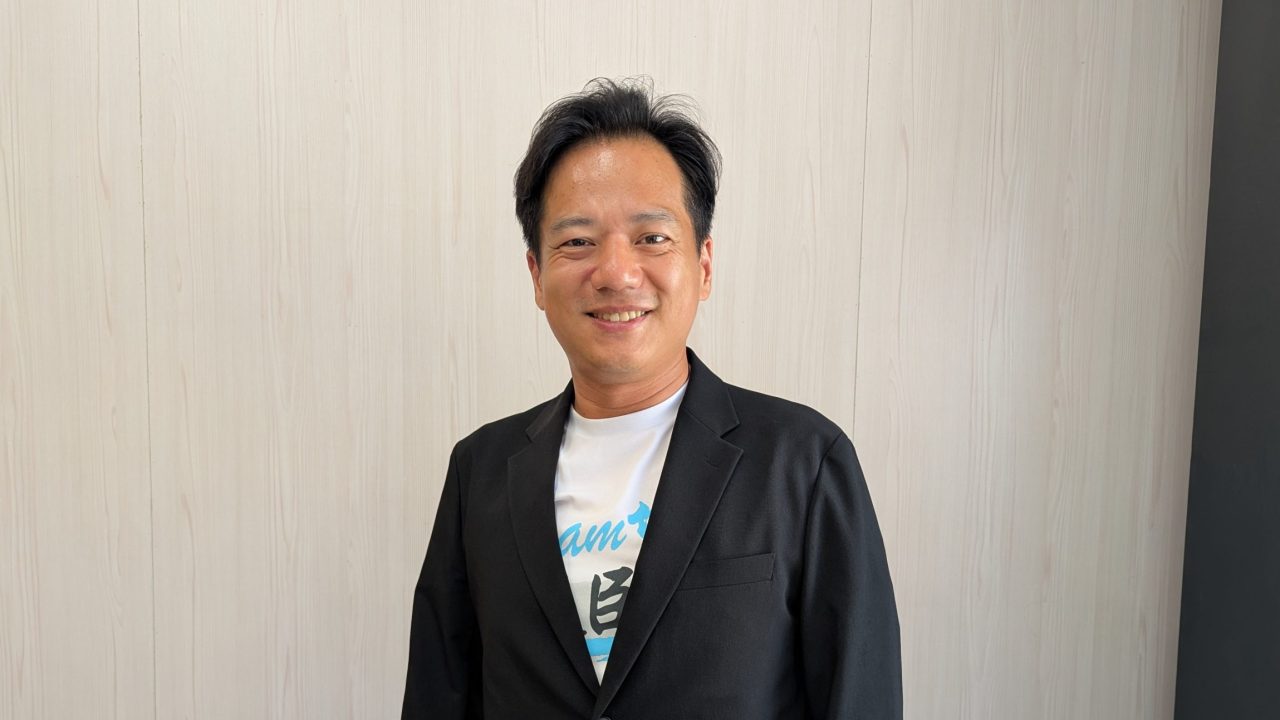
Candidates for mayor in Zhubei don’t want to talk about national politics. The booming suburban municipality — just across the river from the epicenter of the global AI chip boom and home to Taiwan’s highest birth rate — has become a magnet for wealthy engineers and foreign news features.
But ask local politicians about the sorts of things observers outside of Taiwan tend to worry about — cross-strait relations, the future direction of Taiwan’s political parties — and they’d prefer to bring it back to local, bread-and-butter issues.
“What do young parents care about most? Education and cross-county traffic,” said Chiu Chen-yuan (邱臣遠), the Zhubei mayoral candidate for the Taiwan People’s Party, or TPP, in an interview with Domino Theory early last month.
Running in one of the crucial bellwethers for Taiwan’s nationwide local elections, slated for November 28, Chiu and his competitors might not have a choice.
The Zhubei mayoral race is one of more than 10,000 public offices in Taiwan up for election next month. The contests span every level from village heads, a role as humble as it sounds, to city mayors, some of whom serve millions of constituents.
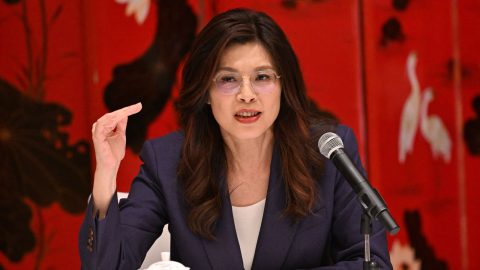
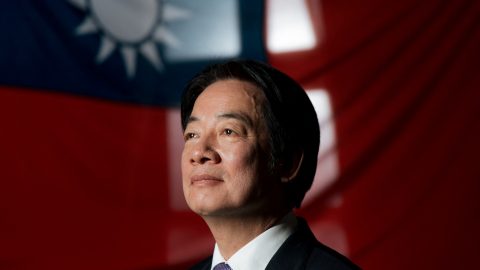
The political stakes of these races are as high for Taiwan as next month’s midterm elections will be for the United States. A weak showing for the Democratic Progressive Party, or DPP, could weaken President Lai Ching-te’s (賴清德) grip over the ruling party, calling into question his stubbornly defiant approach to governance. A poor performance for the main opposition Chinese Nationalist Party, or KMT, could spell the end for pro-China hardliner Cheng Li-wun’s (鄭麗文) leadership. If the TPP comes up short, it might soon not exist at all.
The race for Zhubei is unusually crowded. Taiwan has three main political parties, but four candidates are vying for the mayor’s office: Chiu, a former acting mayor of Hsinchu City, the chipmaking boomtown to Zhubei’s south; the KMT’s Wu Hsu-chih (吳旭智), a former Hsinchu city councilor who has a PhD in computer science; the DPP’s Tseng Sheng-kai (曾聖凱), a professor of urban design at an elite university in Hsinchu; and finally, Zhubei resident and China native Li Chen-hsiu (李貞秀), whom we profiled when she was a TPP lawmaker back in March. Li has since run afoul of her party’s leadership and is now attempting to run as an independent. (Because of Li’s ambiguous citizenship situation, she is still waiting for approval from Hsinchu County Election Commission to officially enter the race.)
Despite the mayoral candidates’ desire to stay focused on local issues, Zhubei has also become a microcosm for interparty conflicts at the national level. On Wednesday, Chairwoman Cheng reportedly prohibited members of her party from campaigning for Chiu. This came after the TPP’s chairman, Huang Kuo-chang, posted a photo of himself alongside Chiu and several KMT lawmakers.
The KMT and TPP, despite their significant differences, have acted in united opposition to the DPP since the beginning of President Lai’s term in 2024. In March, they reached an agreement to coordinate campaign efforts this fall, with the TPP agreeing to throw its weight behind the much stronger KMT in most races, and the KMT to help the TPP in a select few.
The Hsinchu area has historically been home to the highest rates of TPP support anywhere in Taiwan. In 2022, Ann Kao (高虹安) won the Hsinchu mayoral race for the party. In the 2024 presidential election, Ko Wen-je (柯文哲), the party’s founder, won 33.5% of the vote in the county surrounding Hsinchu to the KMT’s 30.7%. According to the TPP’s version of events, that should have meant that the KMT would support the TPP’s candidate in Zhubei.
But in early September, both the KMT’s Wu and the TPP’s Chiu registered to enter the race. Three days later, the TPP announced that it would halt electoral cooperation nationwide.
“You can’t hold hands in public and then act differently behind the scenes. Trust is like a sheet of paper: Once it’s torn, once it’s crumpled, it can’t be smoothed out again,” Chiu said, adding that he had made his campaign hashtag “That’s That” (就這樣), a phrase that, when said in Taiwanese dialect, sounds like ‘sayonara,’ or goodbye in Japanese.
“In the future, when the KMT talks to me, ‘Oh, Mayor Chiu, how about we have a reconciliation,’” Chiu said. “Sian an ne.”
At the KMT’s campaign office later that day, Wu acknowledged that a unified KMT-TPP ticket would have presented the most formidable candidate. But he hoped that the split would not generate animosity between the parties. “Regardless of whether the alliance happens or not, I think we sincerely hope to avoid confrontation,” Wu said. “We aren’t enemies, after all. We are both in the opposition camp, right? Our ultimate goal isn’t just winning the 2026 battles, it’s about the 2028 presidential election.”
In 2024, after talks between the parties broke down, the KMT and TPP both ran candidates for president, but it’s not clear that a unified ticket would have fared better against Lai, who ultimately won with 40% of the vote.
Still, conflict between KMT and TPP could boost the DPP’s chances across the board in November. Voters in Zhubei mentioned that to some TPP supporters, resentment over the KMT breakup betrayal might be enough to push them into a protest vote. “I have people around me who think like that,” said Hsu Wei-lun (許瑋倫), a 41-year-old Zhubei native who works at a private security firm. “They feel: ‘I’m doing this to teach the KMT a lesson, so I’m voting for the DPP.’”
The protest vote is one manifestation of a characteristic found in many Zhubei voters: their independent streak. “People are sick and tired of that old-school mentality from when we were kids, where regardless of who the Blue [KMT] candidate is, you vote Blue, or regardless of who the Green [DPP] candidate is, you vote Green,” said Danny Lin (林佑倫), a 48-year-old department head at Foxconn and a father of a 3-year-old child.
“As long as you do things that genuinely benefit us as citizens, or your plans are something we can get behind, I will vote for you,” Lin added.
Perhaps, in an election season defined by partisan fights and national stakes, the next mayor of Zhubei will still be the one who talks best about schools and sidewalks.



Leave a Reply