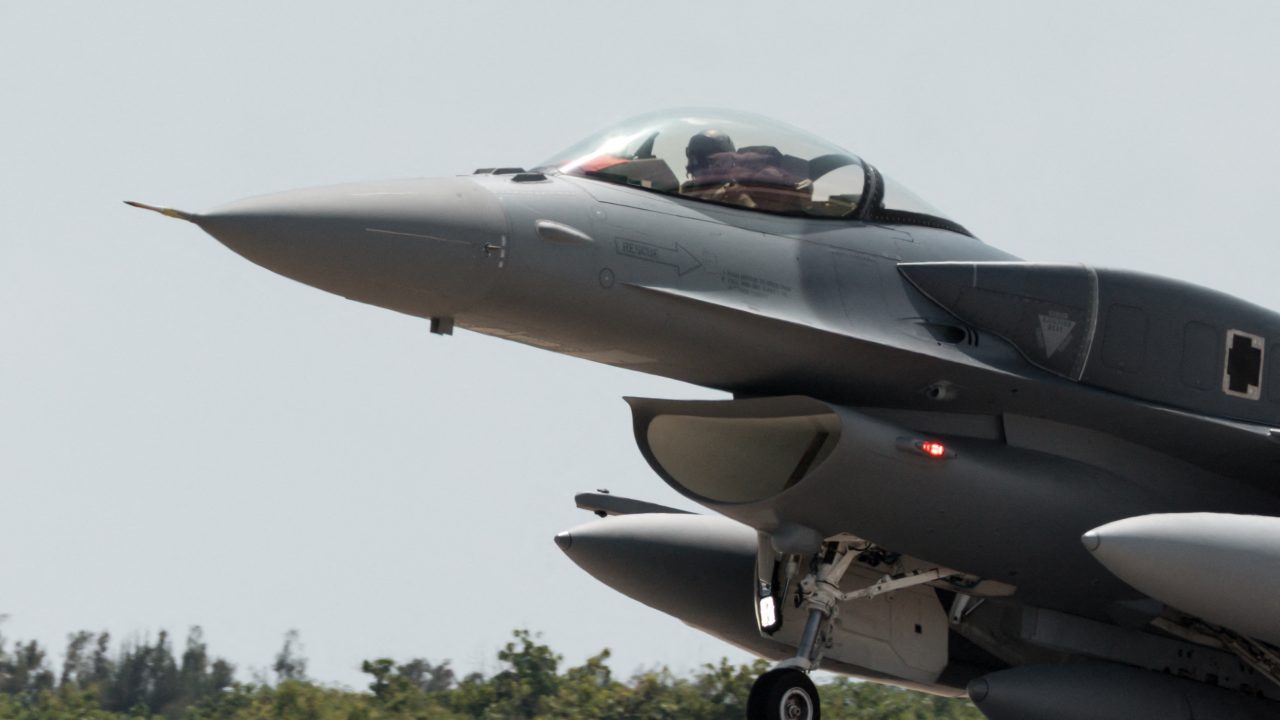
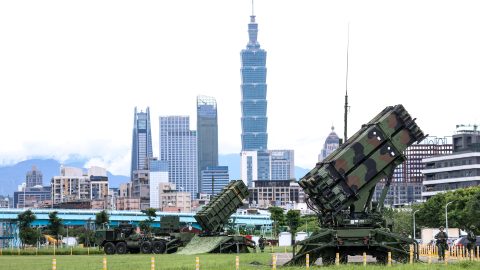
With a month to go before President Donald Trump and Chinese leader Xi Jinping’s (習近平) next expected meeting at the Asia-Pacific Economic Cooperation conference in Shenzhen, the U.S. has still not approved the $14 billion Taiwan arms sale on hold since May.
Taiwan Defense Minister Wellington Koo said last week that he had not heard whether the U.S. was planning to divide the package into smaller pieces to avoid angering Beijing, as Taiwanese officials had previously proposed.
Taiwan continues to maintain close contact with Washington, which has assured them that the U.S. commitment to Taiwan remains unchanged, Koo said.
American officials have given similar assurances in recent months, stating repeatedly that their Taiwan policy has not changed, despite growing concern about Trump’s pliability on the issue.
Speaking to reporters in New York last month, Secretary of State Marco Rubio suggested that the U.S. military’s depleted stockpiles elsewhere in the world were factoring into the Trump administration’s decision-making.
“I know everyone’s focused on Taiwan, but I want you to focus globally for a moment,” Rubio said. “If we sell you something, we don’t have it anymore. No, we may be able to make it in the future, but we don’t have it right now.”
Analysts have interpreted the Taiwan arms sales delay as an effort by the White House to calm tensions with Beijing during a period of frequent meetings between Trump and Xi.
“There are two more summits between the U.S. and China scheduled within this year, so I think neither side really wants to break things off, and the Taiwan issue will be put aside temporarily,” Tamkang University professor Ma Chun-wei (馬準威) said last month, referring to the APEC meeting in Shenzhen and the G20 summit, which will take place in Florida in December.
Ma added, however, that “arms sales to Taiwan will still be inevitable going forward.”
Taiwan first approved funding for the $14 billion package when its opposition-controlled legislature passed a reduced version of the government’s special defense budget proposal in May.
Following his meeting with Xi in Beijing later that month, Trump announced that he was holding the package in abeyance, while describing it as a “very good negotiating chip.”
In the months since, Beijing has repeatedly called on the U.S. to cancel arms sales to Taiwan altogether.
At a summit in Singapore last week, Assistant Secretary of State for East Asian and Pacific Affairs Michael DeSombre told CNBC that investors are “overpricing” the chances of a conflict in the Taiwan Strait. “Both China and the U.S. don’t want conflict, we’re able to deter conflict,” DeSombre said.
Credible deterrence is essential to avoid conflict, he added. “That’s why it’s important … ensuring that we have the deterrence in place with our allies and partners to make sure it does not happen.”
But the delays in weapons sales have created an awkward situation for U.S. officials and other interlocutors in Taiwan, who vocally pressured the legislature to pass the special defense budget in May.
Doubts about the reliability of U.S. military support have been an animating feature of some corners of Taiwan’s opposition Chinese Nationalist Party, or KMT, which held up the special defense budget for months starting last year.
Further equivocation from the Trump administration could embolden the KMT’s more pro-Beijing wing as the party prepares to sort out its nominee for the 2028 presidential election.
The question now is whether Trump will approve the weapons sale after the G20 meeting in December. At the summit in Washington last month, the U.S. and China agreed to extend their trade truce, but only until January 10, suggesting that a broader reckoning on the tough questions in the relationship could be coming early next year.



Leave a Reply