Read the first part about the impact of USAID cuts on Taiwan’s ability to project soft power here.
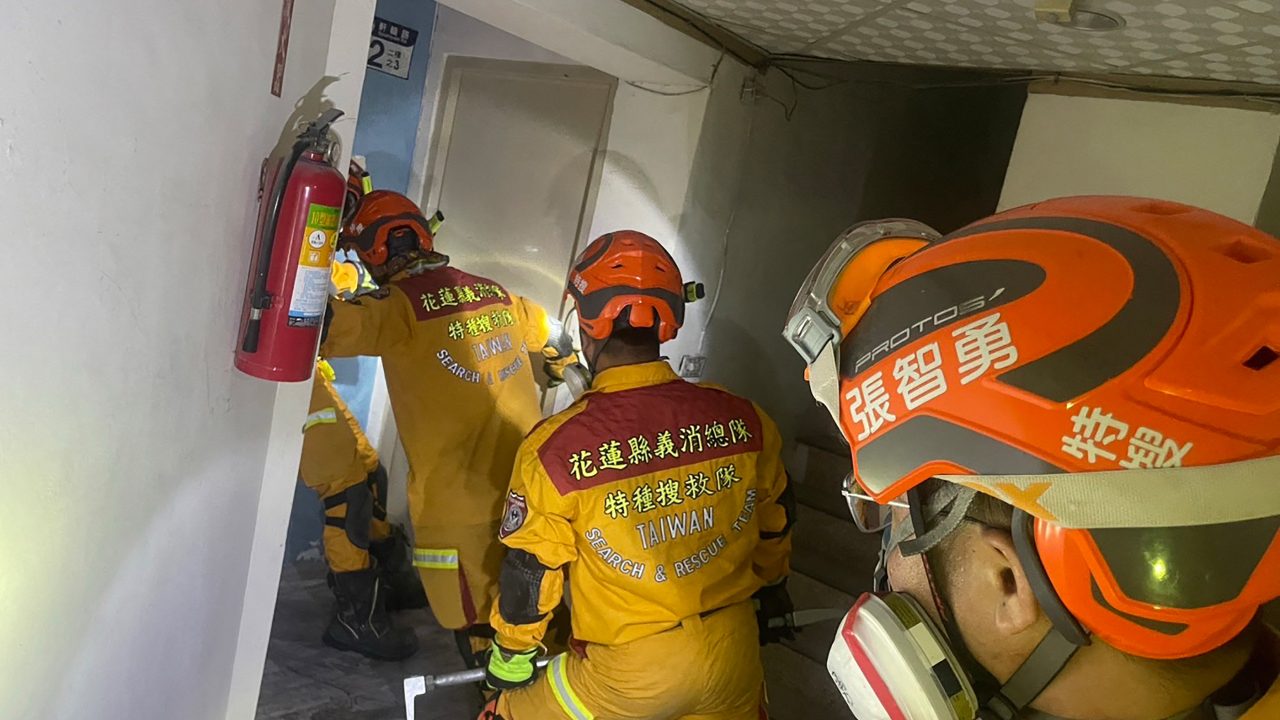
When a 7.7-magnitude earthquake hit Myanmar late last month, Taiwanese rescue teams were assembled and put on standby. But they were never deployed.
Taking advantage of the retrenchment of U.S. humanitarian presence in the region, China sent 30 rescue teams and pledged $1 billion renminbi ($137 million) to the country. Myanmar told Taiwan that it had already received sufficient support, but the real reason behind the rejection was likely political. China often blocks Taiwan’s participation in the international community, including in the humanitarian space.
This case is not unique in the broader context of Taiwan’s participation in international development and humanitarianism. Crison Chien (簡旭伸), a distinguished professor at National Taiwan University’s Geography Department, says that Taiwan’s identity as a participant in this space is caught between the global north and the global south. On the one hand, Taiwan is an advanced economy with the capacity to be a major donor like many global north countries. On the other hand, Taiwan’s contested political status means that it has less formal diplomatic and political power than the countries it seeks to give aid to.
The dilemma seems to have created, or at least compounded, other tensions in Taiwan’s aid giving. The first is related to motivation — is Taiwan giving aid for aid’s sake or trying to win more friends and counter China?
This tension has defined the trajectory of Taiwan’s foreign aid strategy since democratization. During the presidencies of Lee Teng-hui (李登輝) and Chen Shui-bian (陳水扁), foreign aid was primarily motivated by diplomatic competition with China, according to Chien. But when President Ma Ying-jeou of the Chinese Nationalist Party (KMT) came into power, Taiwan’s aid giving strategy shifted to become more professionalized, multilateral and development-oriented. This was inspired in part by a diplomatic truce Ma negotiated with China, which shifted Taiwan’s foreign policy goals away from winning new diplomatic alliances.
Even though the Democratic Progressive Party (DPP), which currently governs Taiwan, has a very different orientation toward China — the DPP generally seeks to counter China’s influence — Taiwan’s foreign aid strategy largely maintained continuity between Ma and his DPP successor Tsai Ing-wen’s (蔡英文) administrations. One manifestation of this continuity is Tsai’s flagship New Southbound Policy, which is now helmed by President Lai Ching-te (賴清德). The policy is, in part, a development framework for Taiwan’s engagement with South and Southeast Asia that prioritizes non-political, low-profile support in areas like public health, agriculture and industrial connectivity.
Alan Yang (楊昊), Executive Director of the Taiwan Asia Exchange Foundation — an NGO focused on implementing the New Southbound Policy — told Domino Theory that the New Southbound Policy is reminiscent of the “heart-to-heart” diplomacy that Japan pursued in the 1970s, which sought to foster mutual understanding and cultural affinity. As part of this strategy, development assistance was a gesture of goodwill, as opposed to a coercive tool. Yang calls this “warm power.” “[T]he connotation of warm power is to keep Taiwan warm in our neighbors’ daily discussion and everyday life. So Taiwan becomes central, becomes indispensable.”
The use of warm power allows Taiwan to develop relationships even while lacking formal diplomatic and political leverage. This light touch approach also allows Taiwan to distinguish itself from the economically coercive development assistance that China has become notorious for providing and align itself with “like-minded” donor countries like the U.S.
Despite the New Southbound Policy’s aim to be non-political, government-to-government cooperation with Taiwan is inherently sensitive. This is where Taiwanese civil society can be an important facilitator, said Yang. “We understand that under the pressure of Beijing, [New Southbound Policy] countries hesitate to work with the Taiwanese government … but they are very happy to work with us as a think tank and as an interface.”
The next question is, has this strategy been effective so far? While Taiwan seeks to align itself with the global north in humanitarianism, it spends only about 0.06% on official development assistance as a percentage of gross domestic income — the official UN recommendation for official development assistance for an advanced economy is 0.7%.
Of course, Taiwan’s political isolation means that it is limited in the amount of development assistance it can provide to non-diplomatic allies (like Myanmar), despite its willingness to do so. One thing Taiwan can do to counter this limitation is seize opportunities where the political context allows Taiwan to provide aid, according to Chien, the professor from National Taiwan University’s Geography Department. This happened in the 2010s, when Taiwan joined the U.S.-led Global Coalition to Defeat ISIS. Two important contextual factors allowed Taiwan to participate. First, this happened shortly after the 2008 global financial crisis when countries were cutting their foreign aid budgets, and there was a large need for additional donors. Second, China’s role in the creation of the refugee crisis — specifically, its refusal to sanction the Syrian government — reduced its leverage in interfering with U.S.-led humanitarian assistance, including Taiwan’s involvement.
The Taiwanese government can also boost its international development ecosystem by increasing its support of Taiwanese development NGOs. Taiwan’s most famous NGO, the Buddhist Tzu Chi Foundation, provides an extensive amount of humanitarian aid with tens of millions of members worldwide and deep pockets — the organization donated $200 million in 2023, nearly half of Taiwan’s official development assistance. But Tzu Chi is an outlier.
There is a large class of medium-sized, legacy, development-oriented NGOs in Taiwan that need more government support to scale up. These organizations do not typically receive foreign funding. Case in point is TaiwanAid, an NGO that serves as a platform for about 30 international development NGOs in Taiwan. Rebecca King-Ying Wang (王金英理事長), the Chair of TaiwanAID, told Domino Theory that more than 90% of Taiwanese development NGOs raise funds domestically. “We definitely depend on ourselves,” added Linus Lee (李尚林), Secretary General of TaiwanAid.
James Gomez, Regional Director at the Bangkok-based Asia Centre, highlighted a couple other reasons why Taiwan development NGOs typically don’t receive foreign funding. One factor may be Taiwan’s diplomatic isolation. A second factor is that Taiwan is not typically an ideal implementation partner for development projects, even in South and Southeast Asia. “To do things in India, to do things in Myanmar, [Taiwan is] too far. You’re too far. You’re not in the natural habitat,” Gomez said. Gomez sees the development efforts of Taiwanese NGOs as disconnected from the “on-the-ground” realities in South and Southeast Asia, leading Taiwan’s development ecosystem to be a bit “contrived.”
It is a sharp criticism, but one that speaks less to the quality of work that Taiwanese NGOs do, and more to another tension baked into Taiwan’s unique position as being not quite global north and not quite global south. Taiwanese NGOs do not benefit from the political legitimacy that global north donors tend to have, but they also are not intimately connected to the local realities of global south recipients and implementing partners, or organizations that receive international funding to implement projects locally.
These tensions are not insurmountable, but the Taiwan government needs to spend more money on aid and coordinate more closely with civil society on official development assistance. Wang thinks that this doesn’t happen because the government remains too focused on providing aid to diplomatic allies and on bolstering soft power through business and investment, as opposed to humanitarianism. “At this moment, the government policy is not friendly enough to encourage Taiwanese NGOs to do more international programs,” said Lee.
The frustrations and complications created by diplomatic isolation aside, Taiwan’s international development ecosystem needs more time to institutionalize and grow up, said Professor Chien. Taiwan’s democracy is vibrant and exemplary, but it isn’t even 30 years old yet.





Leave a Reply