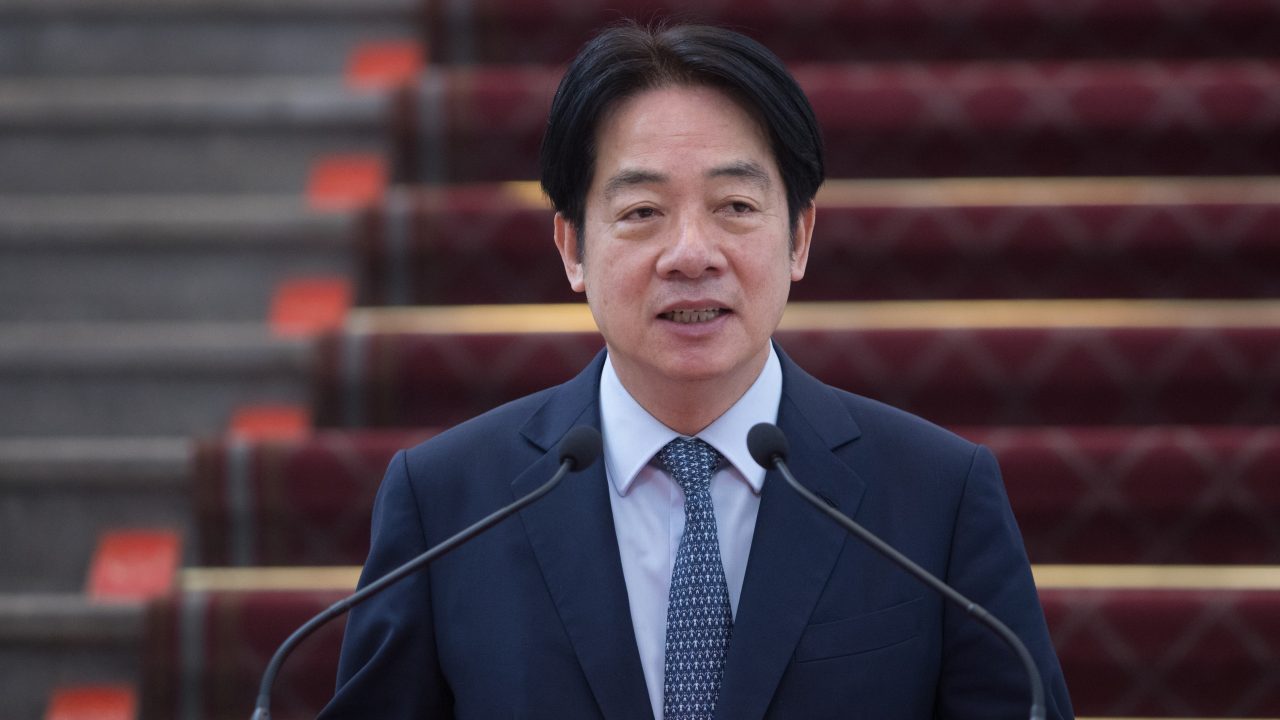
Taiwanese President Lai Ching-te (賴清德) gave a national security speech last week in which he labeled China as a “foreign hostile force.”
The speech attracted criticism from opposition parties in Taiwan and the largest drills of Chinese military aircraft around Taiwan this year.
Chen Binhua (陳斌華), a spokesperson for China’s Taiwan Affairs Office, called Lai a “cross-strait peace destroyer” and “Taiwan Strait crisis maker.”
The headlines in international media on Lai’s speech were about the labelling of China as a “foreign hostile force.”
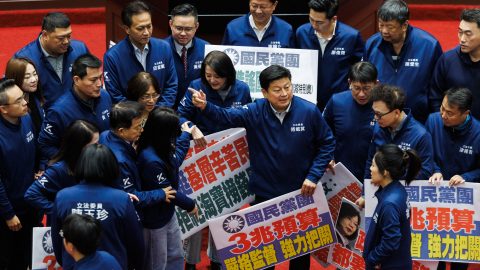
“This is the first time in over 30 years that a sitting leader of the Republic of China [Taiwan] has officially classified the other side of the Strait as an adversary,” said Chinese Nationalist Party (KMT) Chairman Eric Chu (朱立倫). Chu called this change in designation “an unprecedented shift in cross-strait ties.”
It’s worth first of all checking what Lai actually said and then putting his words into their broader context.
“By its actions, China already satisfies the definition of a ‘foreign hostile force’ as provided in the Anti-Infiltration Act,” Lai said in his speech.
The Anti-Infiltration Act was passed in 2019 and is intended to prevent “hostile foreign forces” from interfering in Taiwan’s democratic processes.
Article 2.1 of the Act defines “hostile foreign forces” as follows:
“Foreign hostile forces: refers to countries, political entities, or groups that are at war or in armed confrontation with the R.O.C. The same applies to any country, political entity or group that advocates non-peaceful means to endanger our sovereignty.”
It was understood at the time that this already included China, although it can be applied to other entities as well. In the years since the act was passed, there have been successful prosecutions under it of Taiwanese who accepted Chinese money for use in electoral campaigns.
While Lai saying that China is a foreign hostile force was eye-catching, it didn’t change how Taiwan treats China legally. China was already a foreign hostile force under the act, and this has been playing out in the courts for years.
More Changes Ahead?
What Lai’s use of the term may do is help communicate to the Taiwanese public and international observers the scope and nature of the threat his administration is diagnosing, and may help to lay the groundwork for the renewed use of the Anti-Infiltration Act to prosecute infiltration going forward.
While there has been much ink spilled about some of the the strategies that Lai put forward in his speech, like reintroducing military tribunals to prosecute military personnel suspected of actively working for China, some of the other strategies also called for changes to the legal code. This includes asking the Ministry of National Defense to propose an addition to the Criminal Code of the Armed Forces on penalties for expressions of loyalty to the enemy.
Lai also directed each “competent authority” to run a comprehensive review of relevant laws and search for shortcomings. Should any be found, the “legal framework for national security should be strengthened,” and amendments to various acts should be proposed.
That potentially includes amendments to the Anti-Infiltration Act itself, the source of the “hostile foreign forces” definition.
It seems like Lai is signaling that there will be more national security legislation in the coming years, and we can only imagine that these will be as controversial as the Anti-Infiltration Act was five years ago.
Chinese ‘Gaslighting’
Chinese state media certainly seems to be expecting this. A Global Times editorial on Saturday warned that “Lai Ching-te’s green terror will turn Taiwan island into a cage.”
Although China often charges Taiwan with suppressing freedom of speech when it comes to handling cross-strait security issues, readers might well be aware that citizens of the People’s Republic of China lack these basic rights themselves.
There is similar hypocrisy on display when China says that Taiwanese security measures are raising tensions between the two countries. Last year, China’s Supreme People’s Court issued 22 “Opinions on Punishing Crimes of Separatism and Inciting Separatism by Taiwan independence Die-hards in Accordance with Law.”
Among other things, the opinions make it clear that not only advocating for Taiwanese independence, but even pursuing “two Chinas,” is punishable by life imprisonment or death. This has effectively turned being a Taiwanese politician into a pocket crime, where Beijing could theoretically decide to convict almost anyone, not just members of Lai’s Democratic Progressive Party (DPP).
The phrase “gaslighting” should not be overused in international relations, but it is applicable here. Lai has repeatedly sought talks with Beijing, and Beijing has not reciprocated.
It is unrealistic to think that China might make large moves or concessions in its Taiwan policy, but it has never explored the option of talking with Lai to try to reduce the temperature even temporarily.
One cannot build a navy large enough to invade Taiwan and sail it ever closer to Taiwanese waters while insisting that one has the right to control that territory, and then turn around and claim that Taiwanese efforts towards self-defense are harming peace in the region.
The Drills
Taiwan’s Ministry of National Defense said that 59 Chinese aircraft and nine vessels were detected around Taiwan on Monday, with 43 of the sorties entering Taiwan’s ADIZ. Those are the largest aircraft numbers reported in 2025 and indeed the largest since the Joint Sword 2024B drills in October of 2024.
The U.S. Department of State accused China of “issuing brazen and irresponsible threats” with the drills. Raymond Greene, the director of the American Institute in Taipei, the unofficial U.S. embassy, praised Lai’s “initiative to crack down on longstanding Chinese espionage and influence operations.” Speaking at the Yushan Forum, an international conference in Taipei, he said the measures would “further enhance our ability to cooperate with Taiwan.”
Taiwan is conducting its own weeklong drills that were announced the day before Lai made his speech. The timing is convenient. When China launched its exercises, on Taiwan’s side of the Median Line in the middle of the strait, Taiwanese forces were already mobilized and ready to respond.


Leave a Reply