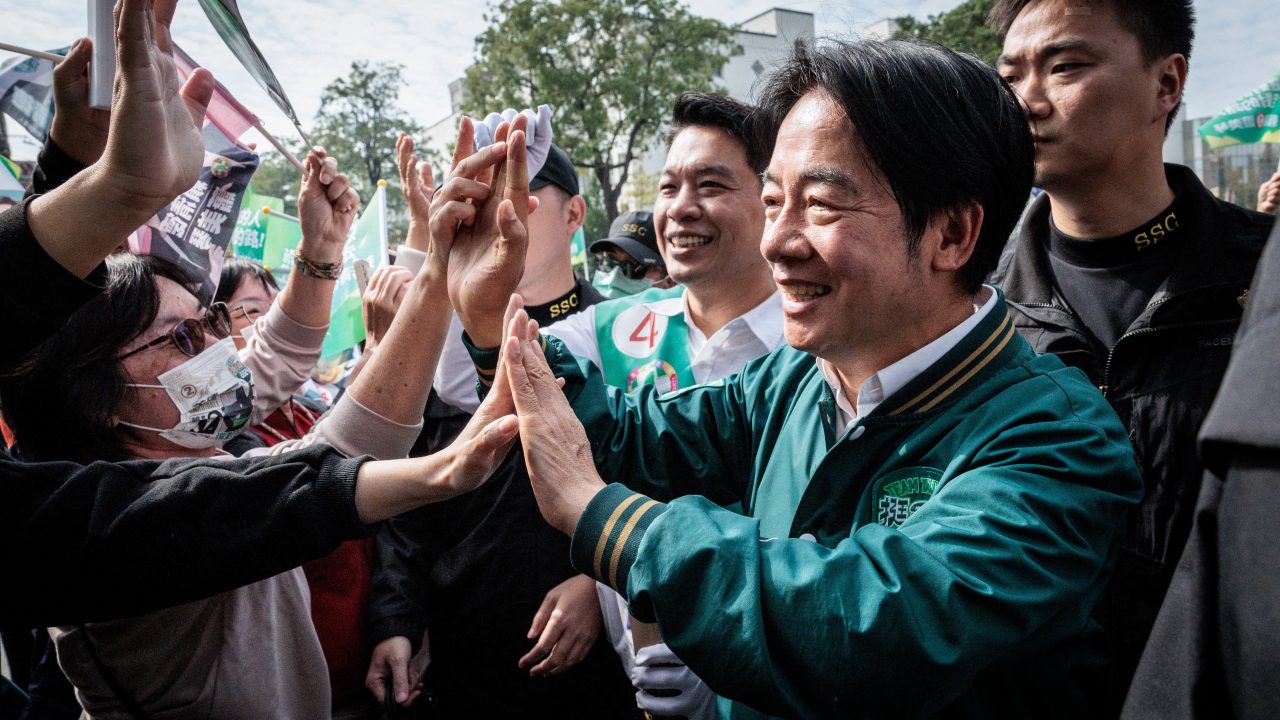
Taiwan president-elect Lai Ching-te (賴清德) has long placed an emphasis on English proficiency. Bilingual 2030 (2030雙語政策) is a crux between his party’s international agenda and attempts to address domestic issues like low salaries.
But as Lai takes the presidency and aligns Taiwan further with English-speaking countries, many doubt whether widespread bilingualism in Taiwan is feasible, or even necessary.
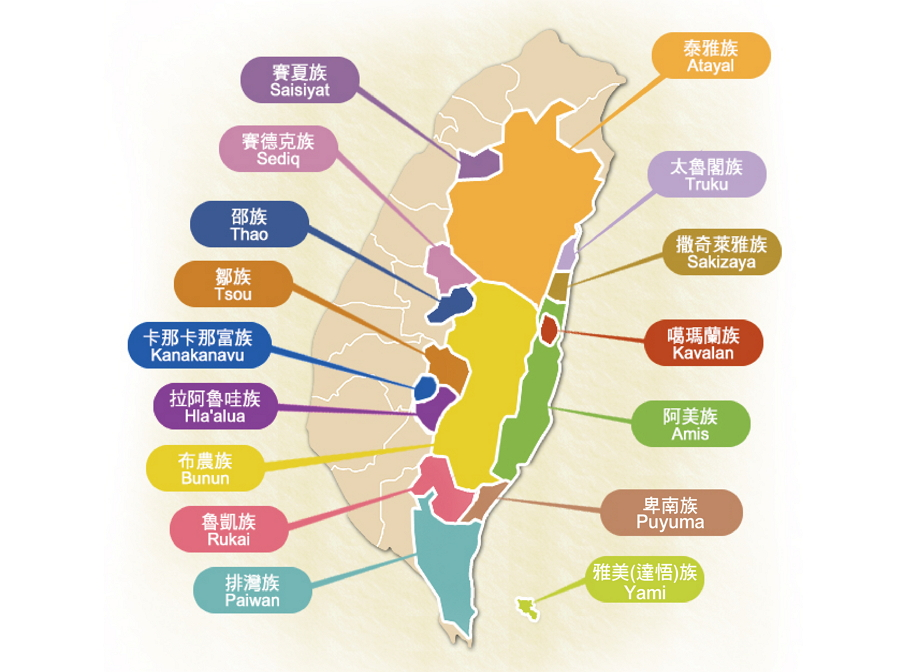
With at least 16 distinct indigenous peoples, and its own forms of Hokkien and Hakka, Taiwan is multilingual. In 2019’s Development of National Languages Act (國家語言發展法), these languages were officially recognized as equal to Mandarin.
However, Cindy Chang (張心瑜), assistant professor at National Taiwan University, explains “the term ‘bilingual’ leaves these languages in an uncertain place. How can a school that teaches national languages alongside Mandarin and English be called ‘bilingual’? This creates a hierarchy.”
For much of the last century such a hierarchy of languages was violently enforced, by Japan during World War II and by the Chinese Nationalist Party (KMT) under martial law. Many who decry the policy today will remember martial law, which ended in 1987, when Mandarin was the “official language” and Taiwanese Hokkein and other languages were suppressed.
This explains the outcry when Lai brought his English as the Second Official Language policy to Taipei from his time as mayor of Tainan. “At the early stages they used the term ‘official language’ without really knowing what this means, having mainly consulted businessmen and politicians, rather than researchers,” says Chang. After review the policy was renamed Bilingual Nation 2030 (2030雙語國家).
“Right now” Chang explains, “the DPP has two national-level language policies. One focusing on internationalization and the other focusing on Taiwanization, or indigenization.”
“Bilingual Nation 2030 and the Development of National Languages Act grew at the same time and were competing against each other. After several rounds of discussions, they saw this tension could be a problem, and renamed the policy ‘Bilingual 2030,’ conceding the word ‘nation’ to the national languages.”
Despite these nominal concessions, some feel Lai and elements of the Democratic Progressive Party (DPP) are still focusing on English at the expense of national languages.
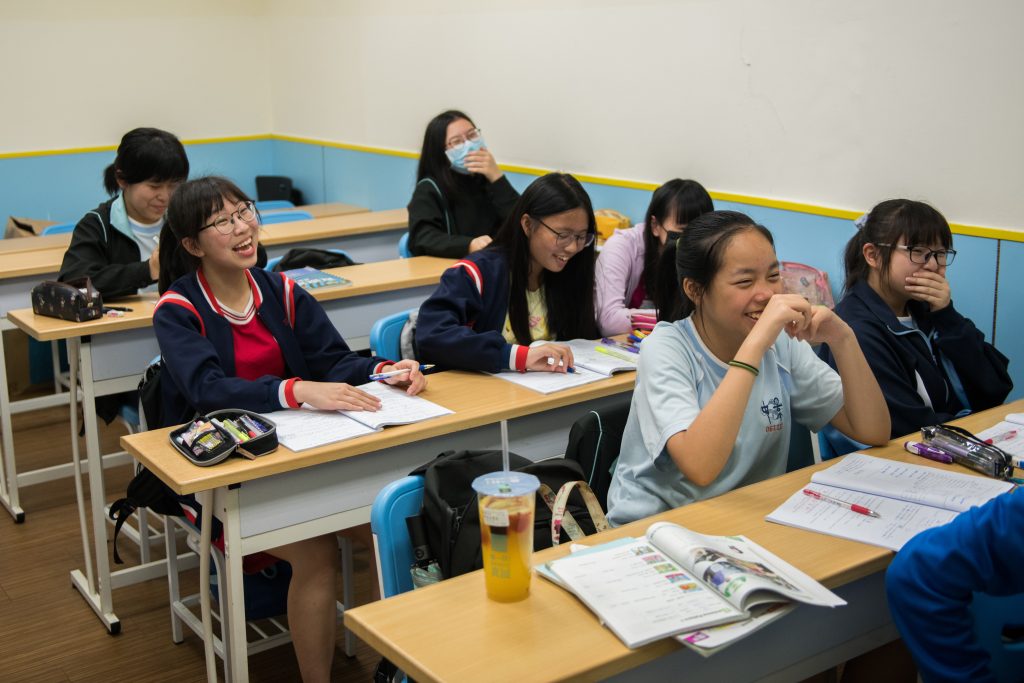
Last year was the first in which national languages were taught for one period a week in schools below high school. By junior school, however, English is taught for three. The curriculum weighting on English gradually increases, and by senior secondary school English is worth eight times as many credits as a student’s chosen national language. English is an important subject in the huikao (國中教育會考), the high school entrance exam. At universities receiving Bilingual 2030 subsidies, 20% of first and second-year students must earn 20% of their credits in English-taught courses by this year.
This emphasis on English favors students from the major municipalities, where a 2020 British Council study found English proficiency is higher than in rural areas and on the east coast.
“In Taipei, roughly 20% of students score low-proficiency grades for English in the huikao. In Hualien 70% do. You can see how wide the gap is between cities and counties,” says Lin Tzu-bin (林子斌), vice president of teacher education at National Taiwan Normal University.
While an August 2023 poll found that of 1,551 respondents 61.2% strongly disagreed that the policy would decrease the gap in English proficiency, Lin is more optimistic: “I see this as more about equal opportunities. Elite students already study English from kindergarten. Students in rural areas don’t have this benefit. If we can gradually create a fair English-speaking environment in schools, then we can reduce the gap.”
To the dismay of those involved in preserving national languages, officials have framed Bilingual 2030 as Taiwan’s attempt to emulate Singapore, where English has become the de facto official language, with Mandarin, Tamil and Malay proficiency falling behind. In 2019 Singapore’s prime minister warned that it was “losing its bilingual competitive advantage” and called for a national push to speak Mandarin at home.


But the ambition to compete with Singapore, a British colony for almost 200 years, may be misguided for another reason. “English proficiency in Taiwan’s workforce is far lower than in Singapore,” explains Lin.
“When the government announced this policy, there wasn’t a plan about how to produce sufficient English proficiency in the workforce, or even an idea of how to train the workforce to reach the needed level. This is one reason why there was so much discontent among the teachers,” he explains.
With a lack of English-speaking teachers and teacher-training capacity, the government is recruiting international teaching assistants to achieve its 2024 benchmark of 60% of English lessons below high schools being taught in English.
In their report the British Council found that while 20% of high schoolers graduate at upper-intermediate level (Common European Framework B2), speaking ability fell behind, with 8.27% graduating at B2 level or above. English, despite being compulsory for decades in Taiwan, has largely remained an exam subject.
The government hopes that these teaching assistants and newly trained teachers will create “an English-speaking environment” in elementary schools, making young students more comfortable using English to communicate.
Many in the education sector still resent the policy, however. A teaching assistant explains that “it’s often a difficult working environment. An older teaching workforce doesn’t think they need us, making working together in the way the policy intends practically impossible. On the other side, teachers keen to access additional training have been unable to due to a lack of capacity.”
In the face of these difficulties some question the need for better English proficiency in the population as a whole. In 2018 (the last year it was included) Taiwan placed 48th globally in EF’s English Proficiency Index. This year Japan ranked 87th but remains a successful international economy having made good use of translation services in professional contexts.
The rapid improvement of translation services should give the DPP pause for thought, according to Her One-soon (何萬順), chair of the Department of Foreign Languages and Literature at Tunghai University.
“For AI companies, the English-Chinese language pair is the most lucrative to develop full-capacity translation technologies for. The DPP’s 2030 Bilingual Policy, a hugely costly language reengineering program, has completely overlooked this.”
Like English, Mandarin is one of 24 global languages with a sufficient amount of data available to train powerful large language models like ChatGPT.
Taiwan’s other national languages are part of the 99% of world languages that lack sufficient data to make good AI tools. As we enter an era where, AI researcher Monojit Choudhury warns, large language models “may reinforce language hegemonies,” it is more important than ever that sufficient emphasis is placed on preserving them.





Leave a Reply