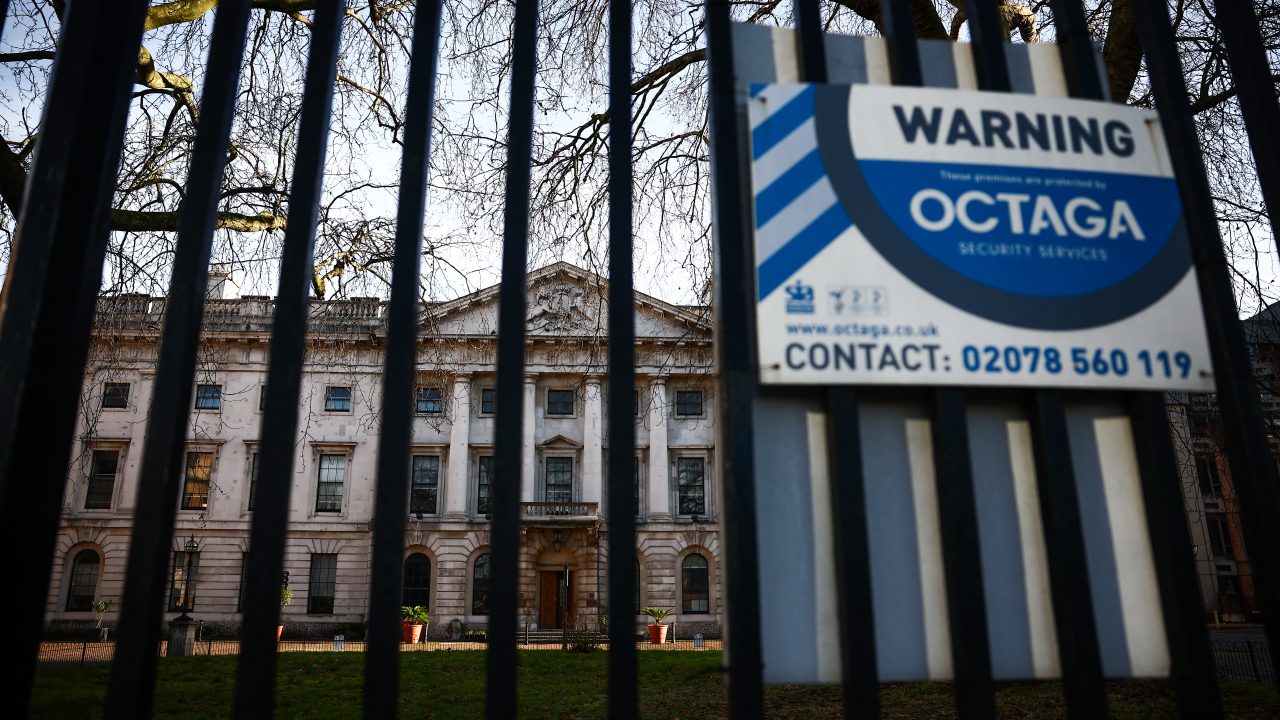
A local residents’ association is challenging the U.K. government’s approval of a new five-acre Chinese embassy compound in the heart of London. The property previously served as a mass burial trench during the Black Plague, a Cistercian monastery, an army weapons store and the Royal Mint.
China purchased the historic site in 2018. After the local borough council of Tower of Hamlets blocked China’s proposal to transform it into what would be the largest embassy in Europe, Prime Minister Keir Starmer’s government “called in” the application and approved it in January, overriding the council’s decision.
The Royal Mint Court Residents’ Association is composed of 100 leaseholders who reside on the edge of the site, beyond the embassy perimeter but within the property that China now owns. Earlier this year, the residents submitted a crowd-funded application to overturn the government’s decision. The High Court is set to examine the case in a hearing that will take place on July 14 to 15, according to Luke de Pulford, executive director of the Inter-Parliamentary Alliance on China, or IPAC, which is helping the residents’ association with their case.
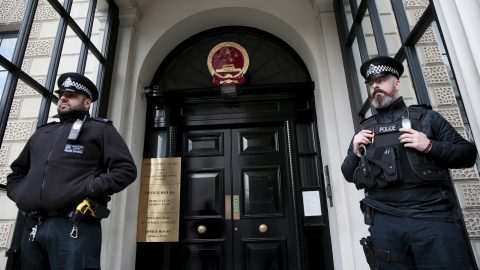
The hearing will cover five grounds, de Pulford said in a written response to questions. First, since diplomatic consent was granted, the area is inviolable diplomatic land, which means U.K. police and other officials cannot enter the premises without permission. As a result, mitigation measures the government requested to enhance the safety of the site cannot be adequately enforced. According to the planning decision document, these measures include reinforcing enclosures, CCTV and street lighting at the embassy perimeter, limiting public access and implementing security measures at access points.
Inviolability “to some extent curtails the traditional options for enforcing breaches of planning control,” the Ministry of Housing, Communities and Local Government acknowledged in its official planning decision, adding that immunity does not, however, affect the lawfulness of an act.
Second, the residents will argue that the failure to disclose a blast assessment during the public inquiry was unlawful, de Pulford said, referring to the collateral risk to residents of a terrorist attack on the embassy. The ministry did review a blast assessment that was originally commissioned by the Tower of Hamlets Council, according to the planning decision document, but decided not to disclose the assessment to the residents. Beijing did not disclose its own blast assessment to either the U.K. government or the residents, de Pulford said.
Third, the government’s plan to move the underground cables that run right next to the embassy, which is close to London’s financial district, is “irrational” in the context of making an ostensibly impartial planning decision, the residents will argue. The cables, which carry sensitive information between the City of London and Canary Wharf, would not be a relevant consideration for a “friendly state which does not have a propensity to hack us,” de Pulford said. “[B]y deciding to move the cables, the [government] is conceding that they took into account the occupier’s identity.”
In the same vein, the residents will argue that the government was not agnostic toward China as the applicant, meaning that the decision to allow China to build an embassy at the Royal Mint site wasn’t made neutrally or impartially. The U.K. government was unduly influenced by factors including the government’s own desire to update its diplomatic premises in Beijing, they argue. De Pulford said this argument does not form a key part of the judicial review, as proving it in court would require lengthy disclosure hearings.
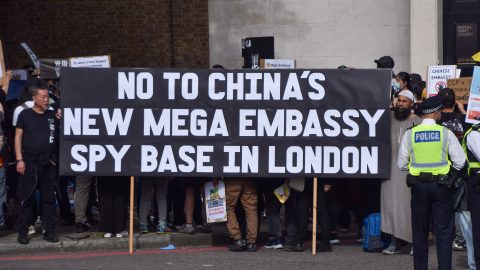
Finally, the residents will highlight that no human rights assessment was completed in the course of making this decision. Their filing argued that the embassy could “curtail the ability of concerned citizens to protest against alleged Chinese rights violations,” Politico reported. IPAC, along with diaspora groups, have argued that the embassy would provide the personnel, resources and space to further empower transnational repression against Chinese dissidents in London.
China has escalated transnational repression in recent years, with diplomatic offices playing “an active role in monitoring, harassing, and intimidating overseas dissidents,” Christopher Mung, the executive director of Hong Kong Labour Rights Monitor, wrote in The Diplomat in February. Opponents of the embassy have cited an incident in 2022 when staff at the Chinese consulate in Manchester dragged a protester onto the consulate grounds and beat him.
“For all these reasons, we argue the Secretary of State erred in his decision, and it wasn’t lawful,” de Pulford said.
China declined to participate in the hearing.






Leave a Reply