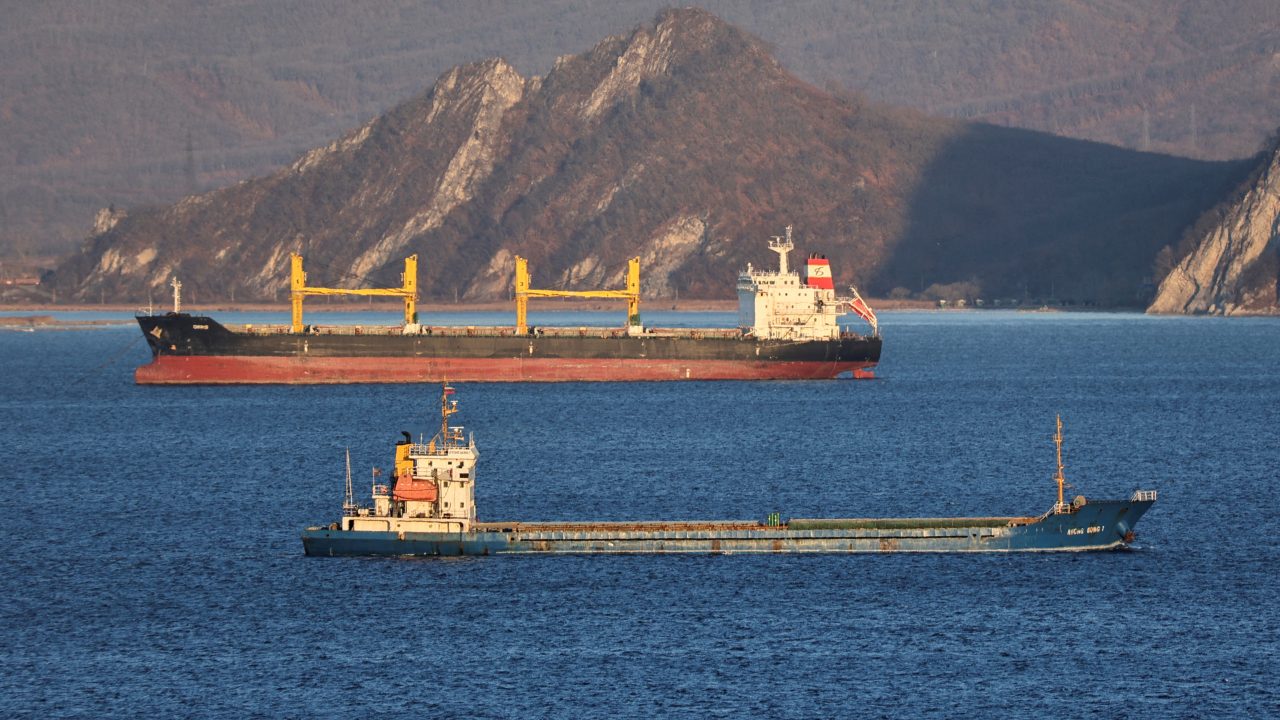
Should Taiwanese companies stop buying more Russian coal?
Taiwan is the fifth-largest importer of Russian coal since Russia’s invasion of Ukraine in 2022. Despite state power company Taipower stopping imports of Russian coal in September 2022, private Taiwanese companies have continued using it to fuel their operations — and as a result, the question of pursuing a tighter sanction regime keeps coming up.
Taiwan’s commitment to sanctions on Russia began the day after the invasion of Ukraine with a statement from its Ministry of Foreign Affairs. That statement said it hoped to “compel Russia to halt its military aggression against Ukraine, and to restart peaceful dialogue among all parties concerned as soon as possible.”
Such straightforward sentiment, however, covered a multilayered policy. When they were officially rolled out in April and May 2022, Taiwan’s sanctions initially restricted exports of computer and information communications products, sensors, laser goods and aerospace items. Those sanctions were then expanded in January 2023 to include various chemicals, as well as two types of stainless steel. But fossil fuels were dealt with more indirectly.
Rather than an outright ban, Taipower allowed fossil fuel contracts with Russia to run down. This meant private Taiwanese companies were still allowed to import Russian fuel. And that led to a situation where, as of July, Taiwan had imported $3.5 billion of Russian coal since the start of the invasion, and imports had risen 31 percent in the last 12 months.
As of now, there’s no consensus on future direction, and there are substantial arguments against going any further.
Taiwan relies almost entirely on imports for its fossil fuels, it’s playing “catch up” on a green transition, with companies concerned about a lack of renewable energy supply, and it has decommissioned most of its nuclear power plants. This means that any further narrowing of energy options comes with clear costs.
Added to that, any case for further sanctions on Russia must be made in the face of a range of critics who argue that existing sanctions have not damaged Russia’s economy enough to end the war, that alternative buyers are too easy to find and that if sanctions work, they tend to work quickly.
Yet there remains a case that sanctions are a longer term battle worth sticking with — and tightening.
Agathe Demarais, author of “Backfire,” a book on U.S. sanctions, has argued that significant elements of the sanction regime on Russia come into play in the longer term. For instance, as Russian oil and gas fields are depleted, new reserves are located around the Arctic Sea, and tapping them requires major finance and technology — both of which are currently being withheld.
At the same time, while Russia can reroute gas exports to China, this will take years and will require huge investments in new infrastructure — leaving China able to extract large financial concessions from Russia.
“In a nutshell, Russia sanctions are quite different from other sanctions regimes,” Demarais told Domino Theory “They seek to degrade Russia’s ability to wage war against Ukraine, both from the financial and military perspective. This means that sanctions will work best in the long run, so the analysis regarding the fact that sanctions tend to work quickly or not at all may not apply to the Russia case.”
The Centre for Research on Energy and Clean Air, which published the data on Taiwan’s Russian coal imports, told Domino Theory it believes sanctions can be effective if they can be tightened.
“Sanctions against Russia can be effective if new measures are introduced (such as an EU ban on Russian gas imports), enforcement is drastically improved and loopholes are tied up (such as the refining loophole which legally allows Russian crude to be refined in non-sanctioning countries and the oil products produced to be sold to sanctioning countries),” Isaac Levi, Europe-Russia policy and energy analysis team lead at the center, said.
So which way will Taiwan — and its private companies — go?
There is some indication that pressure in favor of further sanctions is telling. One of Taiwan’s largest coal importers, Taiwan Cement Corporation, announced it would stop Russian imports this September, and that forms part of a developing trend.
“Since our publication in early July 2024, [Taiwan’s] imports of Russian coal have started to fall. To control for seasonality, analysing the most recent three months (August until the end of October) in 2024, Taiwan imported 34% less Russian coal (1,553 thousand tonnes) compared to the same period last year (2,344 thousand tonnes),” Levi said.
One large target for those in favor of further sanctions is Formosa Plastics, one of Taiwan’s richest companies. “We know that Formosa Plastics are amongst the biggest buyers of Russian coal still,” Levi said. “We urge other Russian coal buyers in Taiwan such as Formosa Plastics Group, which purchased over $100 million worth of Russian coal between 2022 and 2023, to follow suit with Taiwan Cement’s decision to stop buying Russian coal as soon as possible.”




Leave a Reply