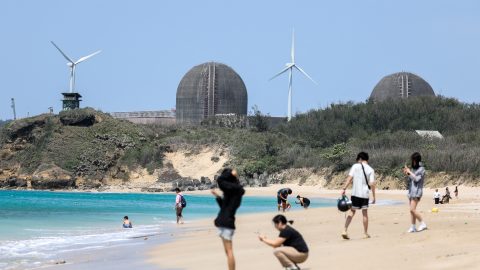
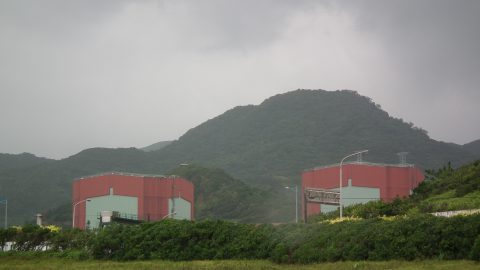
A referendum on whether to restart Taiwan’s Maanshan Nuclear Power Plant failed on Saturday. “Yes” outnumbered “no” votes by a nearly three-to-one margin, but fell short of the five million necessary to pass the measure. And four weeks after 24 Chinese Nationalist Party (KMT) lawmakers survived recall votes, a batch of seven more survived on Saturday as well.
Over the past month, Taiwan has gone to the polls twice. In material terms, nothing has changed. All 113 lawmakers elected in 2024 will continue serving out their four-year terms, while the KMT-Taiwan People’s Party (TPP) coalition holds onto its majority in the legislature. Taiwan’s nuclear power plants, which Lai Ching-te’s (賴清德) Democratic Progressive Party (DPP) long supported closing, will remain shut for now.
But reactions to the results late Saturday showed that, politically, the landscape has shifted. KMT Chairman Eric Chu (朱立倫) called the recall failures “the triumph of the people’s voice over the arrogance of power.” TPP Chairman Huang Kuo-chang (黃國昌) said that the nuclear referendum results “showed that the Democratic Progressive Party should review its wrong energy policy.”
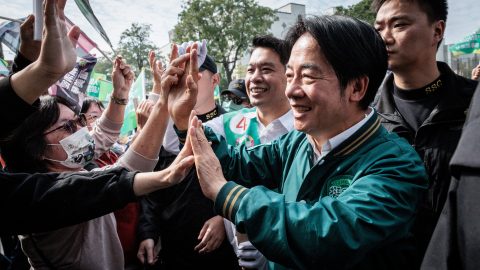
Even Lai responded as if there had been a referendum not on the conduct of KMT lawmakers or the merits of nuclear power, but on the performance of his own team.
“The ruling team will reflect deeply on the shortcomings of the administration and make adjustments and changes,” Lai said.
Saturday’s vote comes amid what has already been a difficult period for Lai. On July 31, as reports emerged that the U.S. had denied Lai’s request to stop over in New York during a planned trip to South America, the Trump administration announced a 20% tariff on Taiwan, higher than the 15% it had agreed to for Japan and South Korea. Both were seen as evidence of Taiwan’s souring relationship with Washington.
Then, on Friday, the United Daily News reported that the administration planned to replace its representative to the U.S., Alexander Yui (俞大㵢), with current National Security Council Deputy Secretary-General Hsu Szu-chien (徐斯儉). (Taiwan’s Ministry of Foreign Affairs has said no such personnel plan currently exists.) All this on the heels of the July 26 recalls, when voters decisively defeated an effort which the DPP had endorsed.
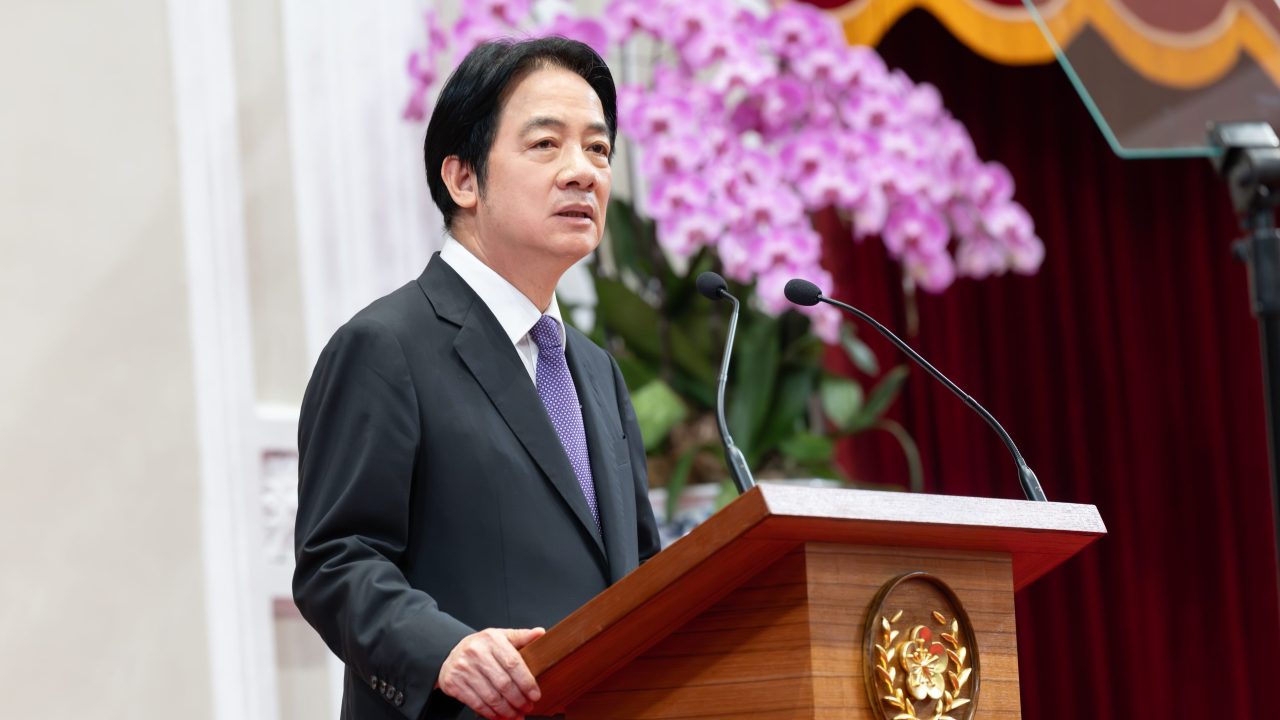
If Yui loses his job, it won’t be the only casualty of the DPP’s recent slump. Speaking to the media from the Presidential Office in Taipei Saturday night, Lai said that he would reshuffle his cabinet to make it “more effective at solving problems in tune with public opinion.”
He went on to lay out additional changes to his administration’s approach, including a renewed focus on economic issues and a more open attitude toward dialogue with the legislature. On nuclear power, Lai suggested that safety checks necessary for restarting Maanshan would proceed, even though the referendum had failed.
“If future technology is safer, produces less nuclear waste, and is more socially acceptable, we will not rule out advanced nuclear energy,” Lai said. “The people want peace of mind and a stable power supply, and these are the government’s unshirkable responsibilities.”
To what extent the administration will stay faithful to these changes remains to be seen, but for those alarmed by the increasing polarization on display in the lead up to the recalls, Lai’s tone is a welcome shift.
In the U.S., a pattern has emerged in recent decades. A president wins an election, claims a mandate, then pursues his agenda for 22 months before getting trounced in the midterms the following November. For Lai’s administration, the reckoning has come after just 15.




Leave a Reply