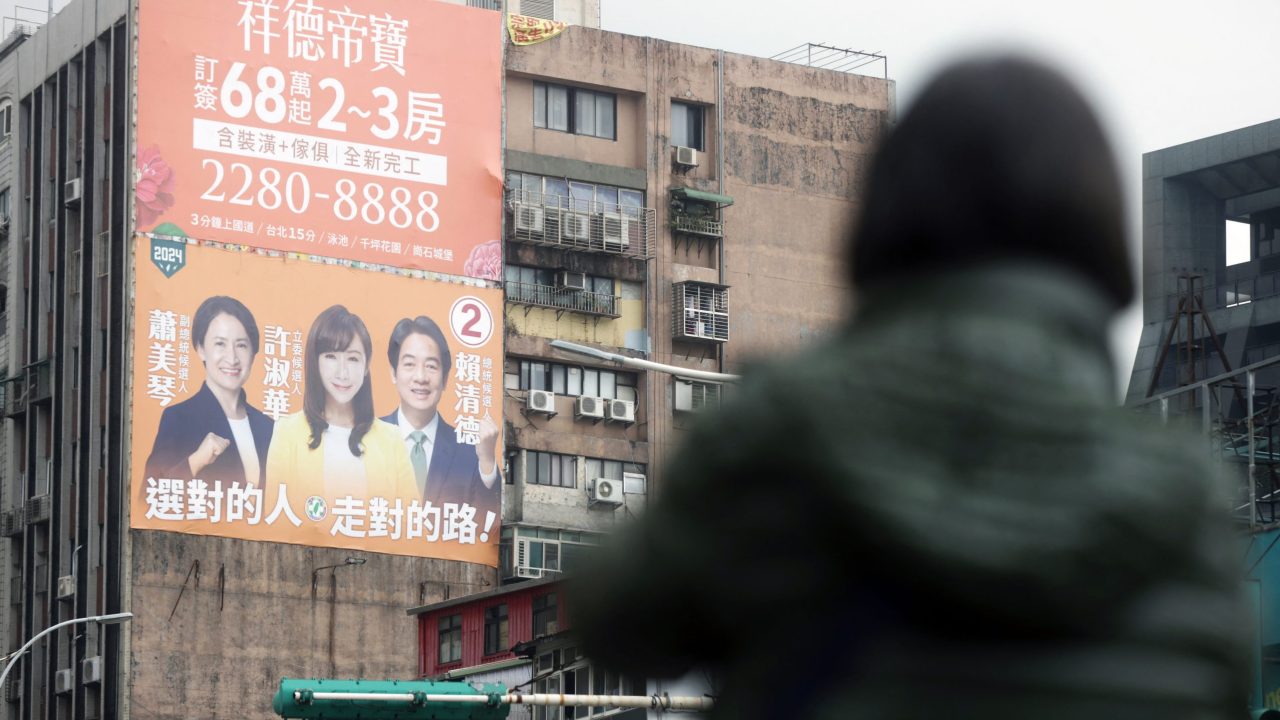
Taiwan is updating its affirmative action quota for women in local elections. The current rule, which will be used for the last time in tomorrow’s local elections, requires one in every four seats available in a local council constituency to go to a woman.
Since it was implemented in 2002, the gender quota has brought many women into local politics who would not otherwise have chosen to run or won a seat. But its impact has diminished over time, leaving a persistent lack of female representation in less populated, rural districts unresolved.
“In recent local elections, relatively few women have been elected by virtue of the guaranteed quota,” a coalition of women’s groups wrote in a joint statement last year. “The quota’s effectiveness in promoting women’s political participation has therefore reached its limits.”
A new, stricter quota was passed by the legislature in November 2025. In electoral districts for local councils, it reserves at least one in every three seats for whichever gender is underrepresented. The new quota will take effect in 2030.
Over the course of its short history as a democracy, Taiwan has become one of the top countries in the world for female representation in politics. At the national level, about 15% of total seats in the legislature are set aside for women. Taiwan has outperformed this quota by a large margin, as 42% of legislators are women.
Taiwan has also outperformed its East Asian neighbors without gender quotas. Less than 15% of seats in the Japanese Diet are held by women. In China, women make up about a quarter of the National People’s Congress. In South Korea, where there are gender quotas but not reserved seats for women, around 20% of representatives in the National Assembly are women.
In Taiwan’s local elections, the number of women who were elected by way of the fourth seat quota dropped to 21 in 2022, down from 118 in 2002, according to the Ministry of the Interior. But that doesn’t mean the quota system has become obsolete.
In fact, an urban-rural gap persists in women’s political participation in Taiwan, as districts with fewer than four seats need not — and often don’t — elect a woman.
Nearly half of all electoral districts for Taiwan’s grassroots township councils elected no women in the 2022 elections, said Chang-Ling Huang (黃長玲), a professor at National Taiwan University.
Huang, who helped draft the new gender quota in 2011, said Interior Minister Liu Shyh-fang (劉世芳) and Legislator Fan Yun (范雲) were instrumental in getting the government to adopt the new quota system.
Although the new quota will not apply to the many electoral districts that have fewer than three seats, Huang hopes that electing more women in three-seat districts will have a broader effect across rural areas as women’s representation on local councils increases.
The impact of the new gender quota might also spill up to higher levels of local governance. The existing quota has helped add to the pool of competent female politicians for roles like district legislators and township mayors, political scientist Nathan Batto said in a blog post.
“The reason the rule works so effectively and so quietly is that it encourages parties to change their behavior. To avoid other parties winning extra seats, parties must not only nominate but also cultivate female politicians.”
(Note: Taiwanese law prohibits media outlets from reporting on polls less than 10 days before an election. For a sense of where the races stand, readers are encouraged to consult coverage prior to November 17.)




Leave a Reply