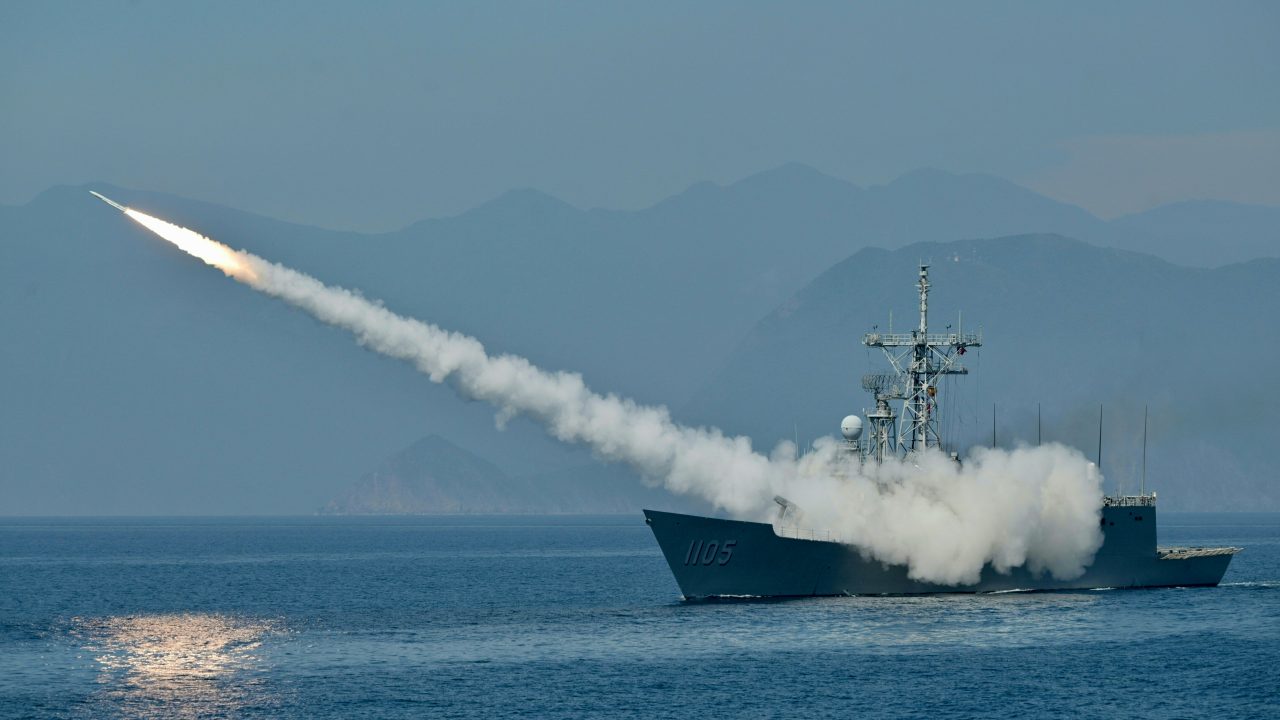
A hot war in the Taiwan Strait would have unimaginable proportions and consequences. Because of this, commentators, scholars and analysts have drawn countless parallels to other contemporary conflicts to contextualize what war in the Taiwan Strait could look like. Most recently, comparisons have focused on perceived similarities between the U.S.-Israeli war with Iran and a possible Chinese attempt to blockade or invade Taiwan. But the Taiwan Strait is not the Strait of Hormuz.
The comparison seems simple: The Taiwan Strait and the Strait of Hormuz are both key maritime chokepoints. Disruption to either would upend the global economy and regional security. Taiwan’s supply of liquefied natural gas arrives through three terminals on its western coast, facing the Taiwan Strait. However, the similarities mostly end there. While China could institute a limited blockade of Taiwan as a means to achieve regional strategic goals and coerce adversaries — similar to Iran with a complete blockade of the Strait of Hormuz — drawing more profound conclusions from one for the other is implausible due to significant differences in strategic geography, the role of partners and allies, and Chinese and Iranian sea power goals and capabilities.
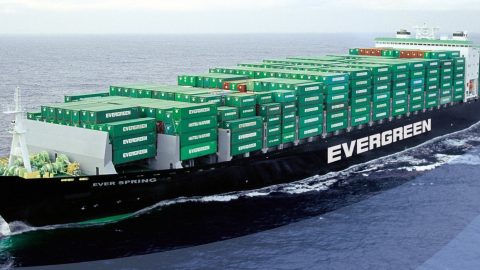
The Taiwan Strait’s geography makes China’s task of blockading it more complex than Iran’s task of blockading the Strait of Hormuz. Ships in the Strait of Hormuz pass a narrow chokepoint — 21 nautical miles at its narrowest compared to 80 nautical miles for the Taiwan Strait — on predictable routes. The Taiwan Strait is wide and busy, with around 50,000 ships transiting it every year. Both the Taiwan Strait itself and the regions it connects are home to the world’s busiest commercial ports. The same is not true for the Strait of Hormuz, where ships mainly transit without stopping to load or unload cargo. Imposing a complete blockade of the Taiwan Strait, as Iran envisions for the Strait of Hormuz, is resource-intensive and logistically difficult. Therefore, it is likely that China would selectively intercept, board or kinetically stop only some of the vessels transiting the Taiwan Strait and institute a partial blockade of vessels transiting the Taiwan Strait.
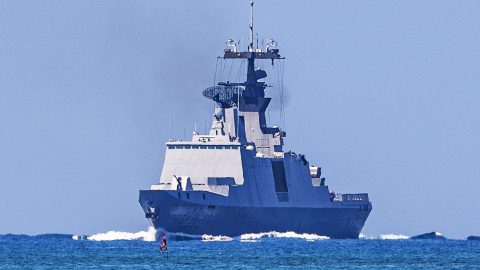
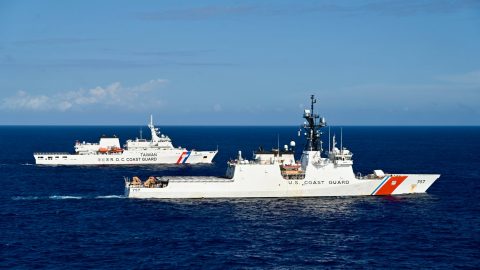
Unlike the Strait of Hormuz, where Gulf navies have done little to challenge the blockade by escorting tankers and countering naval mines alongside the U.S., regional partners such as Taiwan, Japan and Australia are likely to deploy their naval and coast guard vessels to secure the Taiwan Strait should Chinese actions jeopardize free passage there. Japan, which relies heavily on the Taiwan Strait for trade, operates an impressive fleet of advanced mine warfare ships. Significant disruptions to trade would, at best, create massive economic pressure in major East Asian economies and, at worst, jeopardize state survival. Should China attempt to intercept or attack cargo vessels and tankers transiting the Taiwan Strait, it would risk firing on escort-convoyed cargo vessels if it hoped to enforce a selective blockade.
The U.S. has done this before. During the Tanker War in the 1980s, the U.S. reflagged Kuwaiti oil tankers as U.S. vessels, allowing the U.S. Navy to provide armed escort. In a future Chinese effort to restrict passage in the Taiwan Strait, reflagged and nationalized cargo ships, crewed by a planned merchant marine organization from Taiwan, would force China to confront a state organization rather than private shipping firms. In 2025, Taiwan’s navy simulated escorting commercial ships into Hualien, in eastern Taiwan, during its large-scale annual Han Kuang military exercises.
The Islamic Republic of Iran Navy and the Islamic Revolutionary Guard Corps Navy were limited in size and capability compared to the People’s Liberation Army Navy even before the U.S. sank some of their vessels in the latest bout of fighting. By contrast, the PLAN boasts advanced air-defense and anti-surface capabilities. With more than 370 ships, it is the world’s largest navy by ship count and second-largest by total tonnage, trailing only the U.S. Navy. While public data is lacking, it also stands to reason that the PLAN’s fleet readiness rate is high, due in part to a young fleet, with over 70 percent of its ships launched after 2010.
Fighting in home waters allows the force to work in conjunction with ground-based aircraft, fires and sensors, while avoiding its main shortcoming: logistically intensive and bureaucratically complex expeditionary operations. While U.S. Navy vessels mostly face export versions of legacy Chinese anti-ship missiles in the Persian Gulf and the Strait of Hormuz, they would face a military with comparatively more advanced Command, Control, Communications, Computers, Intelligence, Surveillance and Reconnaissance, or C4ISR, capabilities and more advanced anti-ship missiles, such as the YJ-18 and YJ-12. The Taiwan Strait’s proximity to the Chinese coast would also allow the PLAN to operate jointly with other branches, notably the People’s Liberation Army Rocket Force, with its DF-21D and DF-26 anti-ship ballistic missiles, to deter amphibious warfare ships and aircraft carriers. To ease coordination barriers in joint operations, Chinese conventional short-range ballistic and cruise missiles operate under the operational control of theater commands, rather than being restricted to the People’s Liberation Army’s central command. Regardless of how convincingly the PLA can conduct joint operations, doing so closer to home addresses some of the operational challenges inherent in operating far away within the PLA’s organizational structure.
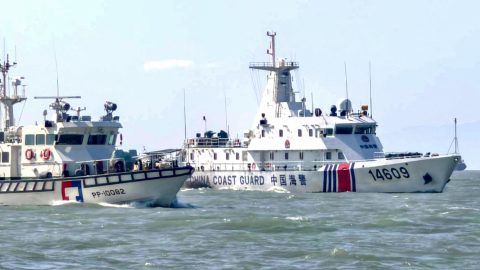
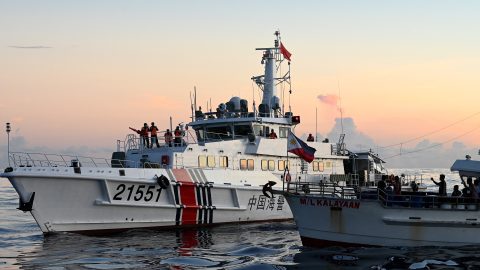
Additionally, China’s sea power extends beyond the PLAN. Chinese maritime law enforcement and paramilitary forces supplement the PLAN in ways that few other countries in the region and around the world can replicate. The Chinese coast guard, China’s premier maritime paramilitary and law enforcement force, fields more than 1,300 vessels, including around 260 that displace over 600 tons and can operate offshore. While CCG vessels lack the PLAN’s air-defense and anti-surface capabilities needed to challenge U.S. and partner military vessels, they would pose a credible threat to unconvoyed cargo vessels seeking to transit the waters around Taiwan.
Deploying the CCG instead of the PLAN would allow China to more comfortably frame any changes to the cross-Strait status quo under the guise of domestic law enforcement, an activity in which the CCG does legitimately engage. The CCG is not part of the PLA but is part of the People’s Armed Police, China’s paramilitary force, and falls under the Chinese military command structure. Iran’s lack of a comparable maritime paramilitary organization, one that can convincingly masquerade as a law enforcement organization while conducting paramilitary operations, compels it to escalate more decisively by deploying military assets. At the same time, the CCG’s deployment would pose additional military policy challenges for Taiwan, the U.S. and other regional partners, such as Japan.
Aside from the CCG, China’s People’s Armed Forces Maritime Militia, or PAFMM, fields thousands of vessels that it has deployed to support the country’s strategic maritime goals. While the PAFMM generally operates unarmed in peacetime, it disrupts shipping operations to benefit and enable Chinese naval and maritime law enforcement, such as conducting dangerous maneuvers near U.S. and partner vessels in international waters. Faced with Taiwan’s navy and coast guard, which currently lack effective joint maritime domain awareness, the layered operations of the PLAN, CCG and PAFMM could create a complex environment that would overwhelm coalition maritime domain awareness capacity.
On both fronts of interdiction and escalation control, China poses a far more significant challenge than Iran.
Drawing direct comparisons is tempting but dangerous. Nowhere was this more clearly demonstrated than in the aftermath of Russia’s full-scale invasion of Ukraine. But just as Taiwan is not Ukraine — and China is not Russia — the Taiwan Strait is not the Strait of Hormuz. And, for better or for worse, China is not Iran. Differences between the two bodies of water and the countries around them make direct comparisons dangerous and imprecise. Understanding the regions and their complexities on their own terms will prove to be the key to sound strategy if the day ever comes.
Leave a Reply